
Get your air conditioner to the right pro
Should you cover your AC unit in a Colorado winter
A full cover traps moisture against the unit, and that does more harm than a Colorado winter does on its own. What your AC actually needs before the cold sets in depends on where it sits and how it's built. Answer that, and you'll know if it needs anything at all.
Connect with a proA full cover isn't necessary, and most of the year it does more harm than good. Your condenser is built to sit outside all year, through snow, hail, and freezing temperatures, with no cover at all. The real risk in Colorado isn't the cold, it's moisture getting trapped underneath a cover and sitting against the coil and the cabinet. That moisture can lead to rust and corrosion you won't see until spring, when the unit struggles to start up. If you want to protect it, a flat piece of plywood or a purpose-made top cover that keeps snow and ice out of the unit while leaving the sides open works better than wrapping the whole thing. The sides need to stay open so air moves through and any moisture already there can dry out instead of sitting trapped against the metal.


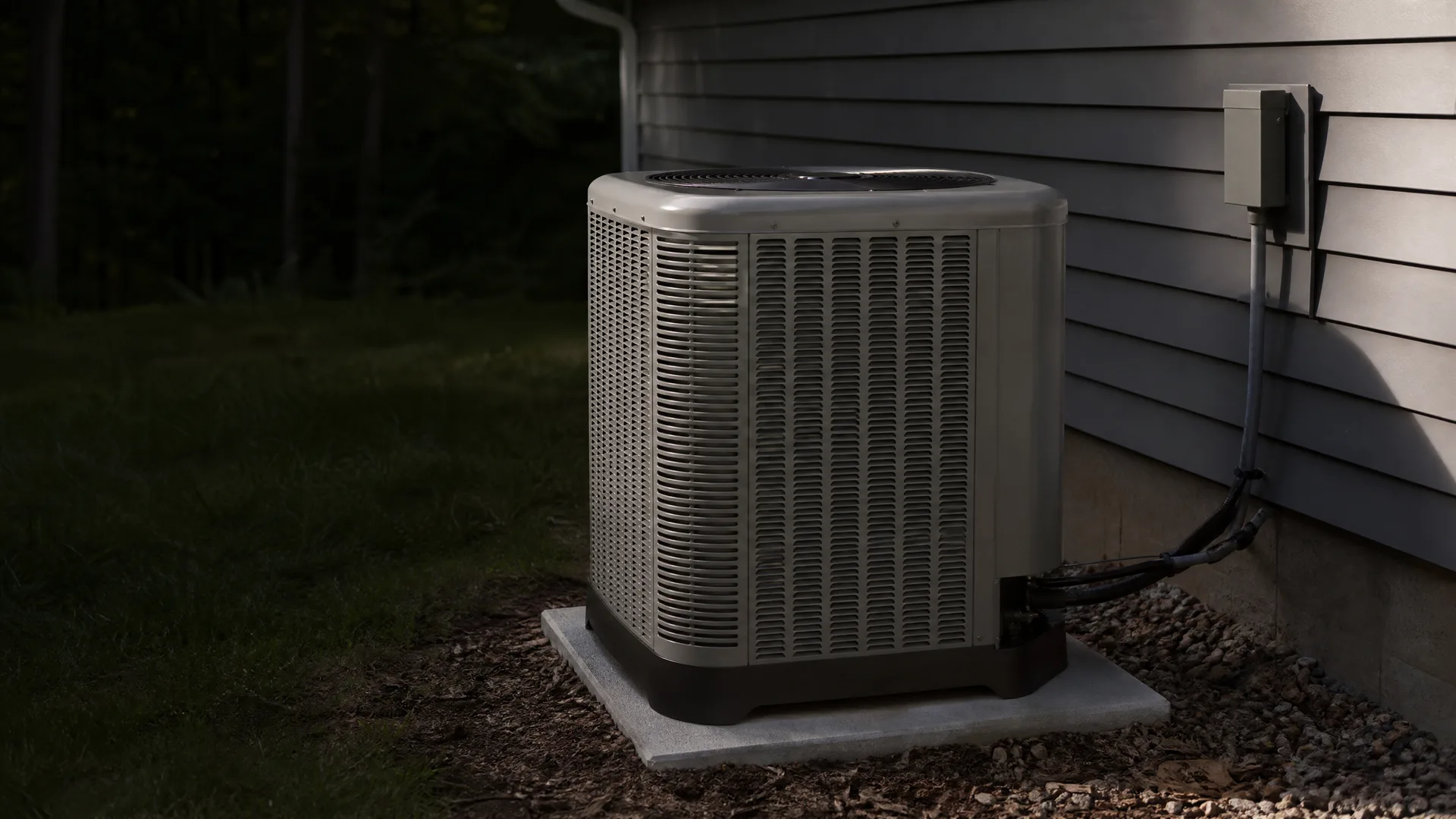
Your condenser is built with louvers or a mesh grille in its casing so moisture moves through it instead of collecting. Snow that lands on top sits on a fan shroud shaped to shed water down and away from the electrical parts. The compressor and the wiring sit lower, inside a sealed housing, out of reach of snow or rain. Wrap the whole unit in a full cover and you block that airflow. Condensation forms inside with nowhere to go, and it sits against the coil and the wiring until it dries, which in a Colorado winter can take a while. A full cover also makes a dry, enclosed space that mice and other small animals look for once the weather turns. If you want to cover anything, a rigid top piece sized just for the fan opening keeps falling debris out while still letting air move through the sides, which is what the unit needs to stay dry through the winter months.
How your condenser handles winter
- The condenser's outer casing has louvers or a mesh grille built in so moisture can pass through rather than collect.
- Snow that lands on top of the unit sits on a fan shroud designed to shed water downward, away from the electrical parts.
- The compressor and wiring sit inside a sealed housing lower in the unit, away from where snow or rain reaches.
- A full cover blocks that natural airflow, so condensation forms inside and sits against the coil and wiring instead of drying out.
- Mice and other small animals look for a dry, enclosed space to nest in over the winter, and a full cover gives them one.
- A rigid top cover, sized to shield only the fan opening from falling debris, still lets air move freely through the sides.


What a Full Cover Costs You
- A full cover left on from November through March traps condensation against the cabinet every time Colorado's sun melts nearby snow.
- Mice and other small animals look for a dark, enclosed space to nest in over the winter, and a covered condenser offers exactly that.
- Trapped moisture against the coil and electrical parts can corrode connections you won't see until the unit fails to start in May.
- A cover that blows loose in a Chinook wind can flap against the cabinet or blow into the yard, doing more damage than the snow would have.
- If you still want to protect the unit, a flat piece of plywood propped over just the top, weighed down and open on the sides, keeps snow off without trapping moisture.
- Skipping a cover costs you nothing and leaves the condenser exactly as it was built to be used, sitting outside through the cold.
Leave the condenser as it is and nothing happens to it over the winter, because that's what it was built for. Put a full cover on it and you've given Colorado's freeze-thaw cycle a way to do damage the cold alone never would. Snow melts in the sun, runs off, and refreezes most days from November through March. Under a cover, that moisture has nowhere to go. It sits against the cabinet and works into the coil and the electrical connections instead of draining off the way the louvers and the fan shroud were built to let it. You won't see the corrosion happening. You'll find out in May, when the unit doesn't start and a contractor has to open it up to find out why.
A cover does something else, too. It turns the condenser into a dry, enclosed spot that mice look for once the weather turns, and a nest built against the wiring is its own kind of damage.
If you want to keep snow off the top without closing the unit in, a flat piece of plywood propped above it and weighed down works better than a cover. Leave the sides open so air moves through the way the cabinet was designed for. Anchor it well. A loose cover or a loose board in a Chinook wind can do more to the cabinet than the winter would have done left alone.
The simplest option is also the right one. Leave the condenser uncovered and let it sit through the cold the way it was built to.




The right pro for this job

Send the form and the air conditioner tune-up stops being something to remember.
It costs nothing to send, and you don't have to hire anyone.

Why a top-only cover works better
If you cover anything, cover just the top, not the sides. A flat piece of plywood or a purpose-made top cap keeps falling ice and heavy snow off the fan shroud without sealing in the air around the coil. The sides stay open, so the louvers can still breathe and any moisture that does get in has somewhere to go. That's the difference between blocking snow and trapping it.

What a dry fall does for you
Before the snow flies, clear leaves, grass clippings, and dirt from around the base of the unit and out of the louvers. Colorado's dry air through fall means debris builds up as dust rather than wet rot, so it brushes off easily if you get to it before the first real snowfall. A condenser that starts winter clean has less for melting snow to turn into a damp mess against the cabinet in February or March.
What's that cover you put on last fall doing to it
If you wrapped your condenser for winter, pull the cover back and look underneath. You might find rust starting on the cabinet where water sat against the metal instead of draining off. Leaves or dirt can build up at the base, trapped where you can't see them until the cover comes off. Check for small gaps chewed or pushed into the cover itself, a sign something made a home in there over the winter. None of this shows from outside while the cover's still on, which is the problem. By the time you notice a smell or hear something when the system first kicks on in spring, the damage is already done.
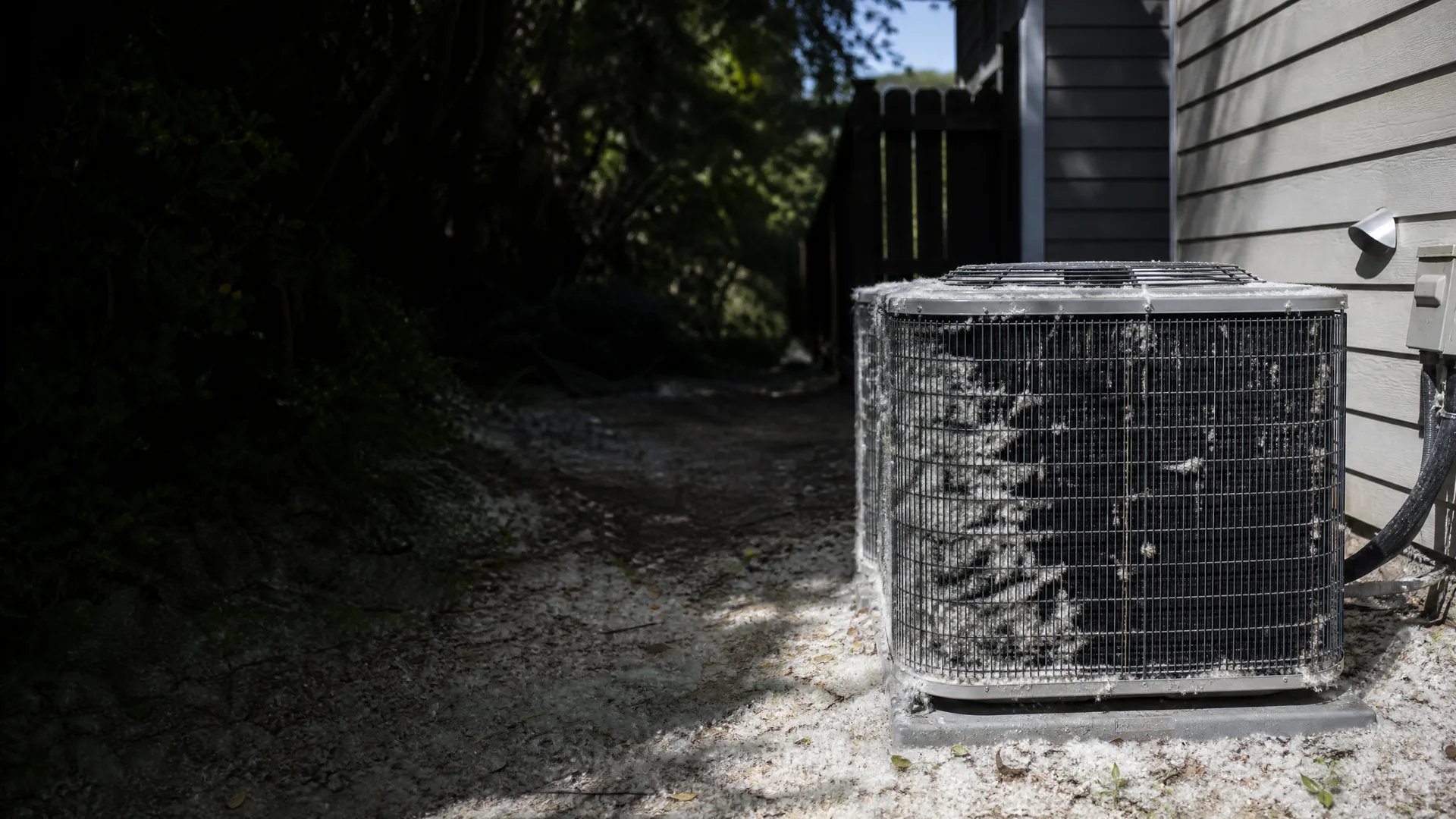
Late May, and the cottonwoods along the fence line have let go. You step into the side yard to coil up the hose and notice the condenser first, the fins on the near side gone soft and white, packed with fluff the way a lint trap looks before you clean it. Some of it has caught on the grille and built up thick enough to block the mesh behind it. You run a hand across it and a patch comes away, dry and light, more of it underneath. The unit hasn't run yet this year. It's quiet, the fan still, and the fluff just sits there collecting more of itself with every breeze off the field behind the house.
Power costs 15.69 cents per kilowatt-hour statewide
At 15.69 cents per kilowatt-hour, running your AC costs the same whether it spent the winter bare or wrapped in plastic. A cover doesn't lower what you pay to cool the house next summer. It just decides whether the unit is dry and clean when you turn it back on, or rusted and full of nesting debris.
EIA-861 2025 statewide residential average
A full cover keeps the top of the unit from icing over, so some owners leave one on from the first frost through the last freeze.
Left on that long, the same cover traps moisture against the cabinet, and a dry unit in March would have done the compressor more good than a clean one in November.


Bare or Covered for Winter
Leave it bare
- Snow sheds off the fan shroud on its own, so nothing sits there long enough to soak into the cabinet.
- Air keeps moving through the louvers all winter, which is what keeps condensation from forming in the first place.
- You can check on the unit anytime without pulling anything off first, so a cracked line or a nest gets spotted early.
- Nothing blocks the coil, so the unit is ready to run the first warm day in March without any setup.
- A contractor doing maintenance in spring sees the unit exactly as it sat all winter, not as a cover left it.
Cover it fully
- The top stays free of ice buildup, which matters if your unit sits somewhere heavy snow slides off a roof onto it.
- A sealed cover keeps windblown leaves and grit from settling directly on the coil during a dry, windy stretch.
- Moisture from melting snow nearby has nowhere to go once it's trapped against the cabinet by the cover.
- A dark, enclosed space under a full cover is exactly what mice look for to nest in over the winter.
- By March, dirt and leaves that blew in before the cover went on are still sitting underneath it, unseen.

A dew point tells you how heavy the air feels, and across Colorado it averages 42°F in June, July and August. That's dry air. A dry summer means the condenser isn't fighting the kind of humidity that leaves coils wet and slow to shed heat. It's also why covering the unit for winter matters more here than the cold itself does. Snow comes and goes, but a cover left on traps whatever moisture does show up, against metal that would otherwise dry out fast in air this dry. The same dryness that makes summer easy on your AC is the reason a cover can do more harm than the season ever would. Source: regional climate averages for Colorado.
NASA POWER T2MDEW county cells weighted by homes

Leave it bare, and have someone check it in spring
Your condenser doesn't need a winter coat. Leave it uncovered and let the snow shed the way the fan shroud was built to let it. The only time a cover earns its place is over the top alone, keeping ice off without sealing moisture against the cabinet.
Once the weather turns in Colorado, it's worth having someone look the unit over before it runs again: check the cabinet for rust, clear out anything that settled in the louvers over the winter, and confirm nothing nested inside while it sat idle. A contractor matched to your situation can tell you what your specific unit needs, in the spot it sits and the way it's built, and reach out to sort it from there.

Matched to your air conditioner job