

Running clean
Air moves out across the room without any smell behind it. The panel is clear, the vents are open, and the coil behind them is doing its job drying out between cycles instead of sitting wet.
One form instead of hunting for a pro who does mini split tune-ups.
Skip the callsA musty smell when the mini split kicks on usually means something is growing inside the unit, and that's enough to make anyone stop and ask whether it's safe to keep running. You're not wrong to pay attention to it. The smell has a specific cause, and it tells you something about what's happening inside the indoor unit each time it cycles on.
A mini split pulls moisture out of the air every time it runs, and that water has to drain away through a condensate line. When the coil or the drain pan stays damp between cycles, mold and mildew settle in, and the smell comes through the vents the next time the fan turns on. Denver's dry summer air actually works against this somewhat, since there's less moisture overall for the unit to pull out of the room, but a mini split that runs for cooling and again for heating through a Denver winter gets plenty of cycles where condensation can sit and breed growth. A clogged drain line or a dirty filter makes it worse, since both slow the water from draining and leave more surface for mold to grow on.
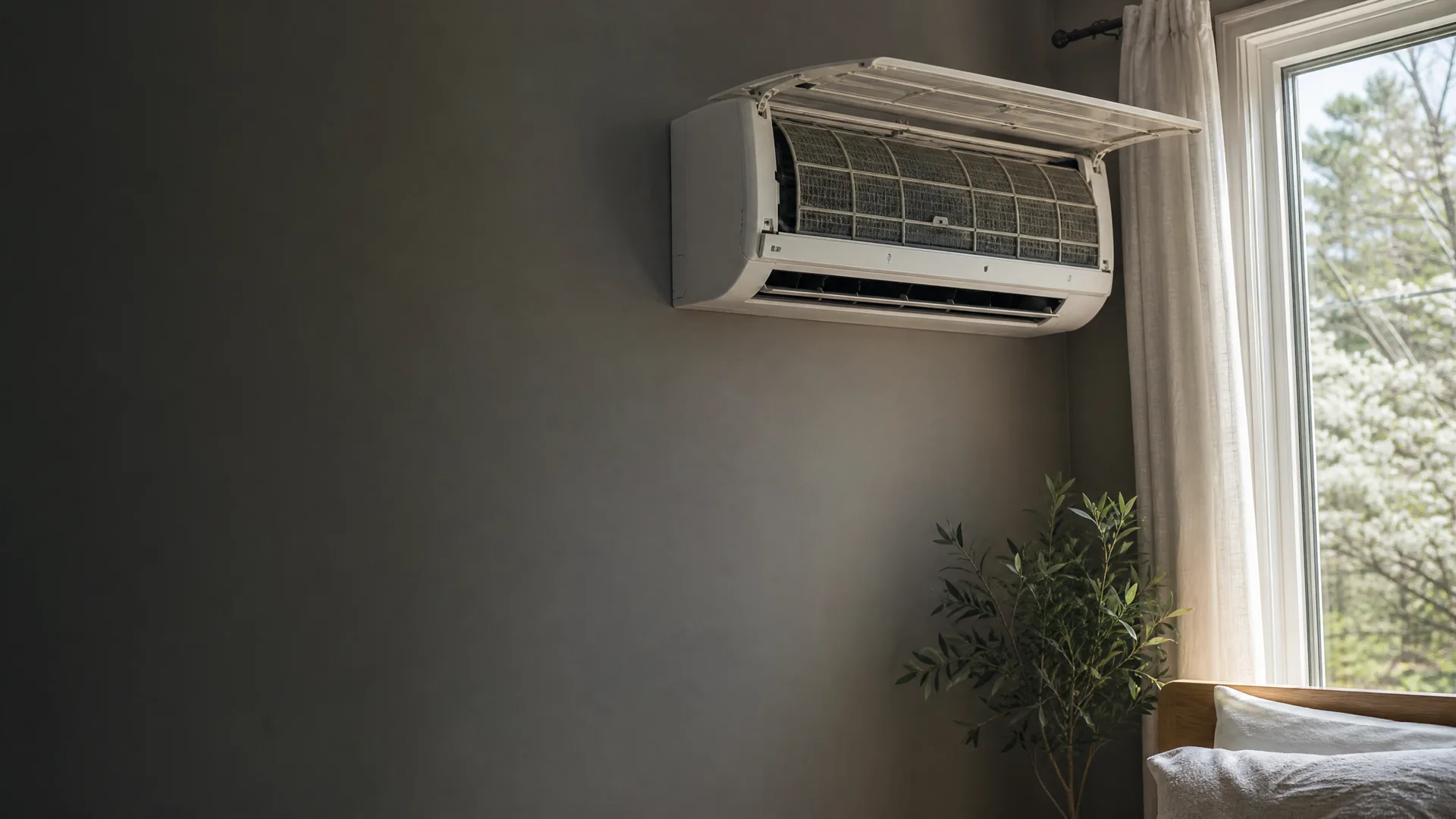
Spring afternoon, sun coming in low through the bedroom window, and you finally get the cover off the indoor unit to see what's behind that smell. The filter screen is grey with dust, the kind that's been sitting through a winter of the heat running and nobody thinking to check it. You pull it halfway out and catch the smell stronger now, damp and a little sour, coming off the screen itself. Behind it the coil is shadowed, hard to see clearly, but you don't need to see it to know. You set the filter on the windowsill and stand there a minute, cover still open, trying to decide if this is something you can rinse off yourself or if it's already past that.
Cooling runs June through August
Cooling runs June through August, so the coil sits wet and still for three months while it pulls moisture out of the air.
Heat runs October through May
Heat runs October through May, which means the system switches modes often and the coil rarely stays fully dry for long.
Power here costs 15.91 cents per kilowatt-hour
Power here costs 15.91 cents per kilowatt-hour, close to the national average, so running the fan alone to dry the coil costs little.
NOAA nClimDiv 1991-2020 · EIA-861 2025
Open the front cover of the indoor head and you're looking at the whole system. There's no attic ductwork carrying the smell from somewhere else. The coil sits right behind the filter, and every time the unit cools, moisture collects on it the same way it collects on a cold glass set out on a counter. That water is supposed to run off the coil into a small drain pan, then out through a condensate line to the outside. When all of that works the way it should, the coil dries between cycles and nothing has time to grow. The problem starts when something slows that process down. A blower wheel coated in dust holds dampness against its own blades even after the coil has dried, so the smell keeps coming back even on dry days. A dirty filter does something similar from the front side, blocking airflow and holding humid air right against the coil instead of letting it move through. And if the drain line has algae growing inside it, the line narrows or blocks, water backs up into the pan, and now you've got standing water sitting inside the unit instead of draining away. Any one of these on its own can cause the smell. Together, they're the usual combination behind a mini split that smells musty every time it kicks on, whether it's running heat or cooling.


A licensed local pro takes the request for your mini split tune-up.
There's no charge for the request.
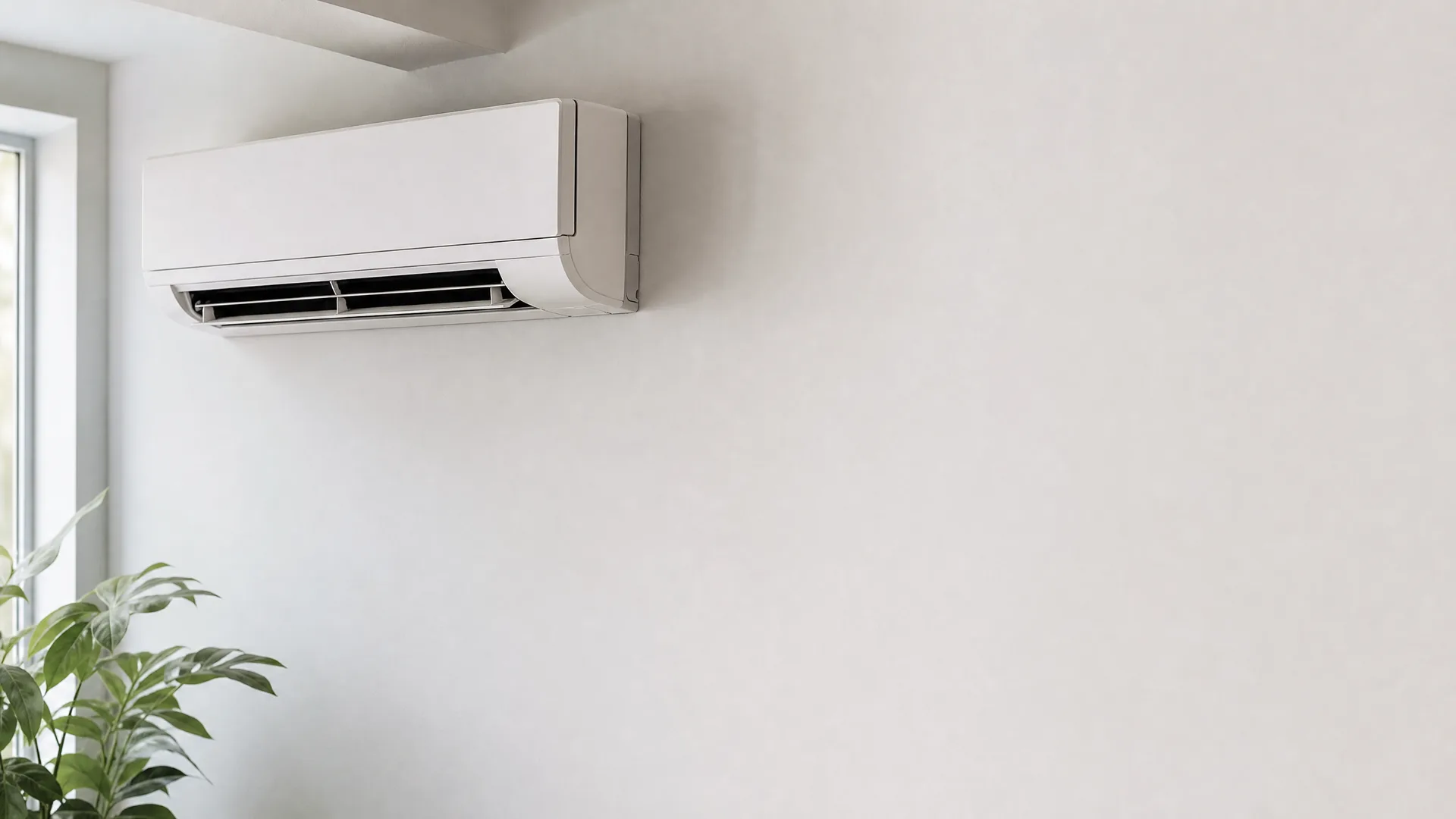
A mini split's coil dries fastest when air moves across it. Shut the unit off and the fan stops first, but moisture left on the fins has nowhere to go. In Denver's dry air that would normally happen quick, but inside the sealed head there's no airflow to push it out. Standing water on metal, with dust already caught in the fins, is what mold needs. That's the part a filter rinse at home never reaches.
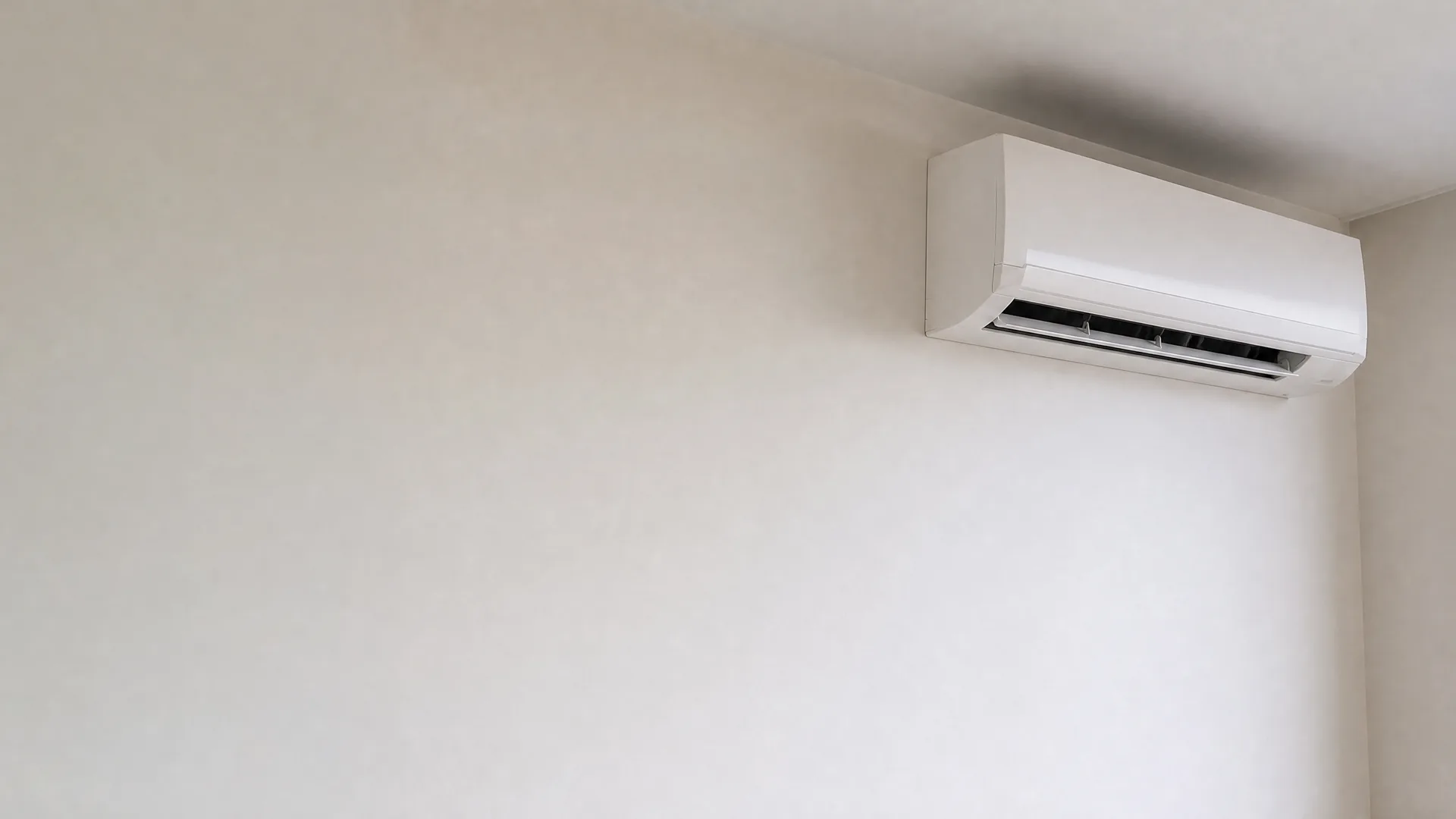
The drain pan under the coil carries condensate out through a small line to the outside. Dust and biofilm narrow that line over time, and once it's slow enough, water backs up and sits in the pan instead of draining. Standing water in the pan feeds the same growth that's behind the smell, right at the bottom of the unit where you can't see it. A clear drain line is one of the few things that keeps that pan dry between cleanings.
You probably caught it first in the bedroom, right when the unit kicks on, that damp basement smell that fades after a few minutes and comes back the next time it cycles. Maybe you've noticed it's worse after a stretch of the system running steady, or that it's stronger in the morning before the room has had air moving through it. Some households notice a faint smell on their clothes or bedding if the unit sits close to the closet. None of that means the air itself is dirty, but a coil that stays damp long enough to grow something will keep feeding that smell back into the room every time the fan turns on, and it won't clear up on its own.

Air moves out across the room without any smell behind it. The panel is clear, the vents are open, and the coil behind them is doing its job drying out between cycles instead of sitting wet.

Dust has built up on the panel, the vents, and the louvers where you can see it. Behind that same panel, the coil and drain pan are holding onto moisture the dust is helping trap, which is where the smell is coming from.






The blower wheel sits behind the filter, and it's shaped to move air, not to be cleaned easily. Dust sticks to its blades along with whatever moisture is in the air, and a rinse of the filter screen never touches it. Behind that is the coil, the only part in the whole system that gets cold and wet, since the refrigerant lines run straight through the wall to the condenser outside. Below the coil, the drain pan has a slight tilt built into it so condensate runs out through a small drain line. It doesn't take much sludge in that line to slow the water down, and once it backs up, it sits in the pan instead of draining away. None of this is reachable by pulling the filter out. Getting to the coil and the wheel behind it takes the cabinet apart, which is why a coil cleaning uses a rinse made to break down what's growing in there, not just move the dust around.


Three months of cooling means three months where that coil is wet and your mini split is running long enough for a musty smell to build. The other nine months, a dirty coil just sits there, damp and quiet, giving mold even more time to settle in before summer brings it back.
NOAA nClimDiv 1991-2020
The musty smell comes from a wet coil and drain pan that haven't been cleaned, not from anything wrong with the air in your home. A mini split technician who services these units all year in Denver has seen this same smell after a dry summer and a long heating season, and knows where to check first and what to clean without pulling the unit apart unnecessarily. You'd be working with one licensed local contractor, not fielding calls from several companies trying to win the job. That means you explain the smell once, to someone who already knows what three months of cooling and a long winter does to a coil that never fully dries. The unit on your wall can run clean again, air moving out with nothing behind it. Getting there just takes someone who knows this equipment opening it up and doing the part a filter rinse can't reach.
Skip the calls to every shop