
A mini split in Colorado needs its filters cleaned every four to six weeks through summer, and a full service once a year, usually in spring before the dry heat sets in. Dust and pollen here are fine and dry, not the heavy, damp grime that clogs coils in wetter climates, but that fine dust still packs into the filter fast when the unit runs daily through a hot, dry summer. A dirty filter blocks airflow, and the indoor coil has to work harder to pull heat out of the air, so your unit runs longer to cool the same room. Since most homes here heat with gas, the mini split mainly carries the cooling load, and that summer stretch is when filters load up fastest. The outdoor unit needs a look too, mainly to clear leaves and cottonwood fluff from the coil fins so it can shed heat properly. Skip this and you'll notice it as weaker cooling and a system that runs longer than it should.




The filter on a mini split is a fine mesh, and dry climates load it fast. Colorado dust doesn't clump, it sifts straight through the weave until airflow across the indoor coil drops.
Weak airflow makes the coil run colder than it should, and that coil can ice over in the middle of a hot afternoon. A clean filter is what keeps that from happening.


Why does your mini split seem to be working harder?
Look at the indoor unit when it's running. If the air coming out feels weak, not cold, or the room next to it never quite gets there on a hot afternoon, the filter is probably loaded with dust. Check it against the light. You'll see a gray film instead of a clean mesh. Some units start to ice up on the coil behind the filter, and you might notice water where it shouldn't be, dripping from the unit or pooling near the base. The outdoor unit can tell you something too. If the fan runs constantly and the house still doesn't cool, it's working to make up for air that can't get through. Left alone, a blocked filter and dirty coil make the compressor run longer than it needs to, and that's the part you don't want failing in July.

That dust problem comes from dry air, and the dryness itself matters just as much. Summer dew points here average 42°F, which is low, the kind of air that feels light even on a hot afternoon. A mini split moves heat, not moisture, when the air is already this dry, so the indoor coil isn't pulling much water out as it runs. That sounds like less work, but it means dust stays dry and airborne instead of settling, and more of it ends up pressed into the filter. The payoff for keeping up with cleaning is steady: a clear filter lets the unit cool the room without strain, and you'll feel it in how fast a room responds on a hot afternoon.
NASA POWER T2MDEW county cells weighted by homes
Filter Rinses or a Full Service
Clean filters yourself
- Pull the filter every four to six weeks through summer and rinse it under the tap, which takes a few minutes and no tools.
- You catch the airflow drop before the coil gets cold enough to ice over, since you're the one looking at it each time.
- You can't see the coil itself or the blower wheel behind it, so grime there keeps building even with clean filters.
- Dry Colorado dust gets into the drain line and the fins in ways a filter rinse doesn't reach or show you.
- You still need someone for the yearly service, so this only covers part of the year's work, not all of it.
Yearly full service
- A licensed local tech opens the unit, checks the coil, the blower wheel, and the drain line, and clears what the filter never caught.
- Someone who works on mini splits every season in this climate knows which parts tend to load up with dry dust first.
- One contractor handles it, so you're not fielding calls from several companies or explaining the same thing twice.
- Spring timing means it's done before the dry heat sets in, so the system starts summer clean instead of already behind.
- You skip the back and forth of comparing quotes and sorting through who to trust, since it's already arranged for you.
- You still need to pull the filter yourself between visits, since a once-a-year service doesn't cover the weeks in between.

Keeping up with it yourself
You can stay on top of the filter easily enough. The yearly service is a different matter. It means opening the indoor unit, checking the coil and the drain, flushing the line, and looking over the outdoor unit before the next stretch of hot, dry weather sets in. Most evenings after work aren't built for that, and getting it wrong on a sealed system isn't worth the risk.
Finding someone to do it
Left on your own, this usually means searching around, calling a few places, explaining the same thing about your unit twice, then sitting with quotes that don't quite match up. A request here goes to one local contractor instead, someone who services mini splits all through a Colorado summer and already knows what the dry dust and low humidity tend to do to a coil.
Power costs 15.69 cents per kilowatt-hour statewide
At that rate, a mini split left to run with a clogged filter costs you more to move less heat, since the coil is doing extra work for the same cooling. A clean filter keeps your system pulling its weight instead of your wallet.
EIA-861 2025 statewide residential average


Skip calling around
You can keep up with the filter, but the yearly service means getting into the coil, the drain line and the outdoor unit, and most homeowners don't have the tools or the time to pull an indoor unit apart and put it back together correctly. Finding someone to do it usually means calling around, explaining the system you have, and sorting through quotes that don't match up. A local contractor who services mini splits all summer has already seen what dry Colorado dust does to a coil that's gone a year without a flush, and knows what to check before the heat sets in again. Sending the request here puts it in front of one contractor who works on this equipment regularly, not a handful of companies competing for the job. That's one call to make instead of five, and one person who already knows what Colorado summers do to a mini split left on its own too long.


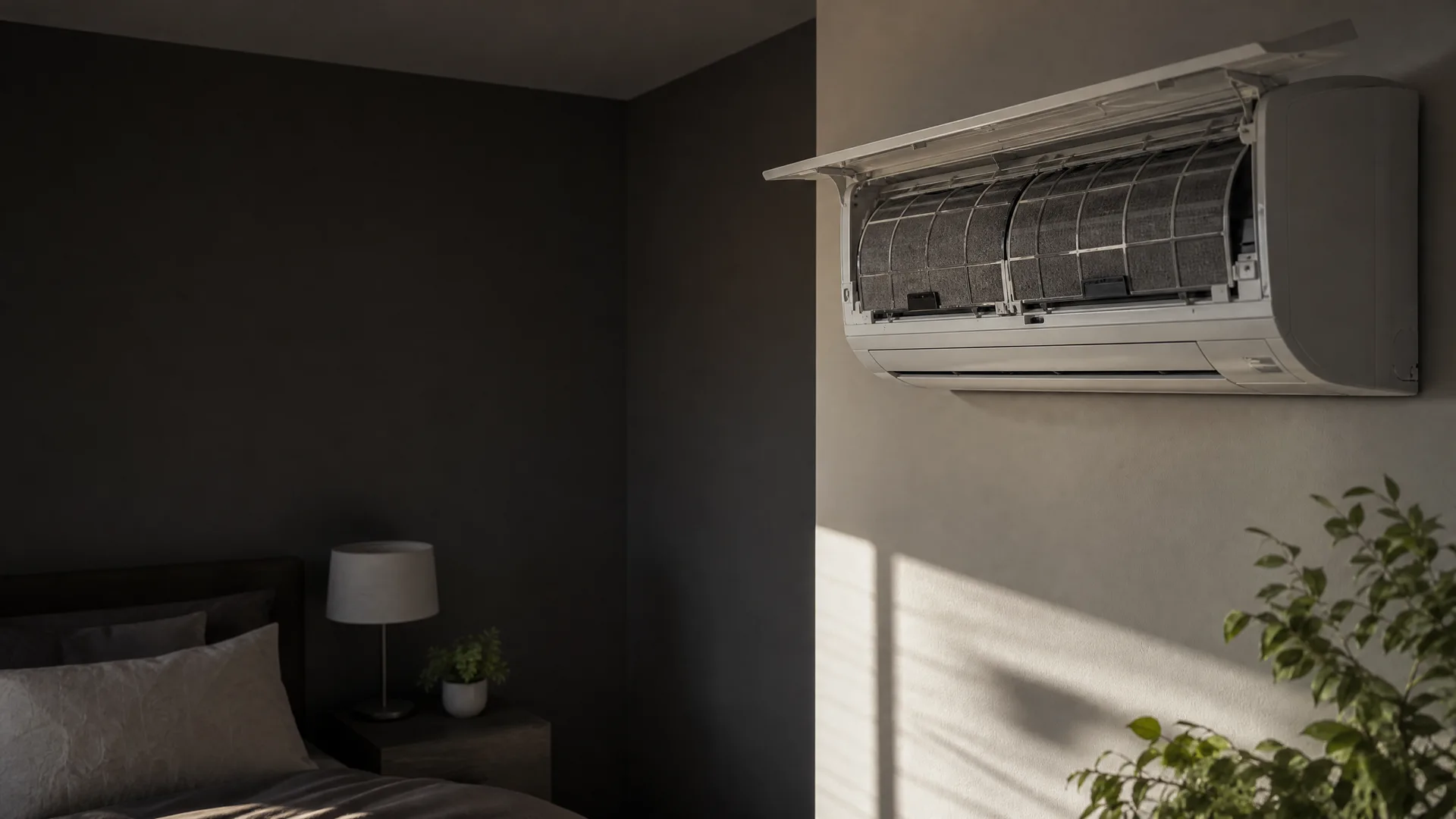
It's a Saturday morning in April, sun already bright through the blinds. You've got the front cover of the bedroom unit popped open, looking for what's slowing the airflow you noticed the night before. The filter screen slides out grey with a season's worth of fine Colorado dust, the kind that never clumped, just worked its way in week after week. You hold it up to the window light and can barely see through the mesh. The rinse at the bathroom sink only takes a minute. You set it on the towel to dry before summer really gets going.

Twice a season, once a year
Clean the filter every four to six weeks from May through September. Get the full service done once a year, in spring, before the dry heat sets in. That's what keeps a mini split in Colorado running the way it's supposed to.
The filter part you can do yourself on a Saturday morning. The yearly service is more involved, the coil, the drain line, the outdoor unit, and it needs someone who knows mini splits specifically, not just furnaces and central air, since most homes here heat with gas and a lot of contractors rarely touch this equipment. Finding one who services this brand regularly, then getting on their schedule before summer, is its own chore. A local contractor who works on mini splits every season already knows what a Colorado summer does to the coil and the filter, so you're not explaining your system from scratch or waiting on someone who has to look it up.


Mini Split Maintenance
Describe it once

- Describe your mini split job, and a local pro who handles it gets in touch.
- Say what's going on with your mini split, and a pro who works on them reaches out.

- Once you send the form, finding a pro is off your list.
- After you send the request, you're done searching.

- Fill out one short form instead of calling around.
- Explain the job once and skip repeating it on every call.

- Only one pro gets your request, so you hear from one company.
- Your request stays with one local pro.