




Illuminated stone-and-timber mountain homes line a quiet street at dusk, with evergreen trees and a mountain range in the background.

Mini Split Installation in Greeley, CO

Tell us about the job

Takes about a minute. No obligation.

New system or replacementMini-splitWeld County, CO
Step 1 of 2

What ZIP code is the job in?

Gas heats 73.0% of homes in Weld County, the most of any fuel here. A mini split works differently. It runs on electricity, and it handles both heating and cooling from the same unit, so homeowners usually add one alongside an existing furnace rather than replace the gas system outright. That makes it a good fit for a room or an addition the furnace doesn't reach well, or for a home that wants cooling without ducts for it. Electric heat only serves 18.0% of homes here, so most installs are adding capacity, not swapping out what's already there.

8 months
October through May, your system heats
3 months
June through August, it cools
16°F
the average winter night it heats against
86°F
the average summer afternoon it cools against
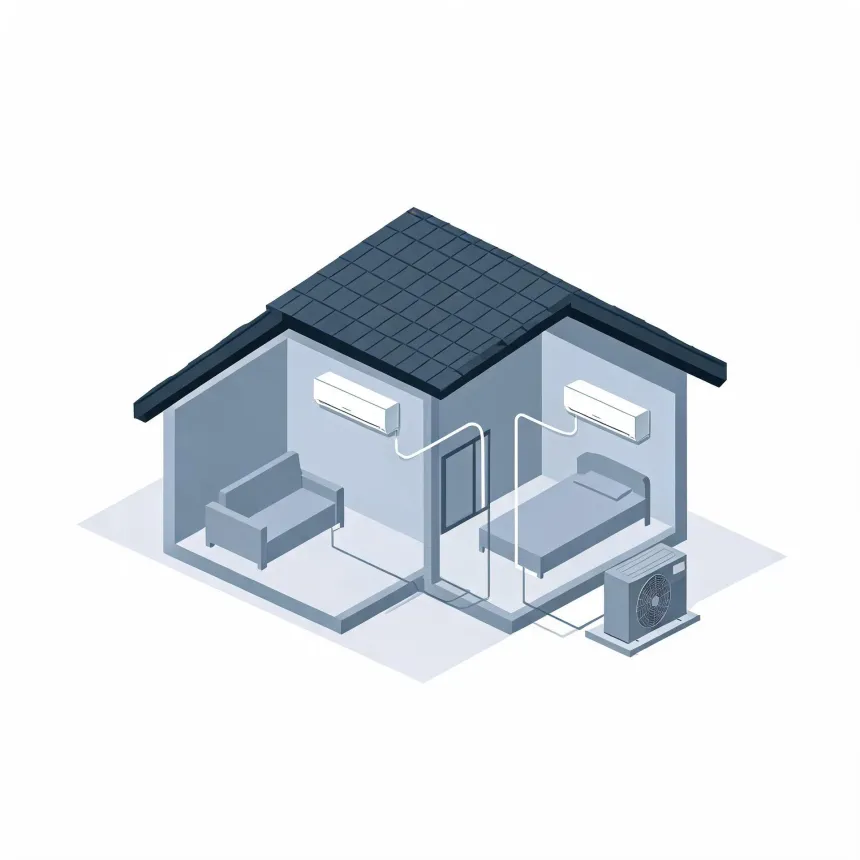
Isometric illustration of a cutaway house with two rooms, showing two wall-mounted indoor air conditioning units connected by lines to a single outdoor condenser unit outside the building.
Your system heats October through May and cools June through August.

NOAA nClimDiv, 1991–2020 normals

Colorado electricity ran 14.92 cents per kilowatt-hour in 2024.

A mini split still costs less to run than electric resistance heat, but at this rate the highest-efficiency models take longer to pay for themselves, so pick one for how well it heats and cools the room, not just its efficiency number.

Weld County sees its share of hail, wind and winter storms, but none of it changes what size mini split a room needs

637 severe weather events from 2015 to 2024
13% of homes statewide lost power a day or more in 2024
172 damaging wind events from 2015 to 2024

Summer here is short. Cooling runs about three months, June through August, with afternoon highs averaging 86. A mini split sized for the room handles that without trouble. Nothing about the climate here calls for an oversized unit or a higher-tier model than the room needs. The outdoor unit itself is built to take sun, wind and cold, so the hail and wind that pass through Weld County don't change the sizing decision either. Picking the right size for the square footage and how the room is used still matters more than anything else.

Any mini split installed here has to meet zone 5B's efficiency minimums

Weld County falls under climate zone 5B, where winters set the bigger load. A ductless mini split counts as a split-system heat pump under the federal standard, so any unit made from 2023 on has to hit at least 14.3 SEER2 for cooling and 7.5 HSPF2 for heating. That floor narrows the field before you start comparing brands, and a federal tax credit is available on top of it for systems that qualify.

Find a contractor
A man in a cap, gray shirt and tan work pants, seen from behind, carries a canvas tool bag up stone steps toward a red front door, with a potted plant beside the entry.
A white outdoor air conditioner condenser unit mounted on metal wall brackets against gray horizontal siding, with a blue sky and white clouds behind it.

Get it in before June

Cooling here runs June through August. If you're installing before summer, May is the month to get it done. Book it after the heat shows up and you're waiting on a crew with everyone else who waited too.

The number of zones changes the job

A single room needs one indoor head and one outdoor unit, a straightforward line set run and a hole through the wall. Add a second or third zone and you need a multi-zone outdoor unit sized to run all of them, plus a line set run to each head. More zones means more labor, more refrigerant line, and a bigger outdoor unit, even before you look at the heads themselves.
Where the outdoor unit can go matters

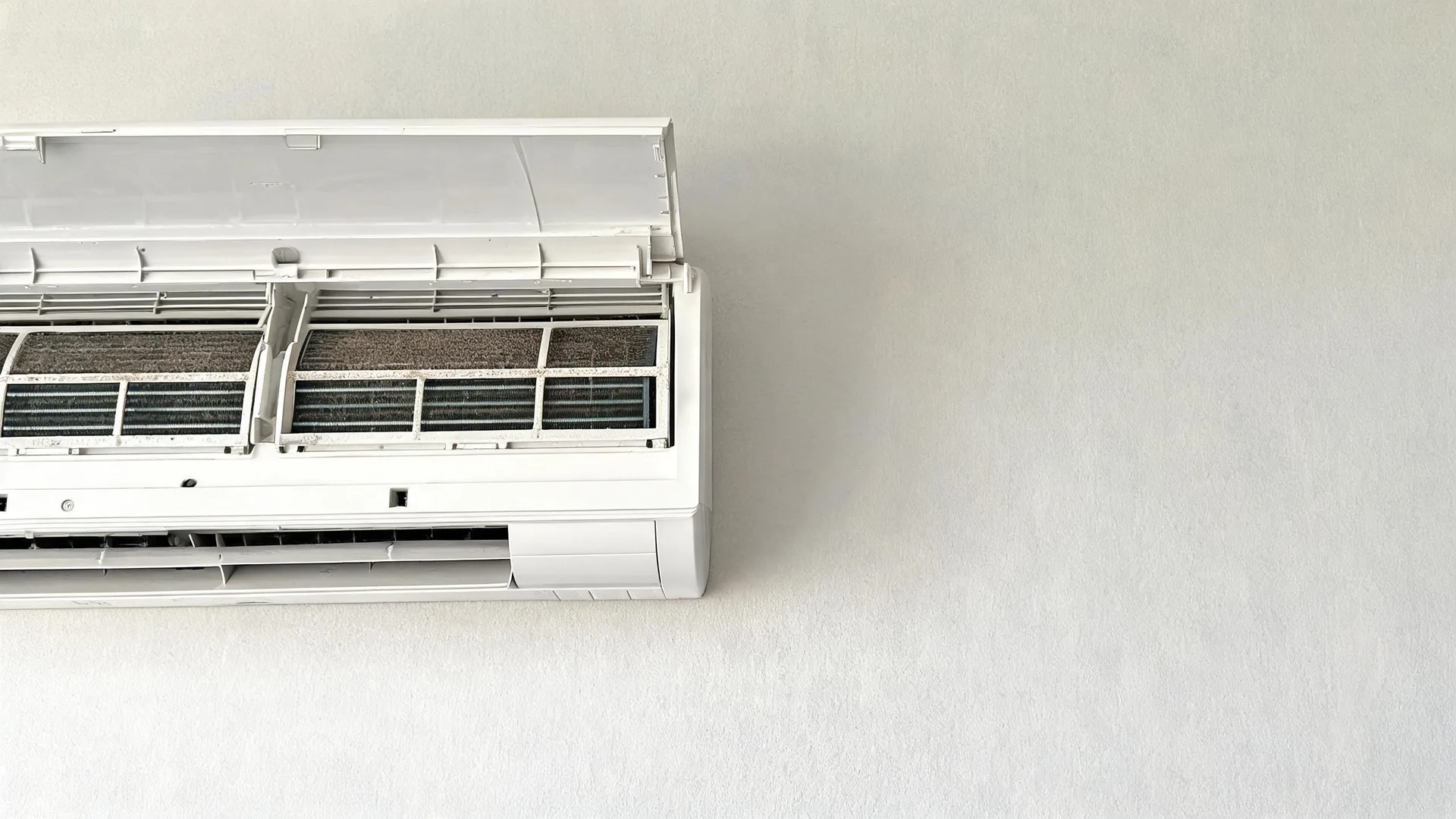
The indoor head and outdoor unit need a clean line set path between them, usually a straight shot through an exterior wall. If the only workable spot for the outdoor unit is far from the room being served, the installer has to run more line set, sometimes routing it through an attic or along the outside of the house, and that adds time and material the straightforward install doesn't need.

Once you've settled on size and zones, the real differences between quotes show up in what each contractor is proposing to put in. Ask what SEER2 and HSPF2 the unit actually carries, not just that it clears the minimum, since systems that both qualify can still perform differently in your coldest and hottest weeks. Ask whether the indoor head is a wall-mount, a ceiling cassette, or a floor unit, because that changes where it can go and how the room feels with it running. Ask what the warranty covers on the compressor versus the labor to replace it, since those are often different lengths. And ask who commissions the system once it's in, because a mini split that isn't charged and set up correctly won't hit the ratings on its spec sheet no matter how good the equipment is.

Install day starts with the line set path and the electrical, not the equipment. The crew mounts the indoor head first, usually on a bracket set into wall studs, then drills through the exterior wall for the line set, the refrigerant lines that connect it to the outdoor unit. Those lines get run, connected, and then the whole system is pulled down to a vacuum to clear out air and moisture before any refrigerant moves through it. Skip that step or rush it and the system can lose efficiency or fail early, even if everything looks fine on the outside. The outdoor unit needs its own electrical circuit, separate from household wiring, so expect an electrician's work alongside the mechanical install. Once it's charged and powered on, the installer checks pressures and airflow against the spec sheet rather than just confirming it blows cold or warm air.