Mini split frozen up in Greeley, CO

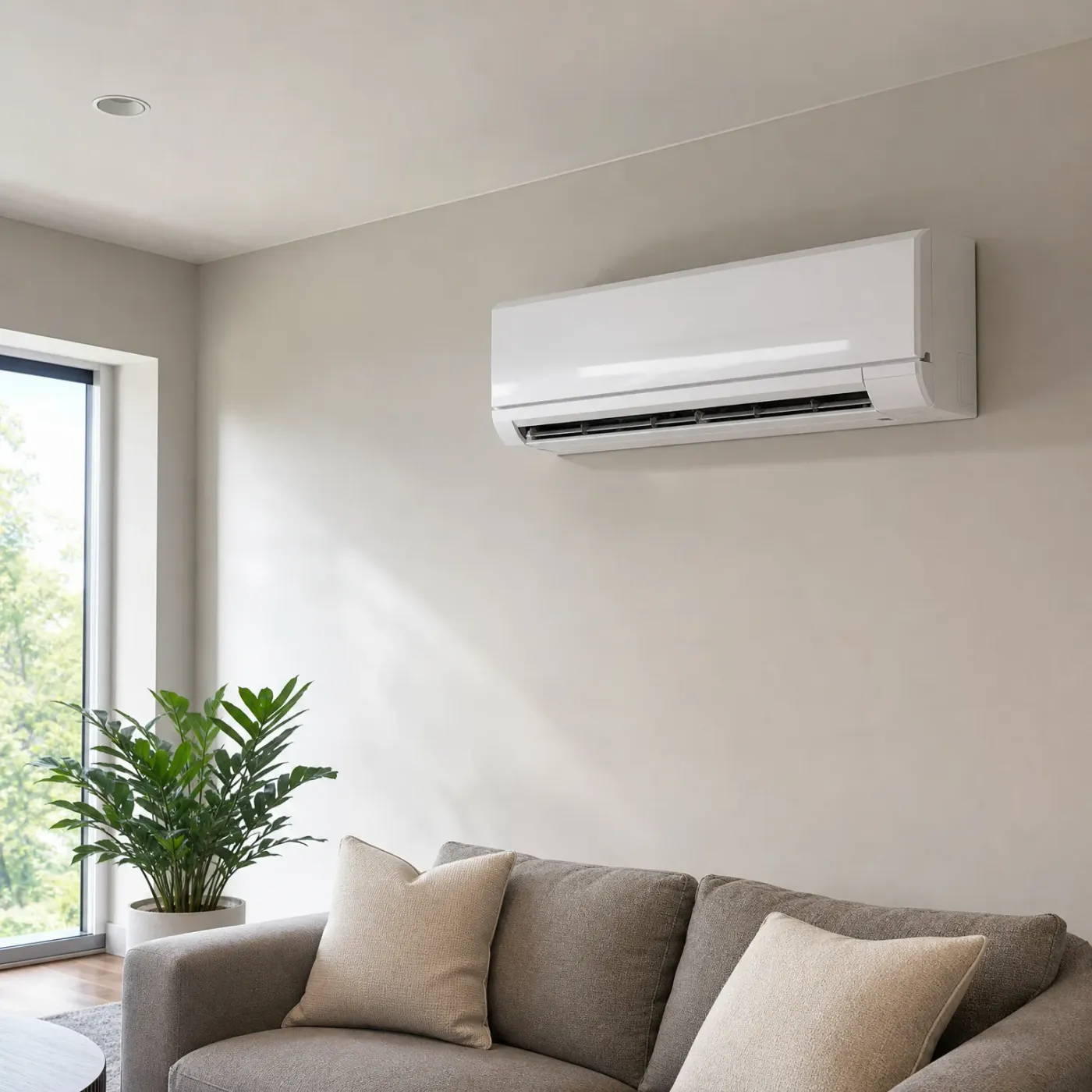
A white wall-mounted mini-split air conditioner indoor unit on a plain light gray wall.
Hand it off

A mini split that ices over in Greeley usually can't move enough heat out of the cold outdoor air to keep its coil above freezing. The system still has to run hard most winter days here, and if airflow across that outdoor coil is blocked, by a clogged filter, a failed defrost cycle, or snow packed around the unit, frost builds up instead of melting off between cycles. Low refrigerant does the same thing: less refrigerant means a colder coil, and a colder coil ices faster than it can shed. Once ice covers the coil, the system loses efficiency fast and can keep running without putting out real heat, which is often how people notice the problem in the first place. Left alone, that ice can damage the outdoor fan or the compressor. It needs to thaw fully, and the cause needs to be found, before it's safe to run again.

Why does your mini split keep freezing up here?

  • Cooling runs June through August

    Cooling runs June through August. That's three months where the outdoor coil works in hot, dry air, not the cold your mini split froze up in.

  • Heat runs October through May

    Heat runs October through May. Eight months of cold-weather operation means more hours where a blocked coil or low charge can turn to ice.

  • Power here costs 15.27 cents per kilowatt-hour

    Power here costs 15.27 cents per kilowatt-hour. A mini split fighting ice draws more of it just to keep running, let alone to heat your home.

NOAA nClimDiv 1991-2020 · EIA-861 2025

Frost that clears on its own

Some mini splits ice up during a hard cold snap, run their defrost cycle, and shed the frost within an hour or two once temperatures ease. If you catch a thin coat of frost on the outdoor unit and the system is still blowing warm air inside, it may be keeping up on its own. Switch it off, let the ice melt, and check the outdoor coil and the area around it for anything blocking airflow, like snow piled against the unit. If the frost doesn't come back the next day, you may not have a problem beyond that one cold stretch.


Ice that won't let go

A mini split that stays frozen for a day or more, or that iced up when it wasn't even that cold out, has something wrong with it. That can be a dirty filter, a fan that's slowed down, or refrigerant running low, and none of those clear up by waiting. Meanwhile the indoor unit keeps drawing power without heating your house, and the compressor is working against a blocked coil the whole time. Letting it run like that through a Weld County winter risks damage that costs more to fix than catching it now would have.

A bearded man in a gray long-sleeve shirt stands smiling and looking off-camera beside a kitchen counter with a white mug, with a living room, fireplace and wall-mounted television behind him.
A man in a dark green ribbed sweater stands smiling and looking off to the side beside a stone kitchen counter with a ceramic mug, with a dining table, pendant lights, and large windows in the background.
A smiling man in a dark gray sweater stands indoors looking to the side, with a kitchen counter holding a ceramic mug and open wooden shelves behind him and a living area in the background.
A smiling man in a dark green sweater sits at a wooden table with a light gray mug in a kitchen with white tile backsplash, pendant lights, and an adjoining living room visible.
A white wall-mounted mini-split indoor unit high on a light beige interior wall above a gray sectional sofa with beige cushions, with a potted green plant and a window at left.

Hand off the mini split problem

Describe what your mini split is doing once, in one form.

Send the request today and let a mini split pro reach out to you.

Hand off the search

It costs nothing to send, and you don't have to hire anyone.

Why does the ice on your mini split keep coming back

You'll see it on the outdoor unit first, a white or gray coating thickening over the coil, sometimes spreading down the line set. Indoors the head may keep running but barely push warm air, or it cycles on and off without warming the room. Some units make a hissing or dripping sound as the ice melts and refreezes. If you let it go, ice can work into the fan blades and crack them, and water from the melt can pool and find its way into the wall or the floor below the indoor unit. A system that keeps freezing back up within a day isn't clearing on its own, and running it through another cold night won't fix what's blocking the airflow.

A wall-mounted mini-split air conditioner with a water streak running down the wall beneath it to a gray towel on the wood floor, beside a desk with a potted plant, lamp, and office chair near a window.

It's late July, mid-afternoon, and you're at your desk in the home office working with the door shut against the heat outside. You notice the carpet feels damp under your chair before you notice anything else. Then you see it, a wet streak running down the wall below the indoor unit, darkening the paint. You go get a towel and lay it along the baseboard, and it's soaked through in twenty minutes. The mini split is still blowing air, but it's not cold anymore, just room temperature air pushing out while water keeps finding its way down the wall behind your desk.

Cooling runs June through August

Three months isn't long enough to wear a system out on its own. If your mini split is icing up now, in the middle of summer, the coil is freezing in warm air, which points to low refrigerant or a coil that isn't getting the airflow it needs.

NOAA nClimDiv 1991-2020

A man in a dark blue t-shirt sits on a grey couch laughing while looking down toward an open laptop in the foreground, with a blurred kitchen and potted plant behind him.
A bearded man in a plaid flannel shirt stands indoors looking out a frosted window at a snowy scene, with a blue mug on the sill and tiled wall and shelving behind him.

What the ice is telling you

  • Ice on the outdoor unit means the coil can't shed heat fast enough, whether that's from a hard freeze, low refrigerant, or blocked airflow.
  • Frost that melts off within an hour or two on its own during a cold snap usually isn't a sign of a failing system.
  • Ice that keeps coming back, spreads down the line set, or shows up in warm weather points to a problem that needs a diagnosis, not another defrost cycle.
  • A mini split running iced up for days can damage the compressor, so waiting it out costs more than finding someone to look at it now.
  • Sorting through contractors, calling around, and explaining the same problem twice is the part you don't have to do once you send the form.

Ice on your mini split is the system telling you it can't move heat the way it's supposed to. In a hard cold snap, that frost clears on its own within an hour or two once the defrost cycle runs and temperatures ease up. That's normal here, especially on the coldest nights between October and May. What isn't normal is ice that keeps coming back day after day, spreads down the line set, or shows up on the outdoor unit in the middle of summer when the air is hot and dry. That pattern means something underneath isn't working, whether it's refrigerant that's leaked out, a coil that isn't getting enough airflow, or a part that's failed and is making the system run harder than it should. A mini split left to run iced up for days isn't resting, it's straining, and that strain reaches the compressor, which is the most expensive part to replace. Waiting to see if it clears on its own costs you time the system doesn't have. The other cost is the one you don't have to pay. Instead of searching for a contractor who works on mini splits, calling a few and waiting on callbacks, and explaining the same ice problem to each one before you get a straight answer, sending the form does that part for you. You still get a system that needs a real diagnosis, but you stop being the one who has to track down who can give it.

A white wall-mounted mini-split air conditioner on a dark brown interior wall above a beige sofa with a dark cushion, beside a curtained window showing green foliage and a balcony railing.

One request and it's handed off

Skip calling shops to ask who repairs mini splits in Weld County.

RepairMini-splitWeld County, CO
Step 1 of 2

What ZIP code is the job in?