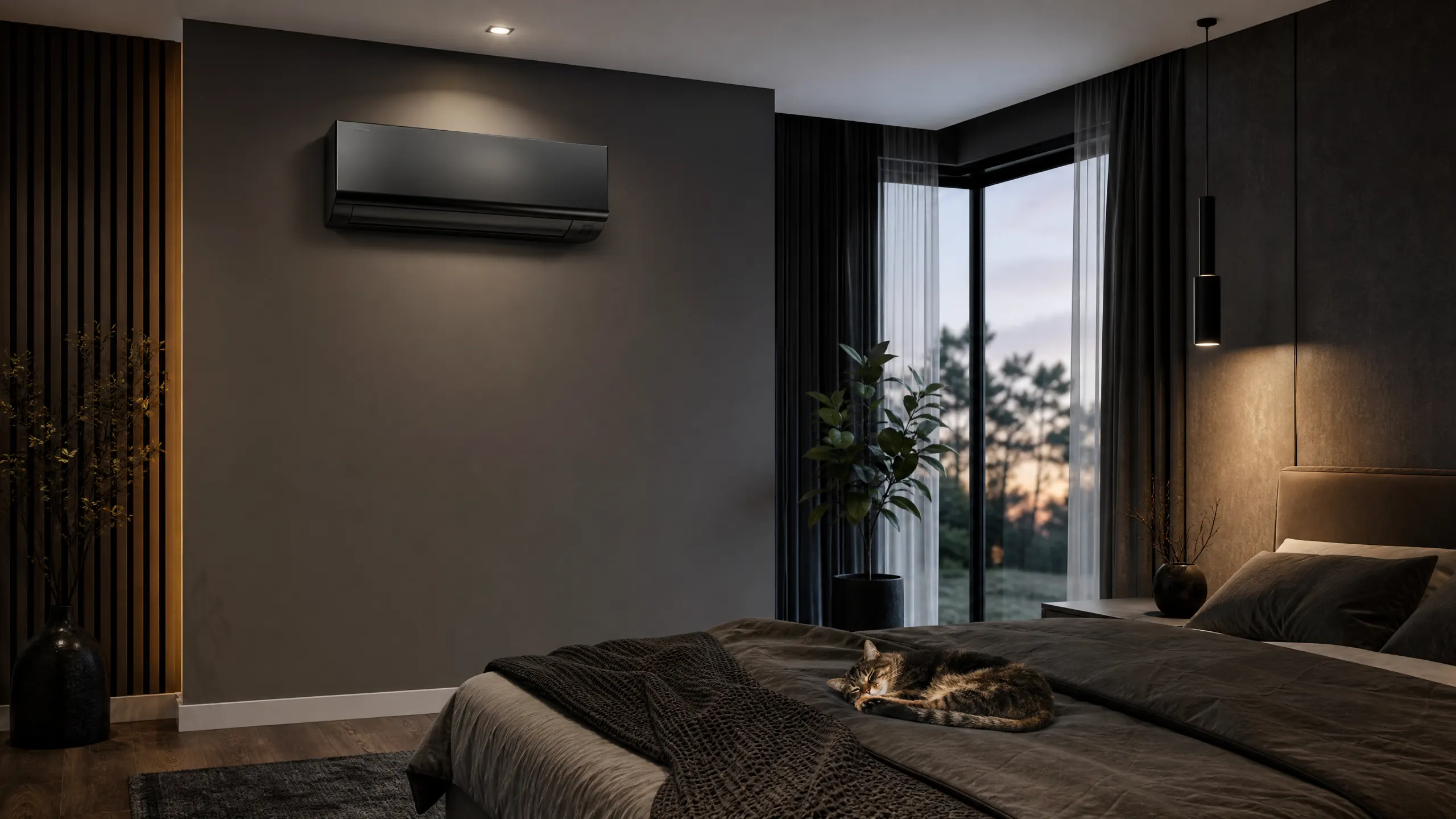






A tabby cat rests on a made bed in a dark modern bedroom equipped with a wall-mounted split air conditioner.

Mini Split Installation in Denver, CO

Tell us about the job

Takes about a minute. No obligation.

New system or replacementMini-splitDenver County, CO
Step 1 of 2

What ZIP code is the job in?

Most homes in Denver heat with utility gas, 60.8% of them. Electricity accounts for another 35.6%, and that's the group where mini splits tend to show up first, since there's no furnace or duct system already doing the job. A mini split works alongside a gas furnace too, taking over a room or an addition that the ductwork never reached well. Either way, the question is what you're trying to heat or cool and whether it needs its own system or help from the one you've got.

8 months
October through May, your system heats
3 months
June through August, it cools
19°F
the average winter night it heats against
87°F
the average summer afternoon it cools against
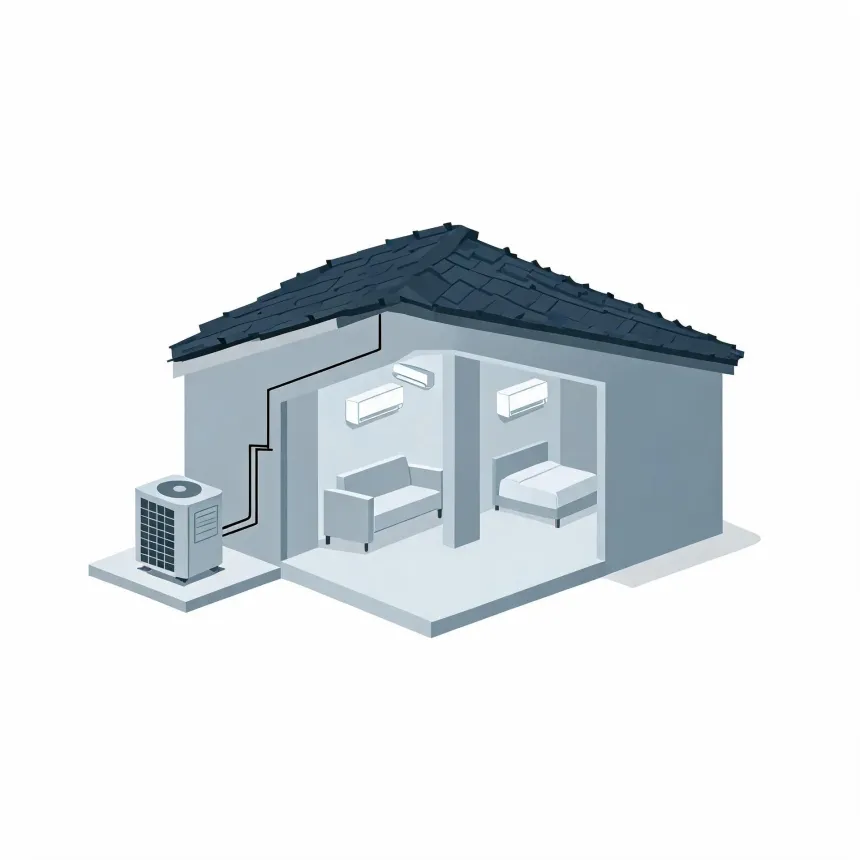
Isometric illustration of a cutaway single-story house with a dark shingled roof, showing three wall-mounted indoor air conditioning units in two rooms connected by lines to an outdoor condenser unit on a pad outside.
Your system heats October through May and cools June through August.

NOAA nClimDiv, 1991–2020 normals

Half the homes in Denver County were built in 1975 or earlier, half in 1975 or later.

A mini split doesn't need to know which one yours is. Standard sizing fits either.

Three months of summer, nothing extreme about it

Cooling runs June through August
Summer afternoons average 87°F
64 damaging wind events from 2015 to 2024
A standard mini split fits hereColorado homeowners paid 14.92 cents per kilowatt-hour in 2024, and that's the number a standard system is sized against.

Denver falls under zone 5B, a cool, dry climate where heating carries more of the year's work than cooling does. Any ductless heat pump installed here has to meet the same federal minimum as other split systems, since the standard doesn't treat ductless as its own category. For units built from 2023 on, that means at least 14.3 SEER2 for cooling and 7.5 HSPF2 for heating. Most mini splits on the market now clear that bar without trouble. On top of meeting the standard, a mini split can qualify for the federal energy efficiency credit, which helps offset the cost of a heat pump system that meets the requirements.

Have it in before June

Cooling in Denver starts in June and runs through August. Put the mini split in before then and it's running the first hot day instead of catching up to it.

Find a contractor
A man in a dark shirt and tan work pants carries a worn canvas tool bag up concrete steps toward a red front door of a gray clapboard house, with a potted shrub in a red planter beside the entry.
A white mini-split air conditioner outdoor condenser unit mounted on metal brackets against a beige stucco exterior wall, with a blue sky and scattered clouds in the background.

Sized to the room, not the house

A mini split sized too big will cool the room fast and shut off before it pulls the moisture out of the air, so the room feels clammy even though the thermostat says it's at temperature. It does that over and over, all day. One sized too small just can't keep up when the sun's hitting that room hardest, and it runs flat out trying. Sizing is worked out room by room, not off the square footage alone. A tech looks at the floor area, but also the window glass facing that room, the wall insulation, the ceiling height, and anything else inside giving off heat. Rooms that look the same size on paper can call for different sized heads once all that's counted. Get it right and the system cycles on and off at a steady pace, runs quiet, and holds the room wherever it's set, on the mildest day and the hottest one.

The number tells you the ratio, not the bill

SEER2 compares the cooling a unit puts out against the electricity it takes to do it. A higher number means more cooling per watt of power, nothing more than that. It doesn't account for how the room holds heat, how many heads are running, or how the homeowner sets the thermostat. Houses running the same rated unit can still see different power bills because of all the things the rating doesn't touch.
The rating only means what it says if the sizing is right

A mini split rated high for efficiency still has to be matched to the room it's heating and cooling. Oversize it and the unit shuts off before it's done its job, cycling on and off instead of running steady. Undersize it and it runs flat out just to keep up, drawing more power than the rating would suggest. The number on the label describes the equipment, not the installation, and the installation decides whether that number shows up in how the system actually runs.

If this is replacing a window unit or electric baseboard, that equipment usually just gets hauled off, nothing about it feeds into the new system. If it's going in alongside a gas furnace, the furnace and ductwork stay exactly as they are. A mini split doesn't tie into existing ductwork at all, it runs its own refrigerant line to each head, so there's no shared equipment to sort out between old and new. The only thing that carries over is the electrical circuit, and even that often needs upgrading to handle the new unit rather than reusing what was there.

The outdoor unit goes in first, set on a pad or mounted to a bracket outside. Each indoor head gets mounted next, on the wall or ceiling in the room it serves. A hole gets drilled through the wall behind each head. A line set runs through that hole, carrying the refrigerant lines, a drain line, and the wiring, all connected back to the outdoor unit. Before any refrigerant goes in, the line gets pulled down to a vacuum to clear out air and moisture, since either one left behind keeps the system from running right. Once that vacuum holds, the system gets charged and switched on. A tech runs it through both heating and cooling, checking that each head answers to its own controls and that the line hidden behind the wall isn't leaking anywhere along its length.