




Heat pump tune-up in Denver, CO

Tune-up, service, or cleaningHeat PumpDenver County, CO
Step 1 of 2

What ZIP code is the job in?

A heat pump tune-up checks the things that make it struggle through a Denver winter: refrigerant charge, the reversing valve that switches it from cooling to heating, the defrost cycle, and the outdoor coil where ice builds up when something's off. Denver winters push a heat pump hard, and one that's low on charge or slow to defrost will run longer and still fall short on cold mornings. A tune-up usually happens once a year, often in fall before it has to carry the house through winter. A technician checks the coil for ice and airflow problems, tests that the system switches between heating and cooling without trouble, and looks at electrical connections that loosen over time. Catching a weak part now means it gets fixed on a schedule, not at 6 AM when the house is cold and the system has already quit.

A woman in a gray turtleneck sweater sits on a couch under a blanket indoors, looking out a window toward orange autumn foliage, with a bookshelf and plants behind her.
A woman with gray shoulder-length hair in a cream knit sweater sits in an armchair under a blanket, looking out a window at orange autumn foliage, with a living room, houseplant and wooden table behind her.
A woman with gray hair in a cream knit sweater sits on a light sofa by a large window, looking out at trees with autumn foliage, with a dark mug on a wooden side table nearby.
A gray-haired woman in a dark knit sweater sits on a couch with a cream blanket and patterned pillow, looking out a window toward yellow and orange autumn trees, with wooden shelves and plants in the room behind her.

What does Denver weather actually ask of your heat pump?

  • Winter nights average 19°F

    Nights average 19°F in December and January, and that's when a heat pump has to work hardest to keep the defrost cycle and reversing valve doing their job.

  • Heat runs October through May

    Your system runs heat from October through May, eight months out of the year, longer than it spends cooling or sitting idle.

  • Cooling runs June through August

    Cooling only runs June through August here, so most of the wear on a Denver heat pump comes from the cold side, not the hot side.

NOAA nClimDiv 1991-2020

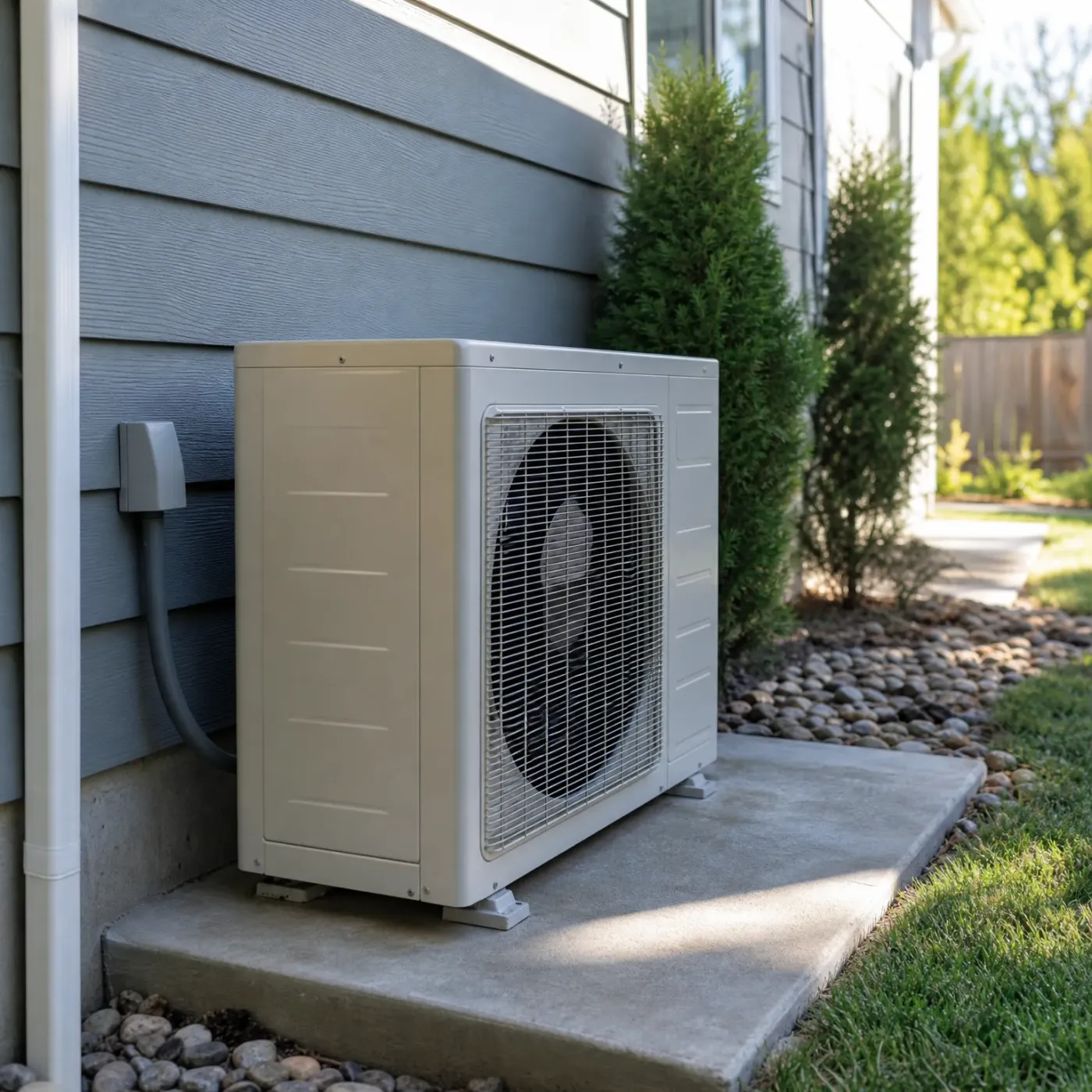
A gray outdoor condenser unit on a concrete pad beside a house with horizontal lap siding, a conduit and disconnect box on the wall, a shrub with white flowers at right and evergreen foliage at left.

Running clean

The coil is clear and the pad is level, so air moves through the way it should. A unit kept up like this cycles between heating and cooling without strain, and the defrost cycle clears frost before it turns to ice. That's what a tune-up aims to keep true through a Denver winter.


A weathered outdoor condenser unit on a concrete pad beside a house with white horizontal vinyl siding, with refrigerant lines and conduit running to a wall-mounted electrical box.

Worn down

Grime has built up on the grilles and the coil underneath is fouled, so the unit works harder to move the same air. Left alone, that strain shows up as weak heat on the coldest nights or a reversing valve that struggles to switch over. A tune-up catches this before December.

What does a heat pump tune-up actually check?

A heat pump has more going on than a furnace or an AC alone, since it runs both directions, and a tune-up that just checks the filter and calls it done misses what actually fails on a Denver winter night. You want to know someone is actually looking at the parts that matter before the cold really sets in.

It checks the parts that switch the system between heating and cooling

A contractor doing a heat pump tune-up checks the refrigerant charge first, since too little or too much makes the compressor work harder and cuts into how well it can pull heat from cold outdoor air. The reversing valve gets checked too, since that's the part that switches the system from cooling to heating, and a valve that sticks can leave you with cold air in January. The defrost cycle gets tested, along with the sensors and controls that trigger it, since that cycle is what keeps the outdoor coil from icing over on a 19°F night. The outdoor coil itself gets cleaned, since dirt or ice on it blocks the airflow the whole system depends on.

  1. Technician checks refrigerant charge against the manufacturer's spec

  2. Reversing valve is tested switching between heating and cooling

  3. Defrost cycle and sensors are checked for proper timing

  4. Outdoor coil is cleaned and cleared of debris

Is your heat pump struggling to keep up this winter

You might notice the outdoor unit running longer than it used to, or frost that builds up on the coil and doesn't clear between defrost cycles. Inside, the air coming from the vents feels cooler than it should, or the system seems to run constantly without the house ever quite reaching the temperature you set. Some homeowners hear a clunk or hesitation when the system switches between heating and cooling, which can mean the reversing valve is starting to stick. Left alone, a heat pump working this hard on a cold Denver night uses more power than it should, and a coil that stays iced over can leave you without heat when you need it most.

A woman in a cream knit sweater sits with eyes closed in an armchair beside an open window showing orange and yellow autumn foliage, with a mug and books on a small side table.
An older man with gray hair and a beard, wearing a dark blue fleece zip jacket, leans back in an upholstered chair with his eyes closed in sunlight near large windows, with a potted green plant and bare trees behind him.

Get your heat pump to the right pro

Send the form, and lining up the heat pump tune-up stops being yours to chase.

You're not committing to anything by asking.

Why defrost cycles matter most here

A heat pump moves heat from outside air even when that air is cold, and at 19 degrees there's still enough heat in it to pull inside. The catch is the outdoor coil picks up frost in that process, and the system has to pause and run a defrost cycle to clear it before ice builds up and blocks airflow. That cycle depends on a sensor reading coil temperature correctly and a timer calling for defrost at the right interval. If either one drifts off spec, frost can build faster than the unit clears it, and a Denver cold snap is exactly when that shows up as a system that won't keep the house warm.

What a clean coil changes

The outdoor coil is where the heat pump picks up warmth from the air, and anything coating it, dust, cottonwood fluff, dead leaves against the cabinet, cuts into how much it can absorb. A dirty coil makes the system run longer to move the same amount of heat, and it makes defrost cycles less effective since frost clings to dirt more than to bare metal. Clearing the coil and keeping the area around the outdoor unit open is part of what a tune-up checks, since it's one of the few things that affects both how the unit heats in January and how it cools in July.

An outdoor air conditioning condenser unit on a concrete pad beside a house with light horizontal siding and a concrete block foundation, with bare soil and small green plants around it.
Before you get your heat pump maintenance
A beige outdoor air conditioning condenser unit on a concrete pad beside a house with horizontal vinyl siding, with refrigerant lines and a disconnect box on the wall, surrounded by dark mulch and a green shrub at left.
After you get your heat pump maintenance

A tune-up catches a reversing valve that's starting to stick before it fails on the coldest night of January. Serviced now, it switches clean between heating and cooling all winter.

Skip it, and that same valve can get stuck in cooling mode while it's 19°F outside, leaving the house cold until a contractor can get out to replace it.

Power here costs 15.91 cents per kilowatt-hour

At 15.91 cents per kilowatt-hour, every hour your heat pump runs longer than it needs to shows up on the bill. A unit that's lost some refrigerant or has a reversing valve starting to stick draws more power to put out the same heat, and across a Denver winter that difference adds up.

EIA-861 2025

An outdoor condenser unit on a concrete pad beside a gray lap-sided house, with an electrical disconnect box and conduit on the wall and shrubs with mulch to the right.

Running clean

The grille and coil are clear, the pad is level, and the lines run straight to the disconnect. Air moves through the unit the way it was built to, so it doesn't have to work past dust or debris just to move heat on a cold night.

A weathered gray outdoor condenser unit on a concrete pad beside a house with horizontal vinyl siding, with conduit, refrigerant lines, and an electrical disconnect box on the wall behind it.

Running dirty

Dust and grime cake the grille and top panel, and dead leaves pile against the base. With airflow blocked like that, the coil can't shed heat the way it should, and the unit has to run longer to keep up on a January night.

A woman in a cream cardigan and jeans stands with one hand raised facing an open front door of a gray horizontal-siding house, with a black lantern wall light, a potted shrub with yellow flowers, and a stone-faced porch column.

A tune-up answers what Denver winters ask

A heat pump tune-up comes down to a handful of things checked and confirmed: refrigerant at the right charge, the reversing valve switching clean, the defrost cycle timed right, the outdoor coil clear. Those are the parts that carry your system through nights in the teens and back out again into a hot, dry summer. When they're checked before winter sets in, you know where you stand instead of finding out on the coldest night of January.

Getting this done doesn't mean tracking down a contractor yourself and hoping they know heat pumps the way they know furnaces. Send the form and a contractor who services heat pumps in Denver County reaches out to you. From there it's between you and them, on their schedule, not yours to chase down.

Interior corner of a room with a dark upholstered sofa and textured cushion, a potted plant, sheer curtains at a multi-pane window showing blurred green and yellow trees, and a dark table holding a wooden tray with stacked coasters and a small ceramic vase.
A beige outdoor heat pump or air conditioner condenser unit on a concrete pad beside a gray horizontal-siding house, with a disconnect box and conduit on the wall, shrubs, river rock and lawn nearby.

Find a heat pump maintenance pro in Denver County

Send my request

Send the form and the heat pump tune-up stops being something to remember.

It costs nothing to send, and you don't have to hire anyone.