Hail and wind find the outdoor unit
Yuma County logged 331 hail events and 172 damaging wind events between 2015 and 2024, plus 30 tornadoes. That outdoor unit sits outside with nothing between it and any of that.
Takes about a minute. No obligation.
Yuma County logged 331 hail events and 172 damaging wind events between 2015 and 2024, plus 30 tornadoes. That outdoor unit sits outside with nothing between it and any of that.
Hail can bend the fins on the outdoor coil, and wind-blown debris can get into the cabinet, without the heat pump shutting down. If a storm came through, it's worth having someone look even if the system seems fine.

NOAA nClimDiv, 1991–2020 normals
Half the homes in Yuma County were built in 1968 or earlier.
A heat pump that came with a house that old is closer to the end of its life, and that changes whether a repair is worth paying for.




A heat pump usually tells you something is wrong before it quits outright. It might blow air that's not warm enough to keep up on a cold morning, or run far longer than it used to just to hold the same temperature. Listen for a clicking that repeats without the system starting, or a hum from the outdoor unit that never turns into a run. Short cycling, where it kicks on and off every few minutes instead of settling into a steady run, usually means something electrical is failing or the refrigerant charge is off. Ice building up on the outdoor coil and staying there, even after the system has had time to defrost, points to a problem with the reversing valve or the defrost control. Any of these is worth a call before the unit stops working altogether, because a heat pump that's struggling and still running is often cheaper to fix than one that's already failed.
A heat pump that took hail or wind damage doesn't always show it right away. If it's acting up now, that's reason enough to get it checked before the next storm or the next cold stretch finds the weak spot first.
Find a contractorHeat here runs on electricity to move it, and this county's grid takes a real hit most years, 172 damaging wind events and 27 winter storms between 2015 and 2024. Watch this unit run long enough and you'll see what that adds up to: short cycles, hard starts, a compressor working against whatever the last storm bent or loosened. If yours is cycling oddly or not holding temperature, don't just reset it and hope. Have someone check the outdoor coil, the contactor and the refrigerant charge before guessing at the fix.
Look at the thermostat first. Make sure it's set to heat or cool, not just fan, and that the setpoint is actually past room temperature. Check the breaker for both the indoor air handler and the outdoor unit. A tripped breaker on just one side will leave you with a system that hums but does nothing useful. Walk outside and look at the unit itself. If snow or ice has built up around the base or debris is packed against the cabinet, clear it away. None of this takes tools or know-how, and it rules out the easy answers before anyone gets billed for a service call.
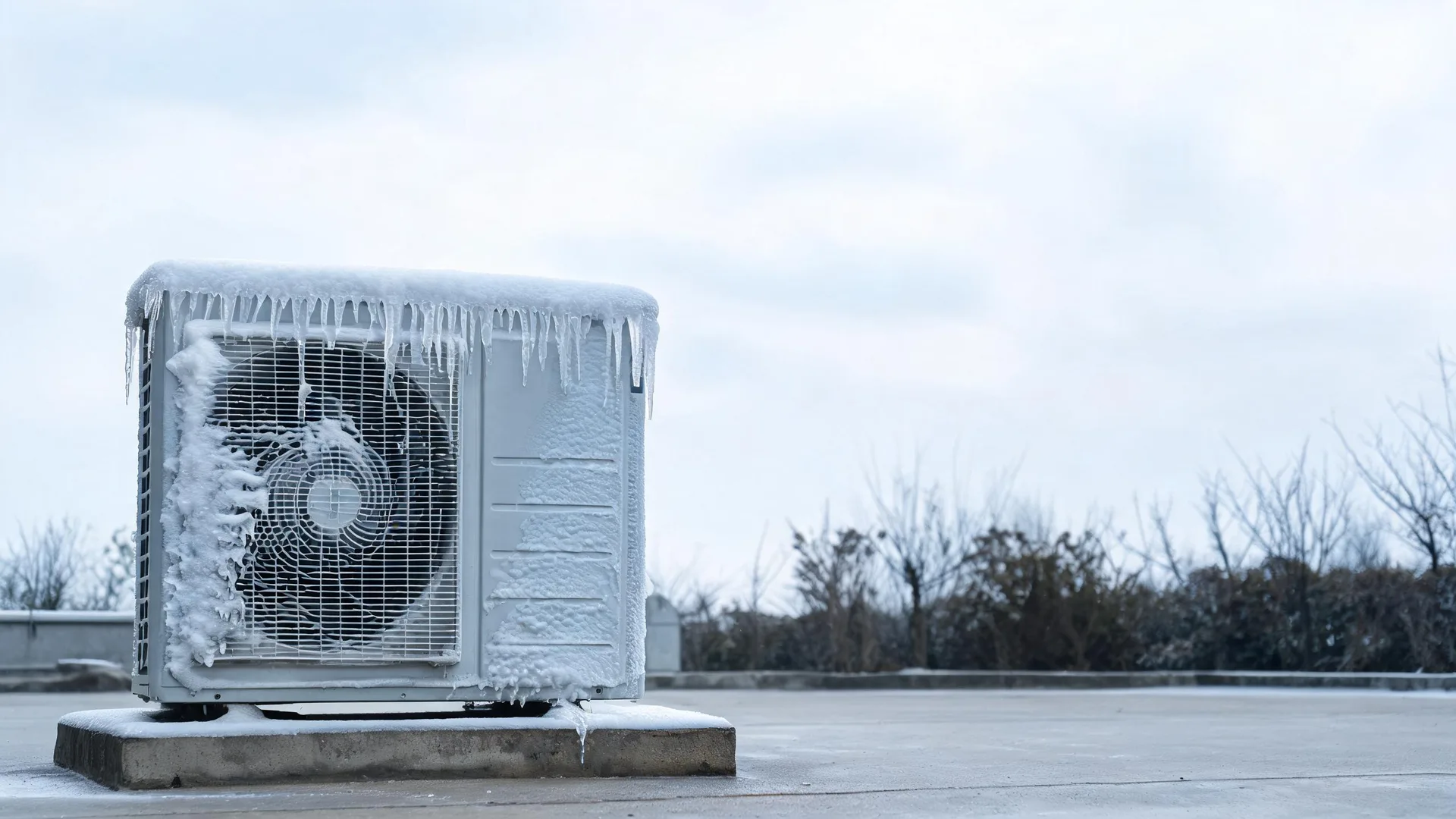
The outdoor coil, the refrigerant lines and anything behind the access panels are not a homeowner's job. Opening the cabinet on a heat pump that's still got power to it is a real shock risk, and refrigerant work needs a license to do legally. If the unit is frosted over heavily, don't chip at the ice or hose it down. Some frost is normal during a defrost cycle, but a thick coat that doesn't clear on its own points to a problem underneath that guessing at won't fix.
A heat pump struggling to hold temperature is already telling you something is wrong, and running it that way tends to make the problem bigger. A compressor working against a low refrigerant charge runs hotter than it should, and heat is what wears a compressor out early. A failing contactor that chatters instead of closing clean will pit and burn with every cycle until it fails for good. Ice that isn't clearing on its own during defrost means something in that cycle already failed, and a coil kept frozen under a thickening coat of ice can't move heat at all, so the system runs longer and longer to do less and less. None of these get better with time or more cycles. Shutting it off and having someone look is cheaper than letting it run itself into a bigger repair.
A diagnostic starts outside, not with a screwdriver. The tech checks refrigerant pressures on both the high and low side, because a heat pump that's low on charge or holding too much will show it there before it shows it anywhere else. From the thermostat they'll run the system in both directions, heat and cool, since a heat pump that's fine blowing cold air can still fail to reverse when it's asked to heat. The reversing valve gets checked for that reason alone. They'll check the contactor and capacitor at the outdoor unit, since a pitted contactor or a weak capacitor causes hard starts and short cycling that feel like a bigger problem than they are. Airflow gets checked at the indoor coil too, because a system fighting a dirty filter or blocked return can look like a refrigerant problem when it isn't one. Whatever the readings show, a tech worth paying tells you what failed and why, not just that something did.