







An outdoor heat pump unit mounted on a concrete pad in front of a two-story suburban house with a landscaped lawn.

Heat Pump Repair in Woodland Park, CO

Tell us about the job

Takes about a minute. No obligation.

RepairHeat PumpTeller County, CO
Step 1 of 2

What ZIP code is the job in?

A diagnostic starts with the thermostat, not the outdoor unit. The tech checks what it's calling for and whether the heat pump is actually responding, because a bad thermostat signal can look exactly like a dead system. From there it's refrigerant pressures, the reversing valve, and the defrost control board, since a heat pump that won't switch between heating and cooling often traces back to one of those. They'll pull the panel and check the contactor and capacitor too, since those wear out from ordinary cycling over the years. If the outdoor coil is iced over, the tech needs to know why it froze instead of just thawing it and moving on. The point is finding the part that actually failed, not replacing things until one of them works.

11 months
August through June, your system heats
10°F
the average winter night it heats against
73°F
the average summer afternoon it cools against
Isometric cutaway illustration of a single-story house showing interior ductwork, an indoor air handler, and an outdoor condenser unit connected by lines along the exterior wall.

Heat in Woodland Park starts up in August.

Get the heat pump checked in July, before it has to carry the load.

Winter storms hit this county often. Your heat pump failing isn't about that.

249 severe weather events from 2015 to 2024
13% of homes statewide lost power a day or more in 2024
99 damaging wind events from 2015 to 2024
Running it broken costs more hereColorado homes paid 14.92 cents per kilowatthour in 2024.

Half the homes in Teller County were built in 1990 or later. If yours is one of them, the heat pump probably isn't old enough to be the real problem. These systems are built to last well past a few decades, and a newer house usually means newer line sets and ductwork too, which rules out some of the wear that causes repeat failures. That points toward repair. A single failed part in a system that still has years ahead of it is worth fixing, not replacing.

A broken heat pump runs up your bill fast here

A heat pump that's short cycling or stuck on backup heat is burning through power at 14.92 cents per kilowatthour every day it runs that way. Get the failed part found and replaced before it has to work through winter.

Find a contractor
A man in a dark beanie, navy long-sleeve shirt and tan work pants climbs porch steps toward a red front door, carrying a waxed canvas tool bag in his right hand.
A white mini-split heat pump outdoor unit mounted on a concrete pad beside a gray-sided house, surrounded by gravel and green shrubs.

It hasn't logged the years yet

A heat pump in a house built in the last few decades hasn't put in the hours that cause real wear. If this is a first repair call, the system is likely on its original compressor and board. That's worth knowing before anyone talks about replacing the unit instead of fixing it.

A frozen coil stops moving heat

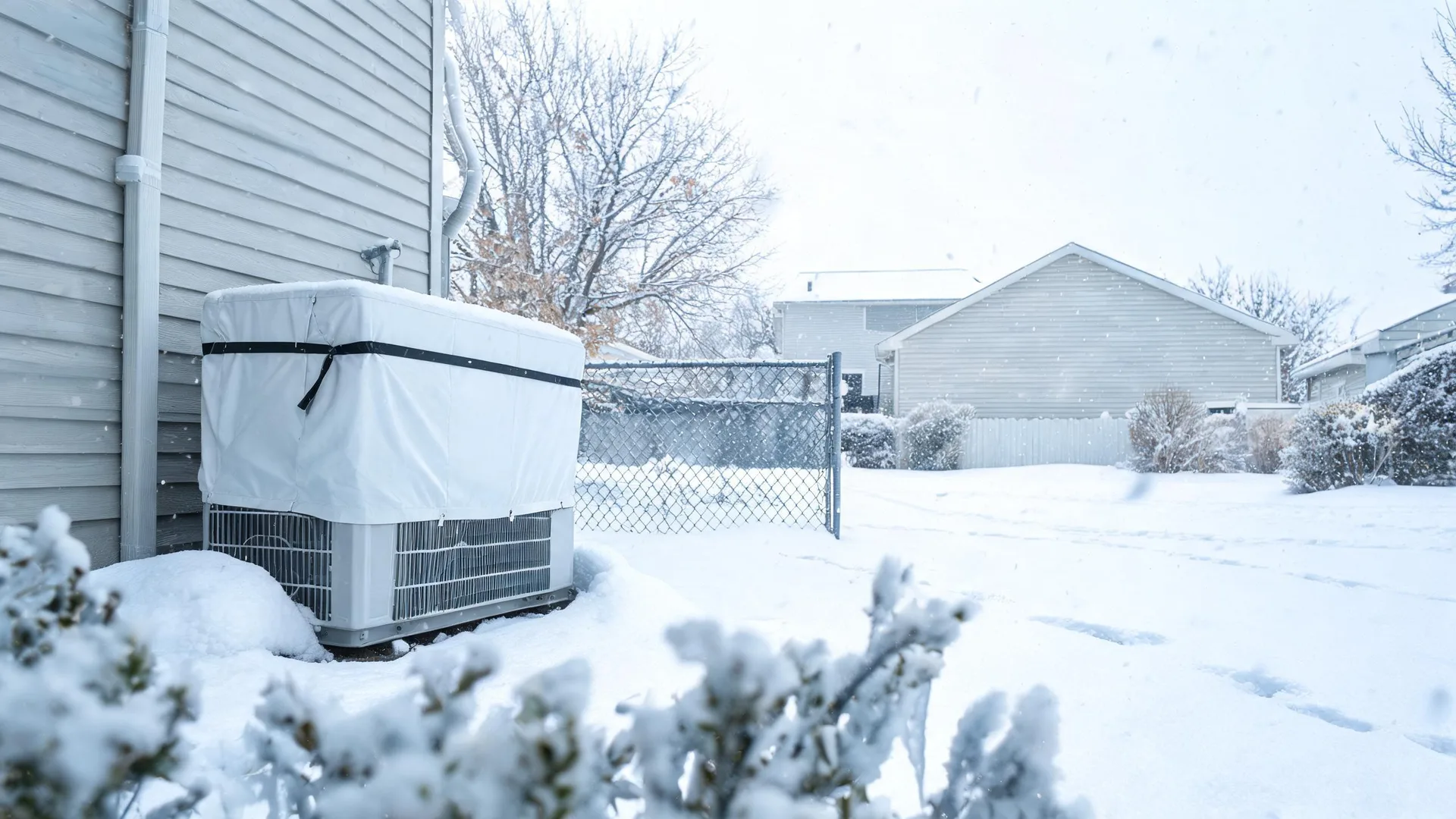
When the outdoor coil ices over, it can't pull heat from the air anymore. The system keeps running and the compressor keeps working, but less heat actually makes it into the house. Left alone, the ice builds thicker and blocks airflow completely, and the compressor ends up working against a coil that can't do its job at all.
A struggling compressor wears out faster

The compressor isn't built to run under strain. Low refrigerant charge, a failing capacitor, or a stuck reversing valve all make it work harder to do the same job. Keep running it in that state and the compressor overheats or seizes, and a repair that could have been one part turns into a replaced compressor or a whole new outdoor unit.

A few things are worth checking before anyone comes out. Start at the thermostat. Make sure it's set to heat and the setpoint is actually above room temperature, and check the batteries if it uses them. Look at the outdoor unit for ice or snow packed around the coil or the base, and clear away any leaves or debris blocking airflow into it. Check your breaker panel for a tripped breaker, since a heat pump that won't start at all sometimes comes down to that and nothing more. If you have a programmable or smart thermostat, check it isn't stuck in a hold or schedule that's fighting what you actually want. None of this fixes a bad reversing valve or a weak capacitor, but it rules out the simple stuff first.

A repair is almost always worth it when the system is doing its job most of the time and failing in one specific way. A capacitor, a contactor, a defrost control board, these are parts that fail on their own without taking the rest of the system down with them, and swapping one doesn't put the compressor or the outdoor coil at risk. Replacement starts to make sense when the compressor itself is the problem, since that's the part that can't be swapped out cheaply and a failing one often means the refrigerant system around it took damage too. The other sign worth watching for is a system that keeps coming back for new repairs every season. That usually means something in the system is wearing out the parts around it, not that each failure is bad luck on its own.