Stone and timber luxury homes with glowing windows line a mountain street at dusk, with evergreen trees and a rocky mountain range in the background.

Heat Pump Repair in Thornton, CO

Tell us about the job

Takes about a minute. No obligation.

RepairHeat PumpAdams County, CO
Step 1 of 2

What ZIP code is the job in?

September is when a weak heat pump shows itself

Heat here runs October through May, about eight months straight. The first cold snap of the year asks the heat pump for more than it has given all summer, and that is when a tired component finally gives out.

Catching it early matters before the long stretch ahead

A heat pump that struggles in October will keep running most days until spring. A repair made now is a few weeks of trouble. A repair put off becomes months of running a system that can't quite keep up.

8 months
October through May, your system heats
3 months
June through August, it cools
16°F
the average winter night it heats against
87°F
the average summer afternoon it cools against
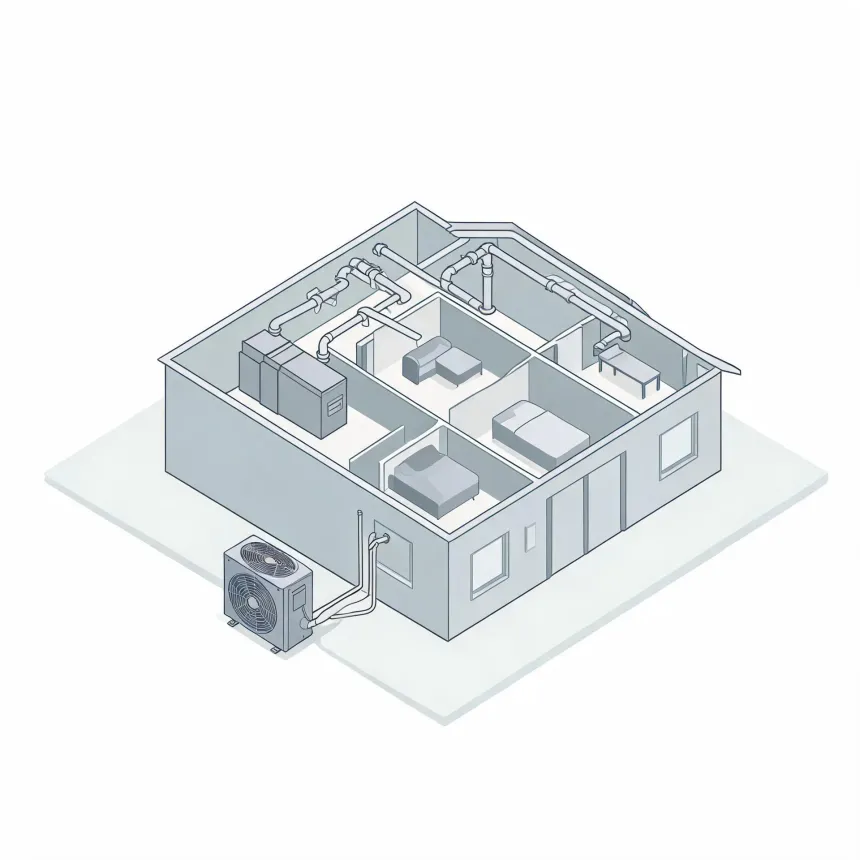
Isometric line illustration of a cutaway single-story house showing interior rooms with beds and furniture, ceiling ductwork connected to an indoor air handler, and an outdoor condenser unit linked by refrigerant lines.
Your system heats October through May and cools June through August.

NOAA nClimDiv, 1991–2020 normals

Adams County sees its share of hail, wind and winter storms, same as the rest of the Front Range.

None of that is what wears out a heat pump. The usual culprit is a failing capacitor, a low charge, or a reversing valve stuck in one position.

A bad heat pump costs more in ColoradoColorado power ran 14.92 cents per kilowatt-hour in 2024, and a struggling heat pump burns more of it every month.

Before you call anyone, there are a few things worth a look. Check the thermostat first. Make sure it's set to heat and the set temperature is actually above room temperature, since a setting bumped by accident is more common than people think. Go outside and look at the outdoor unit. If the coil is caked in ice or buried under leaves and debris, clearing it can sometimes bring the system back on its own. Check the air filter. A filter clogged with dust chokes off airflow and can make a heat pump run constantly without ever catching up. Walk around the house and check that supply vents are open and not blocked by furniture or rugs. If you've done all that and the system still blows cold air, trips a breaker, or makes a grinding or clicking noise it didn't make before, that's past what you can fix from the outside, and it's time to get someone out to look at it.

A newer home usually means a newer heat pump, worth fixing

Half the homes in Adams County were built in 1991 or later. If yours is one of them, the heat pump likely isn't old enough to be worn out on its own. Something specific failed. That's a repair, not a reason to replace the system.

Find a contractor
A man in a cap, blue long-sleeve shirt and tan pants climbs porch steps toward a red front door, carrying a canvas tool bag beside a red planter.
A dark gray heat pump unit mounted on a concrete pad next to a house with gray siding and a stone veneer wall.

One worn part doesn't mean a worn out system

Age by itself doesn't retire a heat pump. What matters is whether the part that failed stands on its own, or whether it's a sign the compressor is going. A capacitor, a contactor, a fan motor. Those get swapped and the system runs like it did before. A compressor is different. It sits sealed inside the system, and replacing it alone tends to cost close to a new unit once labor and refrigerant are counted in. A failing compressor usually means pricing out both and deciding from there. One repair doesn't predict the next either. A system that needed a new capacitor this year isn't more likely to need a new reversing valve next year because of it. Each part wears on its own schedule. What's worth asking before any repair is simple. Is this the part itself, or is this part dying because something else is making it work too hard.

A stuck reversing valve can burn out a compressor

When the valve won't seat right, the compressor ends up fighting itself, trying to push refrigerant against itself instead of through the system. That heat builds up in the windings until one of them fails. A valve is a repair. A compressor is most of the system.

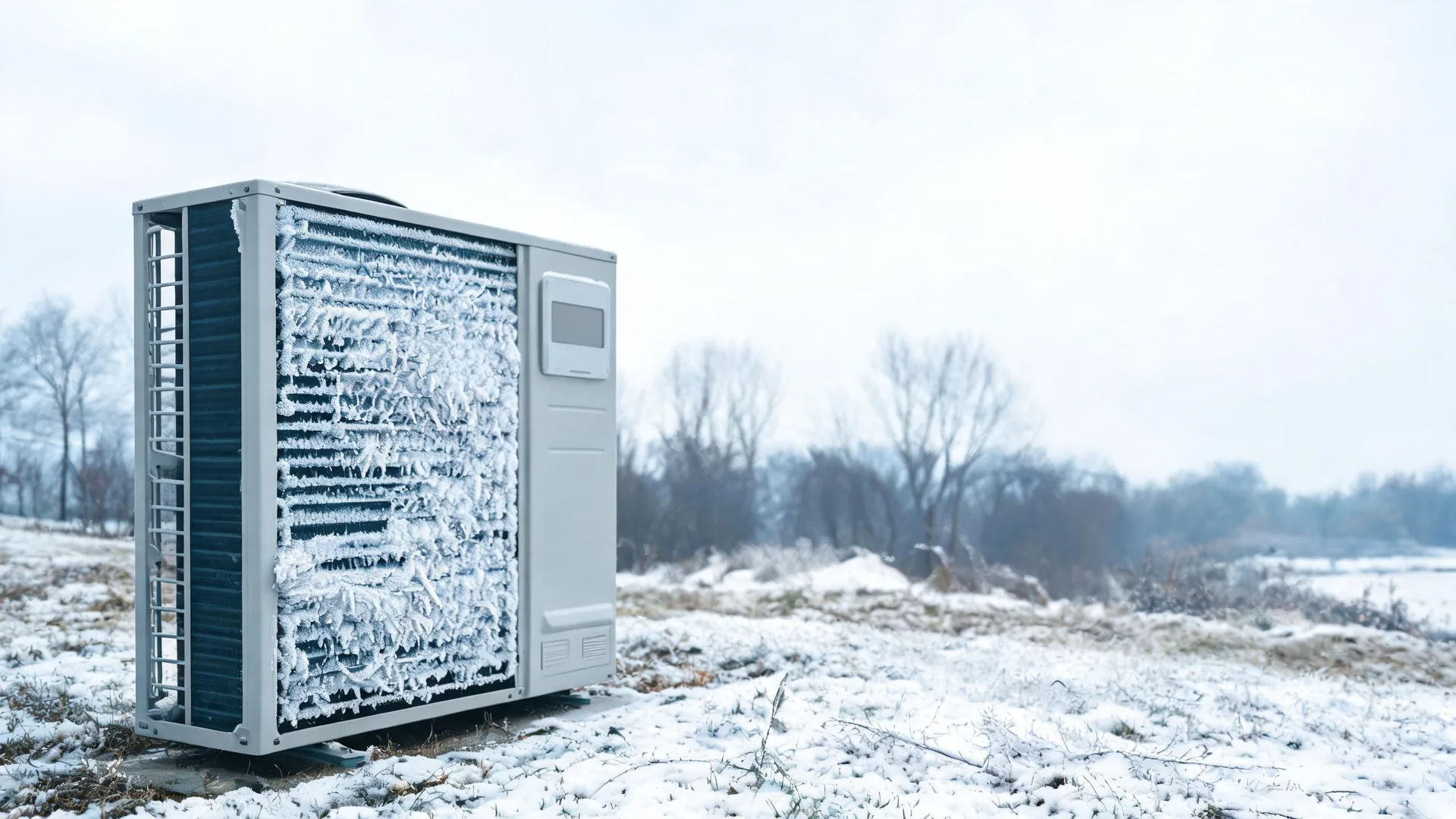
Ice on the outdoor coil feeds on itself

A little frost during a defrost cycle is normal. Once ice builds up faster than the system can clear it, the coil loses its ability to pull heat from the air at all. The unit keeps running, drawing power, moving no heat, while the compressor works against a block of ice instead of a coil.

Short cycling is one of the clearest signs something's wrong. A heat pump that kicks on, runs a few minutes, then shuts off and starts again shortly after isn't completing a normal cycle, and that pattern points to a refrigerant charge that's off or a sensor telling the system something false. Warm air coming out of the vents during heating mode is another one. People expect it to feel as hot as a furnace, but even working right it should feel warm, not cool or barely different from room temperature. If it feels flat out cold, the reversing valve likely isn't switching the way it should. Listen for sounds that weren't there before. A hum that won't stop, a click that repeats without the system starting, or a grinding noise from the outdoor unit all mean a part is struggling to do its job.

A diagnostic starts outside, at the unit itself. A tech will check the refrigerant pressure on both the high and low side, since that number tells them whether the charge is right or whether there's a leak feeding the problem. They'll test the capacitor under load rather than just looking at it, because a capacitor can look fine and still not hold the charge needed to start the compressor. The reversing valve gets checked by feel, comparing the temperature of the lines going in and out to see if it's actually switching all the way. Electrical connections get checked too, since a loose wire at the contactor can cause the same symptoms as a failing part. None of this takes guesswork once the gauges are on. The readings point to one thing or they point to another, and that's what decides whether the fix is a part swap or something bigger.