







An outdoor air conditioning condenser unit mounted on a concrete pad next to a residential house at sunset.

Heat Pump Repair in Sterling, CO

Tell us about the job

Takes about a minute. No obligation.

RepairHeat PumpLogan County, CO
Step 1 of 2

What ZIP code is the job in?

Winter nights here average 17°F, cold enough that a heat pump leans harder on its backup heat strips than it would somewhere milder. That's normal, not a sign of trouble specific to this area. Hail and damaging wind both show up on the record in Logan County, but that's weather working on the outdoor unit's cabinet and fins, same as anywhere on the plains. None of that changes what's likely wrong when yours acts up. A heat pump that runs constantly, blows cool air, or short cycles usually comes down to a low refrigerant charge, a failing defrost control, or a worn contactor, the same causes a tech would check in any house. Get the actual cause diagnosed before you assume the unit itself is finished.

8 months
October through May, your system heats
3 months
June through August, it cools
17°F
the average winter night it heats against
87°F
the average summer afternoon it cools against
Isometric cutaway illustration of a house showing interior ductwork, an indoor air handler, and beds, with an outdoor condenser unit connected by lines outside the wall.
Your system heats October through May and cools June through August.

NOAA nClimDiv, 1991–2020 normals

Heat pumps in Logan County switch over to heating in October.

A weak part that made it through summer often fails once the heat pump starts working hard in October.

Power here runs 14.92 cents a kilowatt-hour, so a heat pump working harder than it should shows up fast on your bill

Power costs 14.92 cents a kWh statewide
104 damaging wind events from 2015 to 2024
153 hail events from 2015 to 2024
Ask how old the system is before you pay for a repairHalf the homes in Logan County were built in 1964 or earlier

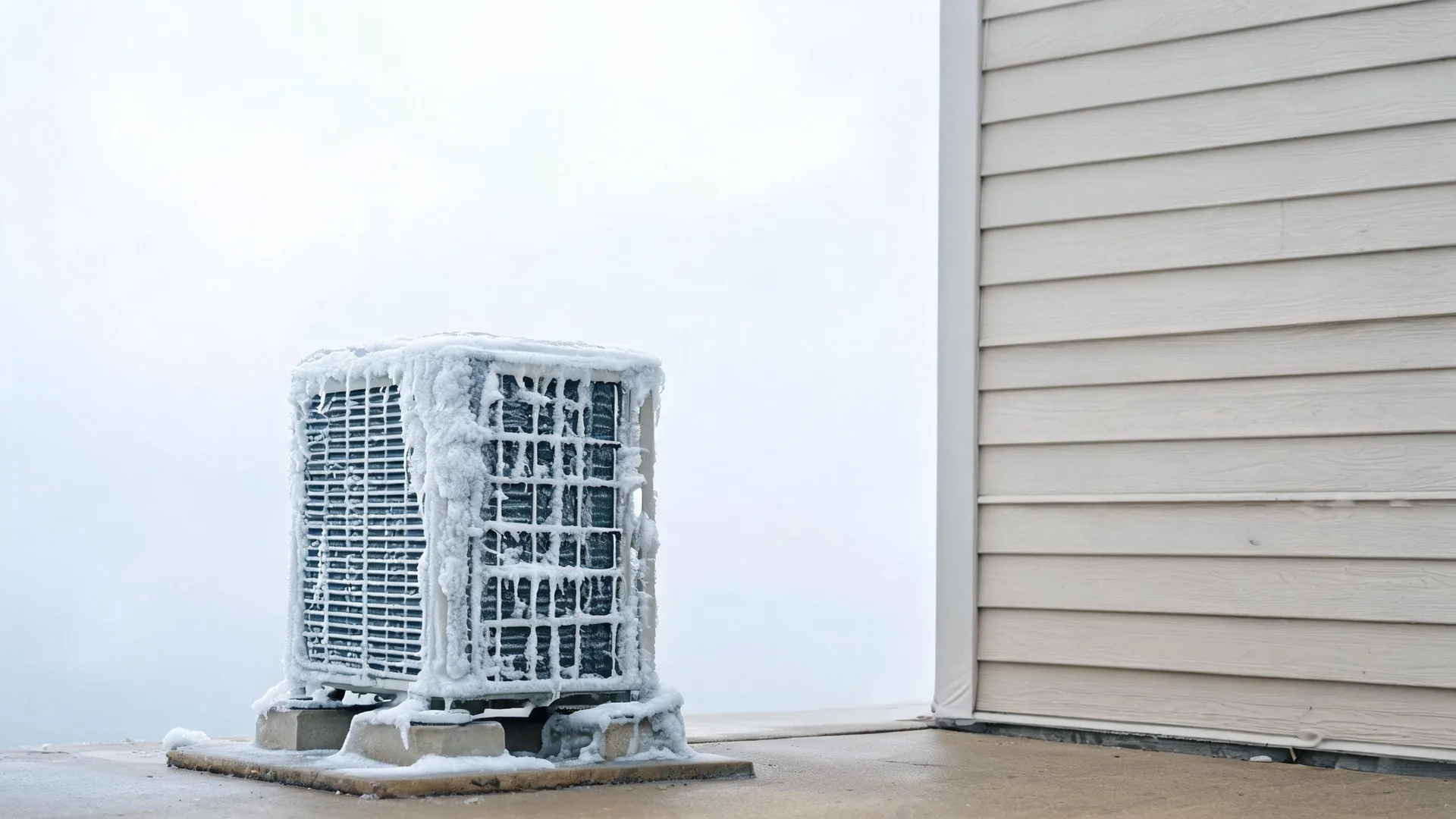
A heat pump that's struggling doesn't fix itself by staying on. If the refrigerant charge is low, the compressor keeps trying to move heat with less to work with, and that strain is what wears it out early. A failing defrost control that doesn't clear frost off the outdoor coil lets ice build up over hours, blocking airflow across the coil until the system can't pull in enough heat to keep up. A worn contactor that's already pitting or sticking gets worse with every cycle, until it won't close at all, or it stays closed and keeps the unit running when it should shut off. None of these get better with time. The part that's already failing fails faster under load, and what starts as one bad component can take the compressor down with it if it keeps running. Shutting it off and getting it looked at beats letting it run until something bigger gives out.

Fix it now, not after another month of bills

A heat pump that's low on charge or sticking on a worn contactor runs longer than it should to do the same job, and at 14.92 cents a kilowatt-hour that extra runtime shows up on your bill. Getting the actual cause found and fixed stops the waste.

Find a contractor
A man in a cap, brown work jacket and tan cargo pants carries a canvas tool bag as he climbs wooden porch steps toward a red front door, with a potted evergreen shrub beside the entry.
A residential heat pump outdoor unit mounted on a concrete pad next to a house with gray vinyl siding.

Find out what's left before you fix what's broken

A tech can check how much refrigerant charge and compressor life is left before you spend money on a repair. If the unit is original to the house, ask for that along with the diagnosis. It tells you whether you're fixing a system with years left or patching one that's close to done.

What you'll notice first

The outdoor unit runs long after it should have satisfied the thermostat, or it cycles on and off in short bursts instead of settling into a steady run. Air coming out of the vents feels cool or lukewarm instead of warm. Some rooms heat fine while others lag behind. Any of these means the system is working to compensate for something, not just having an off day.
What it tells a tech

Constant running points toward low charge or a compressor losing capacity. Cool air points toward a reversing valve stuck in the wrong position or a defrost cycle that isn't ending when it should. Short cycling points toward a contactor or sensor telling the unit to stop before the job is done. Naming which symptom you're seeing narrows down the call before the tech even opens the cabinet.

Most heat pump failures trace back to a handful of parts that wear out doing their job over and over. The reversing valve is a common one. It's what switches the system between heating and cooling, and the coil that shifts it can weaken until the valve sticks partway or won't throw at all. The defrost board is another. It tells the unit when to melt frost off the outdoor coil, and when its sensor drifts or fails, frost builds up until airflow chokes off. Contactors wear from the arcing that happens every time they open and close, and over thousands of cycles the contacts pit and burn until they stick or stop making contact cleanly. Capacitors lose their charge slowly over years, and a weak one makes the compressor or fan motor strain to start. Low refrigerant charge usually means a slow leak somewhere in the line set or coil, not the system using it up, and it shows up as longer runtimes well before it shows up as no heat at all.

A diagnostic visit starts with the thermostat and works outward. A tech checks what it's calling for against what the system is actually doing, then moves to the outdoor unit to check refrigerant pressures and amp draw on the compressor and fan motor. Gauges on the line set tell him whether the charge is low and roughly where a leak might be hiding. He'll cycle the reversing valve to see if it throws cleanly both ways, and check the defrost board and its sensor since a drifting sensor is hard to catch just by looking. The contactor gets a visual check for pitting and a test under load, since a contactor can look fine sitting still and still fail to close right when it's hot. None of this takes guesswork once the gauges are on, and it's the only way to tell a failing part from one that's just old.