





Illuminated stone-and-timber mountain homes line a quiet street at dusk, with evergreen trees and a mountain range in the background.

Heat Pump Repair in Silverthorne, CO

Tell us about the job

Takes about a minute. No obligation.

RepairHeat PumpSummit County, CO
Step 1 of 2

What ZIP code is the job in?

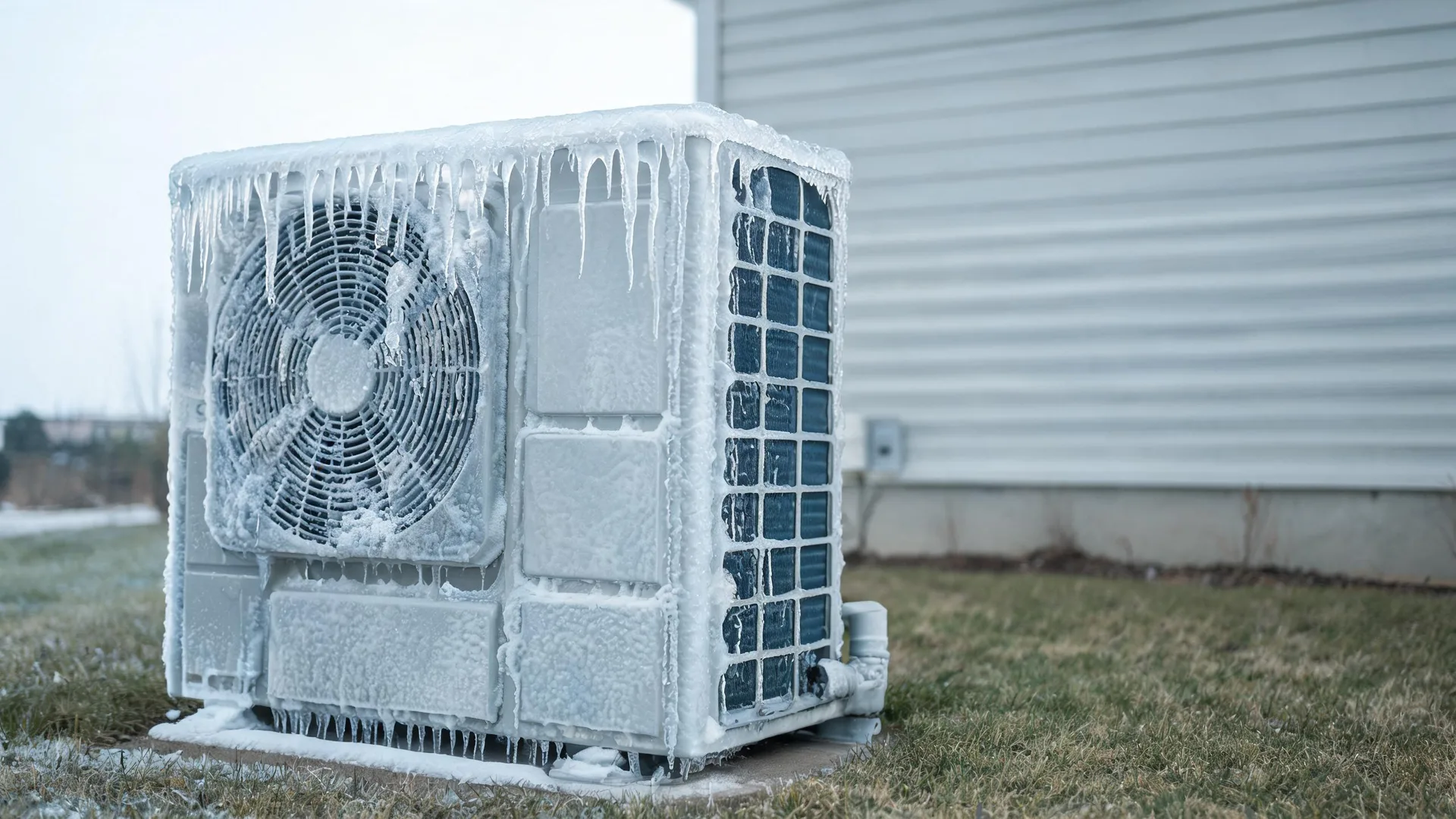
A heat pump that's struggling usually tells you before it quits outright. Airflow at the vents gets weak, or the air coming out barely feels warm when it should be hot. Some frost on the outdoor unit in cold weather is normal. A coil that stays frozen or builds up heavy frost means the defrost cycle isn't working right. Listen for grinding, buzzing, or a clicking that won't stop, especially if it's new. If the system runs constantly and never quite reaches the temperature on the thermostat, something is holding it back. That could be low refrigerant, a failing compressor, or a reversing valve stuck in one position. Short cycling, where it kicks on and off every few minutes, wears parts out fast and is worth calling about soon.

8°F
the average winter night it heats against
68°F
the average summer afternoon it cools against
Isometric illustration of a cutaway single-story house showing interior ductwork and an air handler connected by lines to an outdoor condenser unit on a pad beside the building.

Half the homes in Summit County were built in 1989 or later.

A heat pump in a newer Silverthorne house usually has years of working life left in it, which makes repair the right first call.

At 14.92 cents a kilowatt-hour, cold nights and a struggling heat pump add up fast

Power costs 14.92 cents a kWh statewide
46 winter storms from 2015 to 2024
Winter nights average 8°F

A reversing valve stuck halfway doesn't just mean weak heat, it means liquid refrigerant going places it shouldn't, and that can wash the lubricant right off the compressor's moving parts. A coil that stays frozen blocks airflow further every hour it runs, so the system pulls harder to do less, and ice can work into places that damage fins and lines. Low refrigerant means the compressor runs hotter than it's built for, and heat is what kills compressors. Short cycling puts a hard start on the compressor over and over, and each one is a small shock the motor windings have to absorb. None of this fixes itself by waiting. The longer a struggling heat pump keeps running, the more likely the repair turns into a compressor replacement instead of a part swap.

A heat pump working too hard costs you more here every month it keeps running that way

Electricity in Colorado runs 14.92 cents a kilowatt-hour. A heat pump short cycling or stuck mid-cycle isn't just wearing out early, it's pulling power the whole time it struggles. Getting it looked at now stops that meter from running against you.

Find a contractor
A gray air-source heat pump mounted on a concrete pad next to a house with gray vinyl siding, surrounded by gravel and flanked by green shrubs and white hydrangea flowers.

A newer system still has years in it

If your heat pump came with the house, check the year it was built against the year the system was installed. New construction usually means a new heat pump, and a new heat pump breaking down is almost always a single bad part, not a system giving out. That's a quick fix, not a reason to think about replacement.

Check the thermostat first

Make sure it's set to heat and not fan only, and that the setpoint is actually above room temperature. Swap the batteries if it's been a while. A thermostat that lost its schedule or its connection to the system can look exactly like a broken heat pump.
Check the filter and the outdoor unit

Pull the filter and hold it up to light. If you can't see through it, that's enough to choke airflow and make the system struggle. Then look at the outdoor unit. Clear away leaves, snow piled against the cabinet, or anything blocking the sides. Heavy ice that doesn't thin out over a few hours is worth noting for whoever comes to look at it, but don't chip at it yourself.

Most heat pump failures trace back to a handful of parts, and the compressor is the one that ends up doing the most damage when something upstream goes wrong first. Contactors and capacitors wear out from the plain fact of starting and stopping the system over and over, and when a capacitor weakens, the compressor or fan motor strains to start, which shortens its life too. Sensors and control boards drift out of calibration or fail outright, which throws off the defrost cycle or makes the system run a mode that doesn't match what the thermostat is asking for. The reversing valve, the part that switches the system between heating and cooling, can stick from age or from debris, and it tends to fail at the worst possible time, mid-season, under load. Outdoor fan motors fail from years of weather exposure, bearings wearing down until the motor seizes or runs loud. Refrigerant doesn't get used up, so if a system is low, something is leaking, and that leak only gets worse until it's found and sealed.

A single failed part is almost always worth fixing. A bad capacitor, a stuck contactor, a failed sensor, these are inexpensive parts in a system that otherwise still runs fine, and replacing one restores the whole unit. What changes the math is the compressor. It sits at the center of the system, it costs the most to replace, and in a lot of cases replacing it costs close to what a new system would run. So the real question isn't just what broke, it's what the failure did on its way out. A capacitor that failed cleanly is a different situation than a compressor that's been running hot for weeks before anyone noticed. Age matters too, but less than people think. A system near the end of its working life that needs a compressor is usually a replacement. The same failure in a system with years left in it is usually just a repair.