





Warmly lit timber-frame and stone houses line a street at dusk, with evergreen trees and a snow-capped mountain range in the background.

Heat Pump Repair in Rifle, CO

Tell us about the job

Takes about a minute. No obligation.

RepairHeat PumpGarfield County, CO
Step 1 of 2

What ZIP code is the job in?

Heat pumps in Garfield County run heat from September through June, about ten months of the year. August is the one month the system sits idle before that load hits. If a part was already weak, a capacitor losing its charge, a contactor pitted from last season, it tends to show up in those first cold weeks, not in the middle of winter. That's when the system is asking the most of the part that was already failing. Getting a repair done early in the season catches that before it leaves you without heat on a cold night.

10 months
September through June, your system heats
16°F
the average winter night it heats against
77°F
the average summer afternoon it cools against
Isometric cutaway illustration of a single-story house showing interior rooms, attic ductwork and an air handler, with an outdoor condenser unit connected by lines along the exterior wall.

Rifle winters sit around 16°F overnight through December, January and February.

A heat pump is built to handle that, so a breakdown usually traces back to a worn part, not the cold.

Half the homes in Garfield County date to 1993 or later, so most heat pumps here are still well within their working life

Half the homes here were built by 1993
144 damaging wind events from 2015 to 2024
258 winter storms from 2015 to 2024

Colorado electricity ran 14.92 cents per kilowatt-hour in 2024. A heat pump leaning on backup electric strips to make up for a weak part burns through that rate fast, and it does it every day the problem sits unfixed. A system that's low on charge or struggling to defrost runs longer to hit the same temperature, so the meter keeps spinning even on milder days. None of that shows up as a single bad month. It shows up as next winter's bill being higher than last winter's for no reason you can see. The part causing it is usually cheaper to fix now than to keep paying for every month it's left alone.

Your heat pump isn't fighting an unusual climate. It's fighting a worn part.

Garfield County sees winter storms most years and wind often enough, but none of that is unusual for a heat pump. These systems are built to run through snow and cold. When one stops working, the cause is almost always a part wearing out, not the weather doing something it isn't built for. Finding that part and replacing it is a straightforward job.

Find a contractor
A gray outdoor HVAC unit mounted on a concrete pad beside a house with gray lap siding and a stone foundation.

A newer system is worth repairing

If your heat pump came with the house, there's a good chance that's a system built in 1993 or later. That puts a lot of these units still inside their working life. A breakdown on a system that age is usually one worn part, not a system on its way out. Worth getting it looked at before deciding it needs to be replaced.

The reversing valve is the part unique to a heat pump

A furnace or an air conditioner never has one. It's what lets the system switch between heat and cooling, and it does that job for years without trouble. When it does fail, it sticks partway, and the system either blows cold air when it should heat or won't shut off when it should. Worn seals inside the valve are the usual cause.
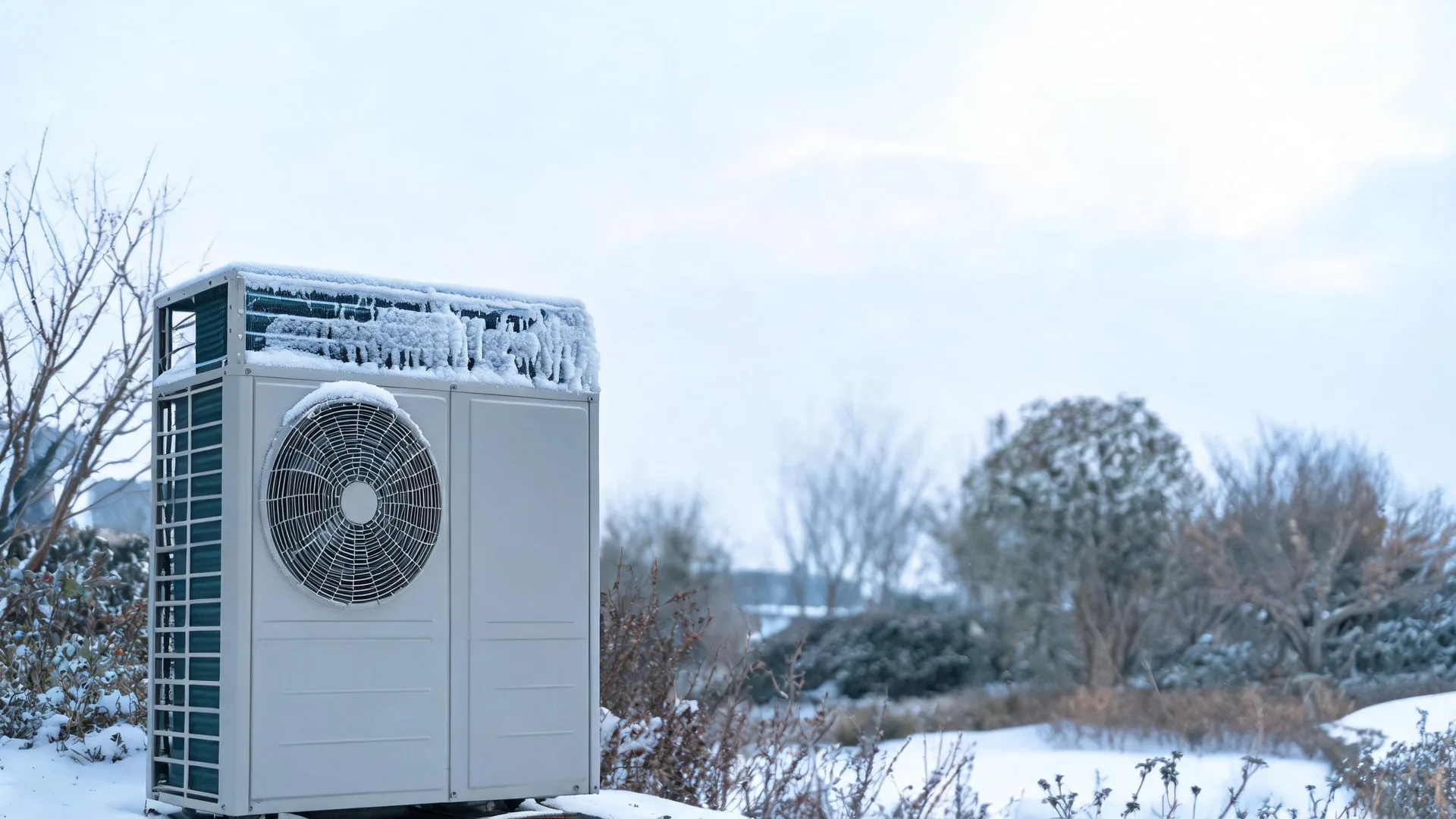
Frost that won't clear means a broken defrost cycle

Outdoor coils are supposed to frost up in cold weather and then clear themselves on a timer, using a sensor to briefly run in cooling mode and melt it off. When that sensor or the control board behind it fails, the cycle doesn't fire, and ice builds up on the coil until the system can't pull any heat from outside air at all.

A heat pump that's struggling still tries to keep up, and that's what causes the damage. If the charge is low or a coil is dirty, the system doesn't shut itself off, it just runs longer and harder to reach the temperature on the thermostat. Those extra hours fall on a compressor that's already working against a fault it shouldn't have to fight. A motor bearing that's starting to wear goes faster under that kind of load than it would if the system got fixed and allowed to rest. Left running, a problem that started in one small part can end up reaching the compressor itself, and a compressor doesn't get repaired, it gets replaced.

Most of the time the real question isn't repair versus replacement. It's whether one part failed or several are failing together. A single worn part, a capacitor, a contactor, a sensor, is almost always worth fixing no matter how old the system is. The math changes when a tech opens the unit and finds the compressor itself is the problem, or finds refrigerant lines that have been leaking long enough to drag other parts down with them. That has less to do with the heat pump's age and more to do with how long a small problem was left alone before anyone looked at it. A system that gets checked when something first seems off almost always comes out ahead on repair. One that's been run hard with a fault ignored for a while is the one where replacement starts to make more sense.