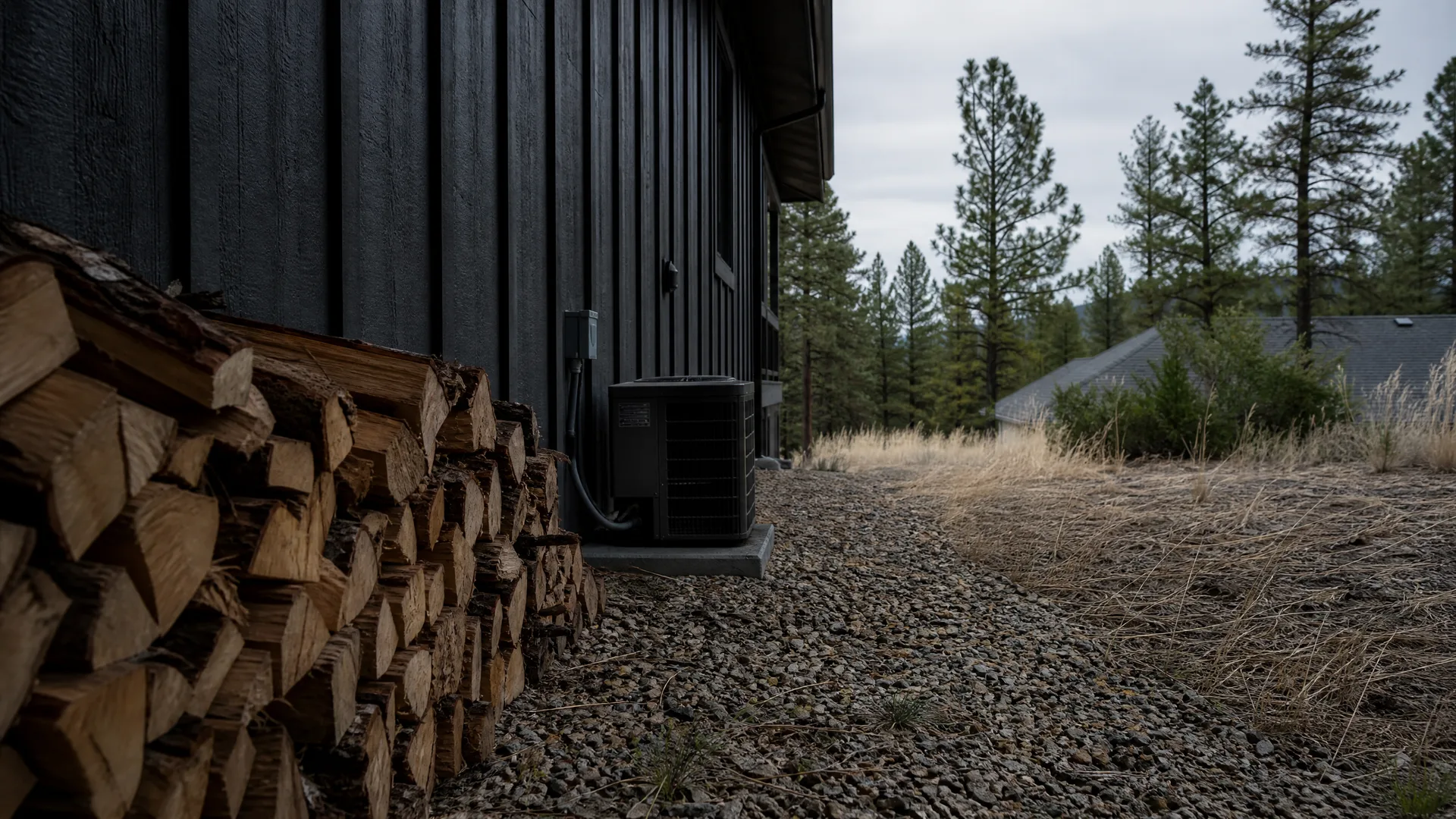




A stacked woodpile beside a dark vertical-board house exterior with an outdoor air conditioning condenser unit on a concrete pad, gravel ground, dry grass and conifer trees under an overcast sky.

Heat Pump Repair in Montrose, CO

Tell us about the job

Takes about a minute. No obligation.

RepairHeat PumpMontrose County, CO
Step 1 of 2

What ZIP code is the job in?

Montrose County logged 202 winter storm events between 2015 and 2024, and 53 more with damaging wind. That's the outdoor unit sitting through a lot of weather it didn't ask for. Hail shows up less often here, 4 events in the same stretch, but it still shows up. Wind-blown branches and debris can bend the fins on the coil or crack a fan blade without stopping the unit outright. A heat pump can keep running after a hit like that and still be working harder than it should, or wear out a part sooner than it would have otherwise. If yours took a hard storm recently and something seems off, even just a new sound or weaker airflow, that's worth a look.

8 months
October through May, your system heats
2 months
July through August, it cools
18°F
the average winter night it heats against
83°F
the average summer afternoon it cools against
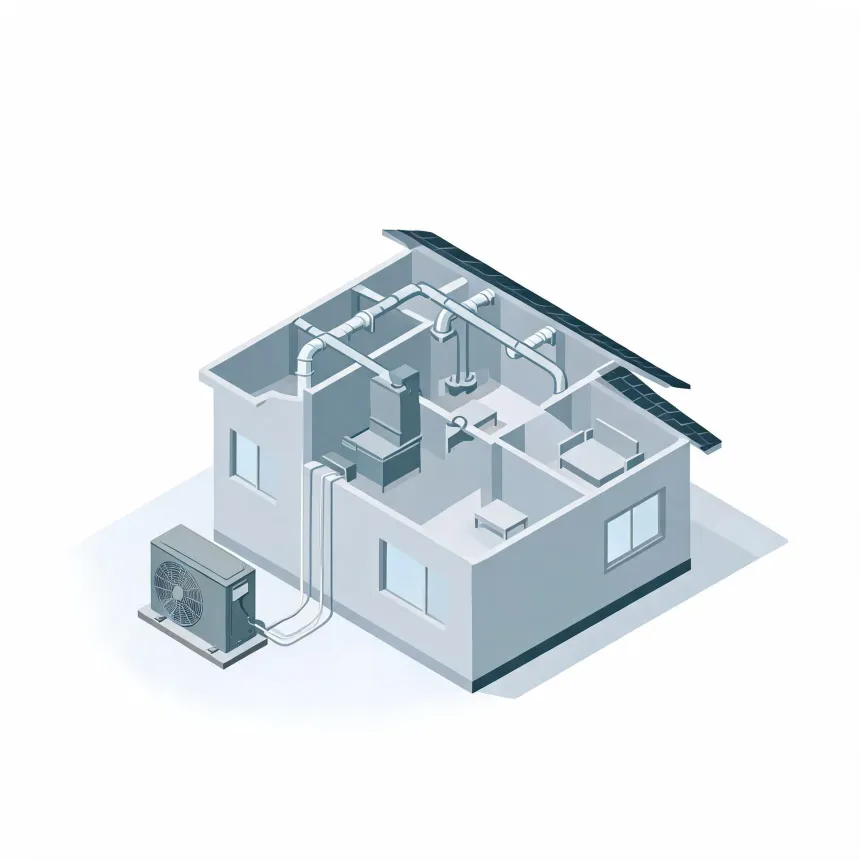
Isometric cutaway illustration of a single-story house showing interior ductwork, an air handler and rooms, with an outdoor condenser unit connected by refrigerant lines on a plain white background.
Your system heats October through May and cools July through August.

NOAA nClimDiv, 1991–2020 normals

Half the houses in Montrose County were built in 1991 or later.

A heat pump that came with a newer house still has working life in it, and that's usually a reason to repair it rather than replace it.

Heat runs here eight months a year. October is when a weak part gets found.

Cooling runs July through August
Heat runs October through May
Climate zone 5B

If your heat pump is the one that came with the house, that newer age is a reason to get it looked at instead of replaced outright. A repair now can get you through the rest of winter without a bigger project on top of it. Worth checking the nameplate or your paperwork for the install date before you decide anything. If the unit turns out to be original to a mobile home, ask the contractor about parts, since those sometimes run on different equipment than a site-built house.

If the outdoor unit took a hard hit, get it looked at before you trust it

Storms here don't always stop a heat pump outright. A bent fin or a cracked fan blade can leave it running rough instead of failing clean. If yours came through a bad storm and something's off, a new sound, weaker airflow, anything, have it checked before you count on it for the rest of winter.

Find a contractor
A gray heat pump condenser unit mounted on a concrete pad against the gray lap-siding exterior wall of a house.

A problem that's ignored doesn't stay small

A heat pump that's struggling doesn't usually quit on the spot. It keeps running, just worse. A failing capacitor makes the compressor work harder to start each cycle, and that strain adds up every time it kicks on. A dirty coil makes the system run longer to move the same amount of heat, which pushes every part in the cycle past what it was built for. Low refrigerant charge is its own slow burn: the compressor keeps trying to do a job it doesn't have enough refrigerant to finish, and compressors are the most expensive part to replace. None of this shows up as a dead system right away. It shows up as a strange sound, a weaker airflow, a unit that runs longer than it used to. Catch it there and it's usually one part. Let it ride and the compressor can be the thing that finally gives out, and that's a different job entirely.

What you'll actually notice first

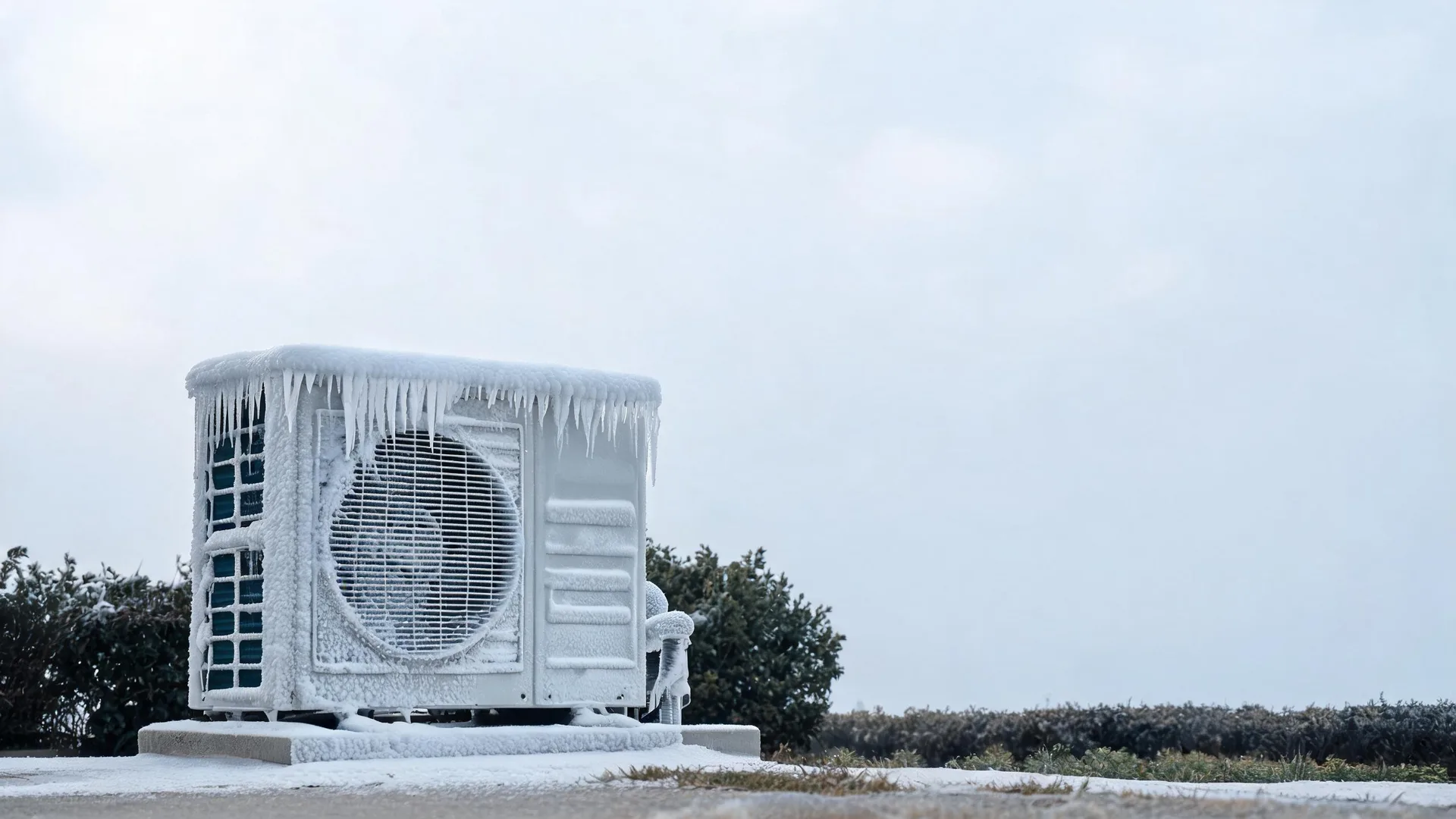
A heat pump in trouble rarely just shuts off. The air coming out of the vents feels cooler than it should for a heat setting, or the unit runs for long stretches without the house catching up to the thermostat. You might hear it short cycling, turning on and off in quick bursts instead of settling into a steady run. Ice building up on the outdoor unit beyond a normal defrost cycle is another sign something's off, same with a hissing or clicking that wasn't there before.
What those signs mean for the call you make

Most of these signs point to something specific: a failing reversing valve, a weak contactor, a dirty coil, a refrigerant leak. A contractor can usually trace the sign back to the part within one visit, especially if you can describe when it started and what changed. The sound or the weak airflow is the clue, not the diagnosis, so don't try to guess the part yourself. Just get the symptom described clearly and let the diagnosis happen at the unit.

Most heat pump failures trace back to a handful of parts that wear the same way in every system. The capacitor is the one that goes most often. It gives the compressor and fan motors the jolt they need to start, and that jolt weakens it a little every cycle until one day it can't deliver enough. Contactors wear out the same way, from the arcing that happens every time they open and close, until the points pit and stop making good contact. The reversing valve is what lets the system switch between heating and cooling, and if it sticks, the unit can get stuck in the wrong mode or stop switching at all. Refrigerant leaks usually show up at a joint or a coil, slow enough that you won't notice right away, but the compressor keeps trying to do its job without enough refrigerant to do it, and that's what shortens its life. A dirty coil or a clogged filter doesn't break anything by itself, but it makes every part downstream run longer and hotter than it was built for.

A diagnostic visit starts with the thermostat and works outward. A contractor will check what the system is set to do against what it's actually doing, then move to the outdoor unit and the air handler to see where that breaks down. Gauges go on the refrigerant lines to check the charge, since too little or too much both point to different problems. Electrical readings on the capacitor and contactor show whether they're still delivering what the compressor and fans need to start and run. The coil gets a look too, since a coil caked with dirt changes the readings everywhere else in the system and can lead a contractor astray if it's not ruled out first. Most of this gets done with the unit running, because a part that tests fine sitting still can still fail under load.