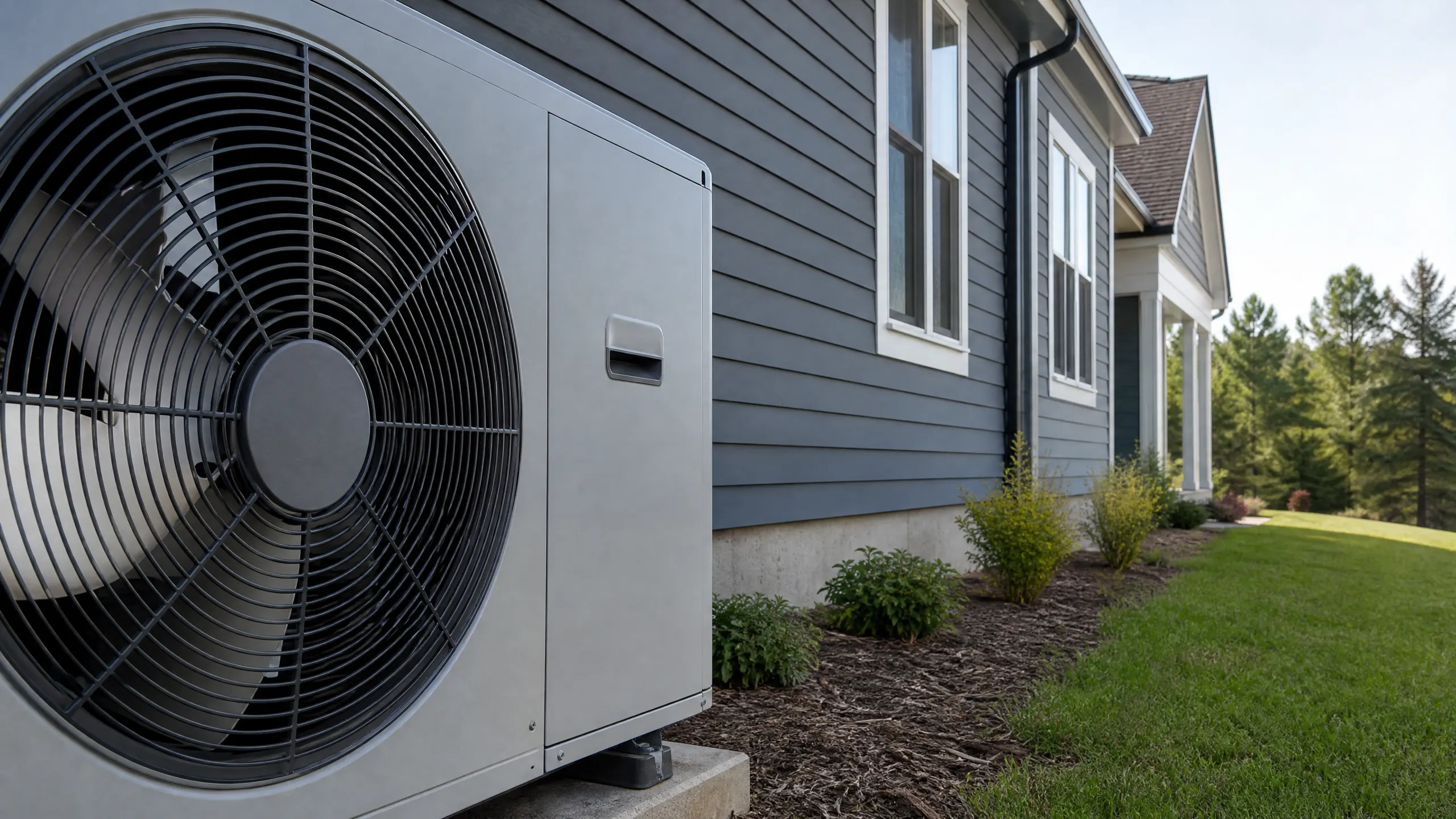
A heat pump outdoor unit mounted on a concrete pad next to the gray-sided exterior wall of a residential house.

Heat Pump Repair in Monte Vista, CO

Tell us about the job

Takes about a minute. No obligation.

RepairHeat PumpRio Grande County, CO
Step 1 of 2

What ZIP code is the job in?

Winters here just mean the system works harder

Monte Vista sees overnight lows averaging 7°F through December, January and February. A heat pump in that cold runs longer to hold a setpoint. It may lean on backup heat more than it would somewhere milder. That's normal operation, not a sign of damage.


The cause is usually something a tech sees all the time

A heat pump that's short cycling, running constantly, or blowing cool air in winter is almost always a known problem. A failing defrost control. A low refrigerant charge. A stuck reversing valve. None of that is specific to Rio Grande County. Diagnosing it right is what gets it fixed once.

7°F
the average winter night it heats against
73°F
the average summer afternoon it cools against
Isometric line illustration of a cutaway single-story house showing interior rooms with beds and furniture, ceiling ductwork connected to an indoor air handler, and an outdoor condenser unit linked by refrigerant lines.

Rio Grande County logged 199 winter storms between 2015 and 2024.

None of that changes what's wrong with your heat pump. It still comes down to finding the one part that failed.

Colorado power costs 14.92 cents a kilowatt-hour, so a heat pump problem costs you more here every month it runs unfixed

Power costs 14.92 cents a kWh statewide
52 damaging wind events from 2015 to 2024
199 winter storms from 2015 to 2024

Half the homes in Rio Grande County were built in 1978 or earlier, half in 1978 or later, and neither tells you anything about the heat pump itself. The system's age depends on when it was put in, not when the house was. If you don't know whether yours came with the place or was swapped in later, that's worth checking. Mobile homes make up 11.5% of the housing here, and a heat pump mounted on one works no differently than one beside a house. A bad capacitor or a stuck reversing valve fails the same way regardless of what the unit sits next to. Finding the part that quit is the job, not where the home happens to be.

Get the real problem found before it costs you another month

A heat pump that's short cycling or stuck blowing cool air is running up your bill at 14.92 cents a kilowatt-hour the whole time it sits unfixed. Getting the actual part diagnosed stops that.

Find a contractor
A dark gray heat pump unit mounted on a concrete pad next to a house with gray siding and a stone veneer wall.

What to check before you call anyone

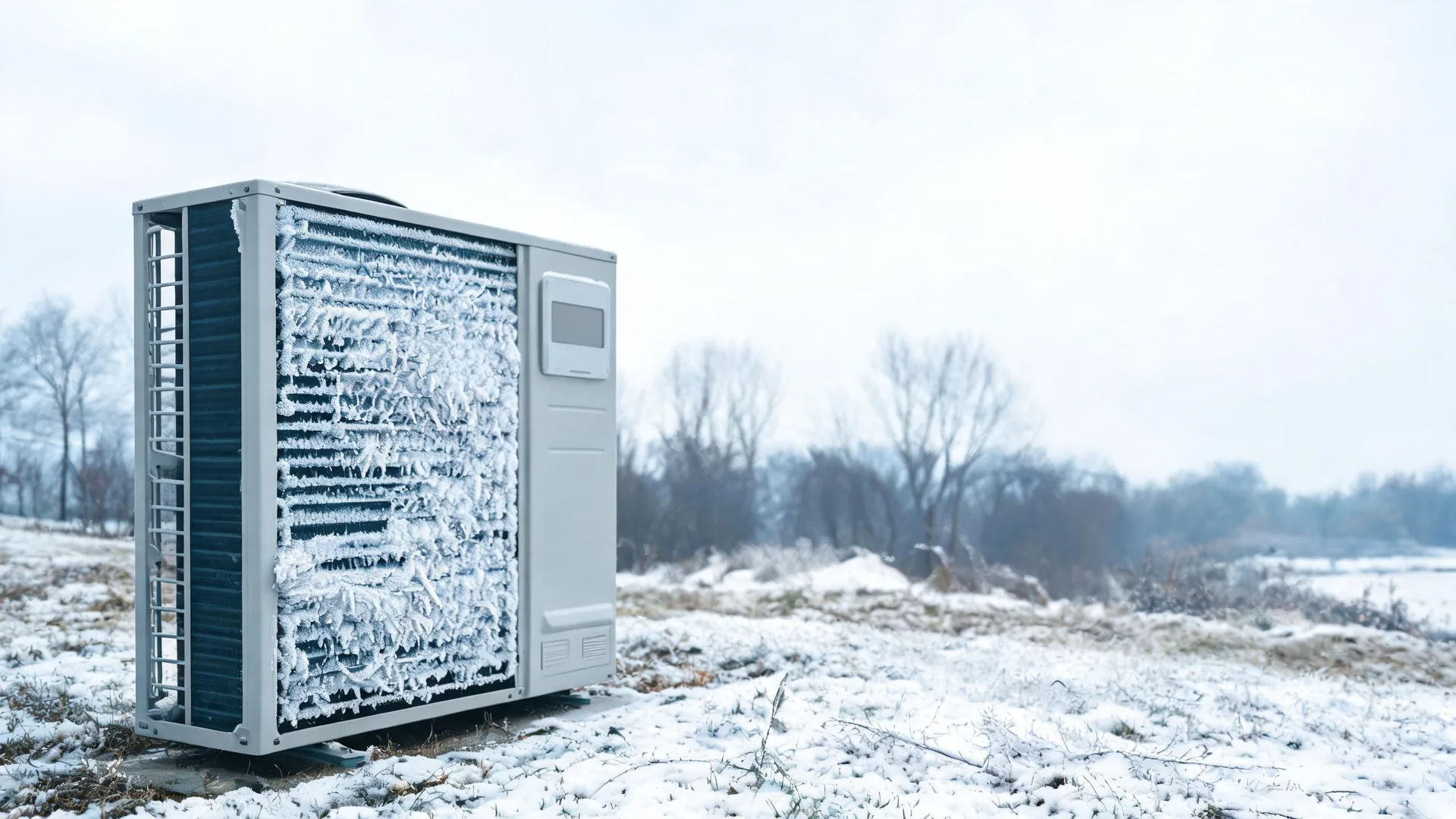
Before anyone comes out, check the thermostat first. Make sure it's set to heat and the setpoint is actually above room temperature, since a setting bumped by accident looks exactly like a broken system. Next, go to the breaker box and confirm nothing's tripped. A heat pump that won't start at all is sometimes just a breaker, not a failed part. Outside, look at the outdoor unit. If it's covered in ice beyond a thin coat, or buried in debris, leaves, or anything blocking airflow around it, clear what you can safely reach. Ice that doesn't melt off during the defrost cycle points to a real problem, but a unit that's just dirty or crowded by plants can struggle for that reason alone. Inside, pull the air filter and hold it up to light. If you can't see through it, replace it. A clogged filter starves the system of airflow and can cause symptoms that look like a refrigerant or compressor issue but aren't. Check that supply vents around the house are open and not blocked by furniture or rugs. None of this fixes a stuck reversing valve or a bad defrost control, but it rules out the simple stuff before anyone starts chasing a part that isn't the problem.

Warm air that isn't warm enough

A heat pump in heating mode should put out air that feels warm at the vent, not just less cold. If the air is barely above room temperature, the system may be stuck trying to heat without help from the compressor, or a component that modulates heat output has failed. This is different from the system leaning on backup heat during a true cold snap, which is normal. It's the vent air never feeling warm at all that points to a problem.

A unit that won't stop running

Short cycling, where the outdoor unit kicks on and off every few minutes, wears out the compressor faster than almost anything else. A system that runs nonstop without ever satisfying the thermostat is also a bad sign. Both point to a refrigerant charge that's off, a sensor giving the control board bad information, or a compressor nearing the end of its life. Either way, it's worth having looked at before the compressor itself takes the damage.

Most heat pump failures trace back to a handful of parts, and they fail for ordinary reasons. The reversing valve sticks when its coil weakens or debris keeps it from sliding fully, and that's what leaves a system blowing cold air in heating mode. The defrost control relies on a sensor reading the coil temperature, and if that sensor drifts or the board misreads it, the unit either never defrosts or defrosts when it doesn't need to. Refrigerant charge drops only when there's a leak somewhere in the line set or coil, never on its own, so a system low on charge has a leak to find, not just gas to add. Capacitors weaken with heat and age and eventually can't give the compressor or fan motor the jolt it needs to start. None of these are wear items you replace on a schedule. They fail when they fail, and the symptom at the thermostat usually points straight back to one of them.

A diagnostic visit starts before any panel comes off. A tech will ask what the system is doing, when it started, and whether it's constant or comes and go. Then it's gauges on the line set to read refrigerant pressure, a meter on the capacitor and the contactor, and a check of the defrost sensor against what the board thinks it's reading. Static pressure in the ducts gets checked too, since airflow problems mimic refrigerant problems and the fix is completely different. The reversing valve gets tested directly, not guessed at, because a stuck valve and a low charge can look the same at the thermostat but need different repairs. All of that points to one failed part before anything gets replaced, rather than swapping parts and hoping.