






A stack of split firewood along the base of a black vertical-board building wall, with a gravel path, dry grass, and pine trees under an overcast sky.

Heat Pump Repair in Lakewood, CO

Tell us about the job

Takes about a minute. No obligation.

RepairHeat PumpJefferson County, CO
Step 1 of 2

What ZIP code is the job in?

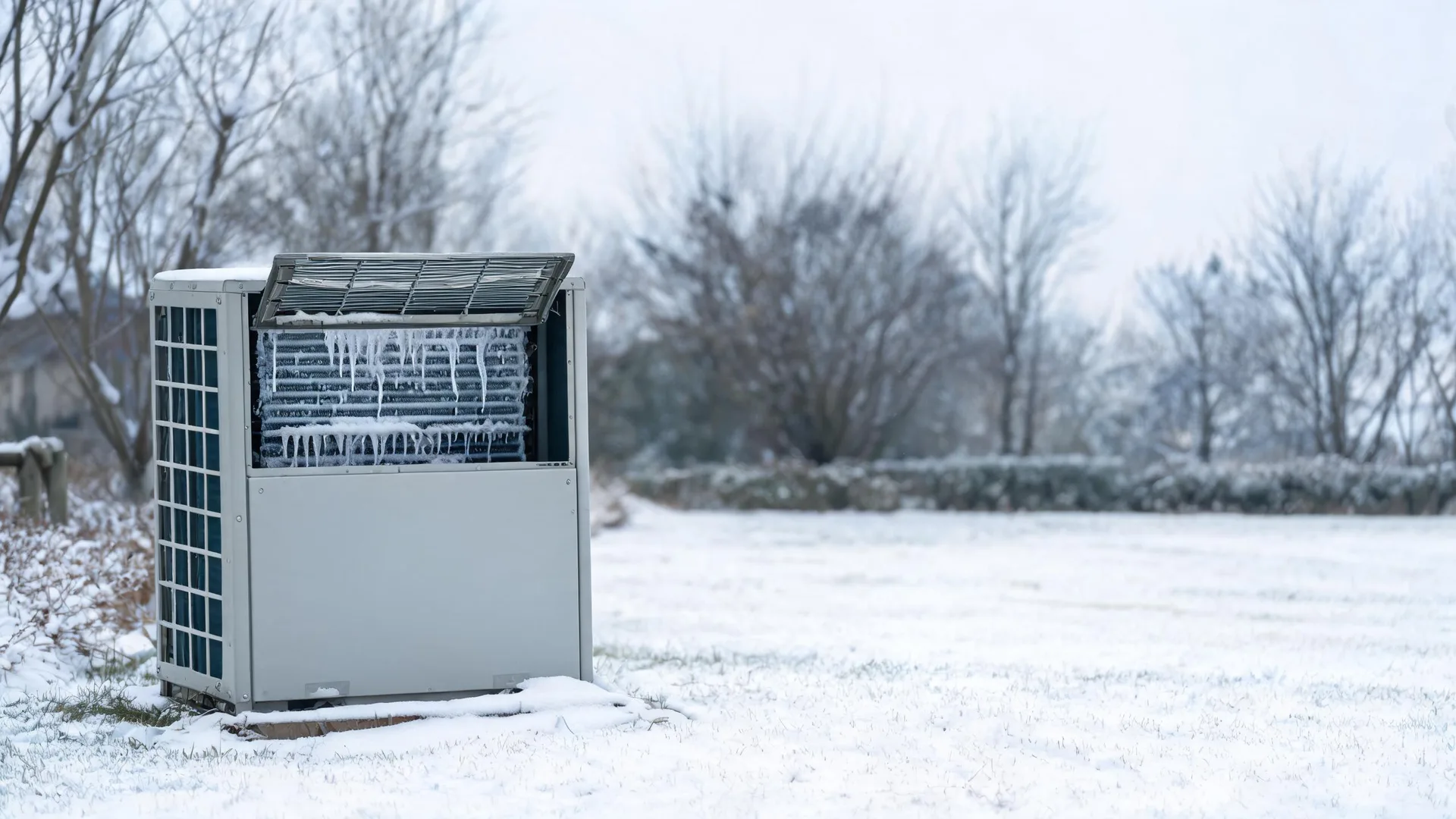
A few things are worth checking before you pick up the phone. Look at the outdoor unit first. If the coil is caked in ice or buried under leaves and debris, airflow is choked off and the system can't move heat properly. Check your thermostat batteries and make sure it's set to the mode you expect, heat or cool, since a setting bumped by accident can look like a breakdown. Go to the air handler or furnace closet and pull the filter. If you can't see light through it, swap it out, because restricted airflow strains the whole system and can trip it into a fault. Check that the outdoor unit has clearance on all sides and nothing is blocking the vents. If you've done all that and it's still blowing warm air when it should heat, or not running at all, that points to something inside the system itself, not something you can fix from outside the cabinet.

9 months
September through May, your system heats
1 months
July through July, it cools
18°F
the average winter night it heats against
80°F
the average summer afternoon it cools against
Isometric cutaway illustration of a single-story house showing interior rooms with furniture, an attic duct system connected to an indoor air handler, and an outdoor condenser unit linked by lines along the exterior wall.
Your system heats September through May and cools July through July.

NOAA nClimDiv, 1991–2020 normals

Jefferson County gets its share of winter storms and hail, same as the rest of the region.

Your heat pump is most likely down to a worn part, not the weather.

Half the homes in Jefferson County date to 1980 or later

Half the homes here were built by 1980
114 damaging wind events from 2015 to 2024
152 hail events from 2015 to 2024
Lakewood heat pumps work hardest in SeptemberHeat runs September through May here, so August is when a weak part finally gives out.

A heat pump that's struggling doesn't just leave you uncomfortable, it runs longer trying to make up the difference. Colorado homes paid 14.92 cents per kilowatthour for electricity in 2024, on the higher side for the region. A system short on refrigerant or fighting a bad capacitor pulls power the whole time it runs, and gets you less heat for it. That cost shows up on the bill whether the unit gets fixed or not. Waiting doesn't save you anything if the part is already failing.

Get the usual fix

Nothing about this area is especially hard on it. It's most likely the usual problem with the usual fix.

Find a contractor
A man in a cap, dark jacket and tan trousers climbs porch steps toward a red door, carrying a worn olive duffel bag, with a potted shrub beside gray clapboard siding.
A gray heat pump outdoor unit mounted on a concrete pad next to a residential house with lap siding and stone accents.

A small problem now is still a small problem. Left running, it won't stay that way.

A heat pump that's struggling still tries to meet the thermostat's setting, so it stays on longer to make up for what it's losing. That extra runtime puts strain on parts that were already weak. A compressor working against a low refrigerant charge runs hotter than it should, and heat is what wears compressor windings down over time. A failing capacitor makes the compressor or fan motor draw harder on every start, and each hard start shortens what's left of its life. Ice on the outdoor coil blocks the airflow the system needs to pull in heat, so the unit runs longer for less output, and if the coil stays iced over the compressor can end up flooded with liquid refrigerant it was never built to handle. None of this fixes itself by waiting. A part that is failing keeps failing while the system runs, and the longer it runs in that state, the more of the system it can take down with it.

What's worth fixing on a heat pump

Most heat pump repairs are single parts. A contactor, a capacitor, a reversing valve, a blower motor. These get replaced on their own without touching the rest of the system. A compressor is the one part that usually decides the question the other way. It's the most expensive part in the unit, and when it fails, a new system with a warranty behind it is often the better move over a compressor swap with none.
What age does to that decision

A heat pump nearing the end of its working life tends to fail in more than one place around the same time, because the parts were all installed together and wear on a similar schedule. Fixing the capacitor on an older unit doesn't tell you the motor behind it isn't next. A newer system failing the same way is usually just that one part, worn or defective, with the rest of the unit still sound.

Most of the time, you'll hear or feel the problem before you ever see it. Air coming from the vents that's cool instead of warm, or warm when it should be cool, usually means the reversing valve isn't switching the way it should. A system that short cycles, turning on and off every few minutes instead of running a full cycle, is often struggling with a failing capacitor or a thermostat sending it bad signals. Listen for new noises too. A grinding or squealing sound usually comes from a motor bearing giving out, while a hard clunk at startup points to the compressor itself. If the unit is running constantly and still not reaching the temperature you set, it's working harder than it should for less heat, and that's a sign something inside has already started to fail.

A diagnostic visit starts outside at the unit itself, checking refrigerant pressures and watching how the compressor and fan respond when the system calls for heat. From there it moves to the electrical side, testing the capacitor and contactor under load, since both can look fine sitting still and still be the reason the system won't start. The reversing valve gets checked too, since a valve that's stuck or slow explains blowing cold air when the thermostat is set to heat. Airflow gets checked at the coil and through the ducts, because a system can have every part working and still perform poorly if air isn't moving through it right. Most of this comes down to gauges and a multimeter, not guesswork, and a tech can usually point to the failing part before anything gets opened up or replaced.