




A snow-covered residential street at twilight with illuminated houses, bare trees, and an orange horizon glow beneath a deep blue sky.

Heat Pump Repair in La Junta, CO

Tell us about the job

Takes about a minute. No obligation.

RepairHeat PumpOtero County, CO
Step 1 of 2

What ZIP code is the job in?

A heat pump in La Junta works through winter nights that average 19°F. That's a normal load for the system, not a strain unique to this area. Otero County sees its share of hail and wind, but an outdoor unit is built to sit outside through weather like that. So when a heat pump here stops heating right or cycles strangely, the cause is usually something ordinary. A failing capacitor. Low refrigerant. A frozen coil. A thermostat out of calibration. Worth having someone check the actual part before assuming the worst.

7 months
October through April, your system heats
4 months
June through September, it cools
19°F
the average winter night it heats against
91°F
the average summer afternoon it cools against
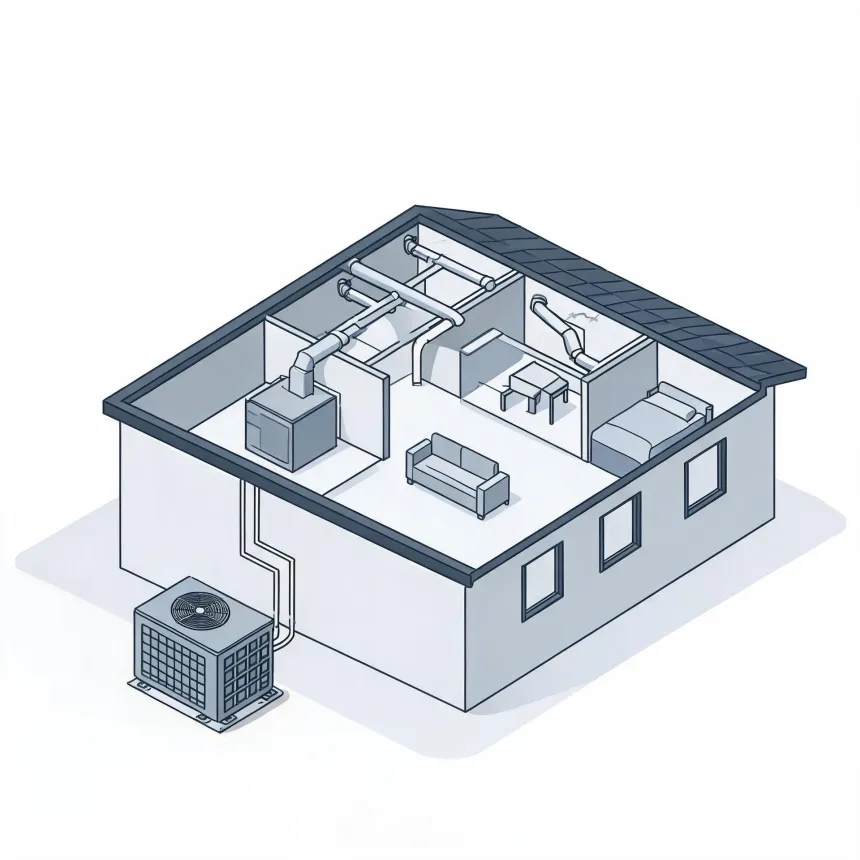
Isometric line illustration of a cutaway single-story house showing interior rooms with ducted air distribution, an indoor air handler, furniture, and an outdoor condenser unit connected by lines outside the wall.
Your system heats October through April and cools June through September.

NOAA nClimDiv, 1991–2020 normals

Heat here starts up in October, after it's sat idle since spring.

The first cold nights in La Junta will find whatever part was already weak.

A heat pump that's struggling runs longer to make the same heat, and at 14.92 cents a kWh that shows up on every bill until it's fixed

Power costs 14.92 cents a kWh statewide
82 damaging wind events from 2015 to 2024
54 hail events from 2015 to 2024

Half the homes in Otero County were built in 1958 or earlier. If your heat pump came with a house that old, it's worth finding out how old the unit itself is before sinking money into a repair. Heat pumps don't usually last as long as the houses they're installed in. A system nearing the end of its life can still take a repair, but it may be the second or third one in a few years. Ask whoever comes out to look not just what's wrong, but how much life is likely left in the unit.

The weather isn't the problem. Find the part that is.

Otero County has seen its share of hail, wind and the odd tornado, same as the surrounding area, and a heat pump sitting outside is built to take it. That history isn't why yours is acting up now. Get the actual part checked and fixed.

Find a contractor
A gray heat pump condenser unit mounted on a concrete pad against the gray lap-siding exterior wall of a house.

How old the unit is matters more than how old the house is

If the unit is old enough to need this kind of attention more than once, ask how old it actually is before paying for the repair in front of you. A technician can check the data plate and tell you what year it was installed. That number matters more than the age of the house.

It's blowing air that isn't warm

A heat pump in heating mode should feel warm at the vent, not just moving air. Air that feels cool or barely lukewarm often means the reversing valve is stuck in the wrong position, or the system is low on refrigerant. Either way it's not doing the job, even though the fan runs fine.
It won't stop running, or won't start at all

A unit that cycles on and off every few minutes, or one that runs nonstop and never satisfies the thermostat, is telling you something upstream is off. A failing capacitor can keep the compressor from starting cleanly. A bad thermostat sensor can keep calling for heat long after the house is warm enough. Either problem is worth having looked at before it takes out the compressor itself.

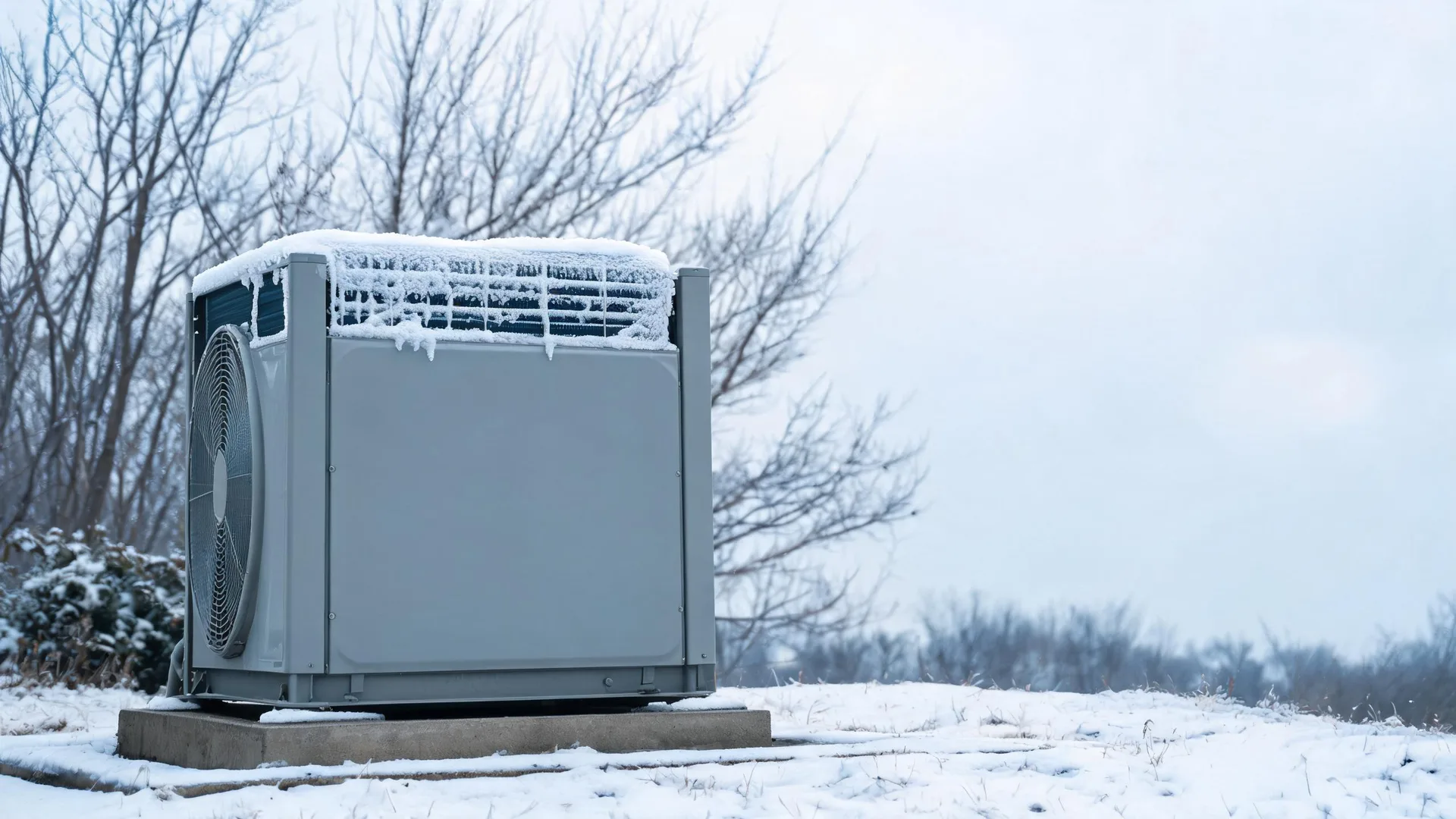
A heat pump fails the same handful of ways most of the time. The reversing valve, the part that switches it between heating and cooling, can stick or wear out, and when it does the system keeps running but stops doing its job. Refrigerant leaks out slowly through a worn fitting or a small crack in the coil, and a unit running low will struggle to keep up and ice over. The defrost board can fail, which leaves frost building up on the outdoor coil with nothing telling the system to clear it. Capacitors weaken over time and eventually can't get the compressor or fan motor started. None of this means the whole system is done. Most of these are single-part repairs, and a tech can usually tell which one it is just by watching the unit run for a few minutes.

A diagnostic visit starts with questions, not tools. What's the system doing. When did it start. Does it happen all the time or only sometimes. Then the tech watches it run. A full heating cycle shows most problems on its own. Whether the outdoor unit is icing over. Whether the air at the vent actually warms up. Whether the system switches between heating and cooling the way it should. From there it's gauges and meters, checking refrigerant pressure, checking the capacitor's output, checking whether the defrost board is sending the signals it should. Most of this gets diagnosed within one visit, because the handful of parts that usually fail are the first ones checked.