A row of illuminated timber-frame and stone houses photographed at dusk, with evergreen trees and a mountain range in the background.

Heat Pump Repair in Idaho Springs, CO

Tell us about the job

Takes about a minute. No obligation.

RepairHeat PumpClear Creek County, CO
Step 1 of 2

What ZIP code is the job in?

Cold nights, not extreme ones

Idaho Springs sees overnight lows averaging 12°F through December, January and February. That's cold enough for a heat pump to lean hard on its defrost cycle and backup heat, but it's within what the equipment is built to handle.


What it means for a repair call

A heat pump struggling here is more likely dealing with a worn part or a system that's fallen out of tune than anything the winter itself caused. The fix is to find which component is failing, not to treat the cold as the cause.

12°F
the average winter night it heats against
68°F
the average summer afternoon it cools against
Isometric cutaway illustration of a gray house showing interior rooms, a central air handler with ducts in the attic, and refrigerant lines running to an outdoor condenser unit beside the building.

Colorado electricity runs 14.92 cents per kilowatt-hour, among the higher rates homeowners pay.

A heat pump losing efficiency burns more of that expensive power every single day it runs unrepaired.

A county with a lot of weather and nothing unusual about it

150 severe weather events from 2015 to 2024
13% of homes statewide lost power a day or more in 2024
72 damaging wind events from 2015 to 2024

Get the usual fix

Nothing about this area is especially hard on it. It's most likely the usual problem with the usual fix.

Find a contractor
A residential heat pump outdoor unit mounted on a concrete pad next to a house with gray vinyl siding.

What a heat pump sounds and feels like when it's failing

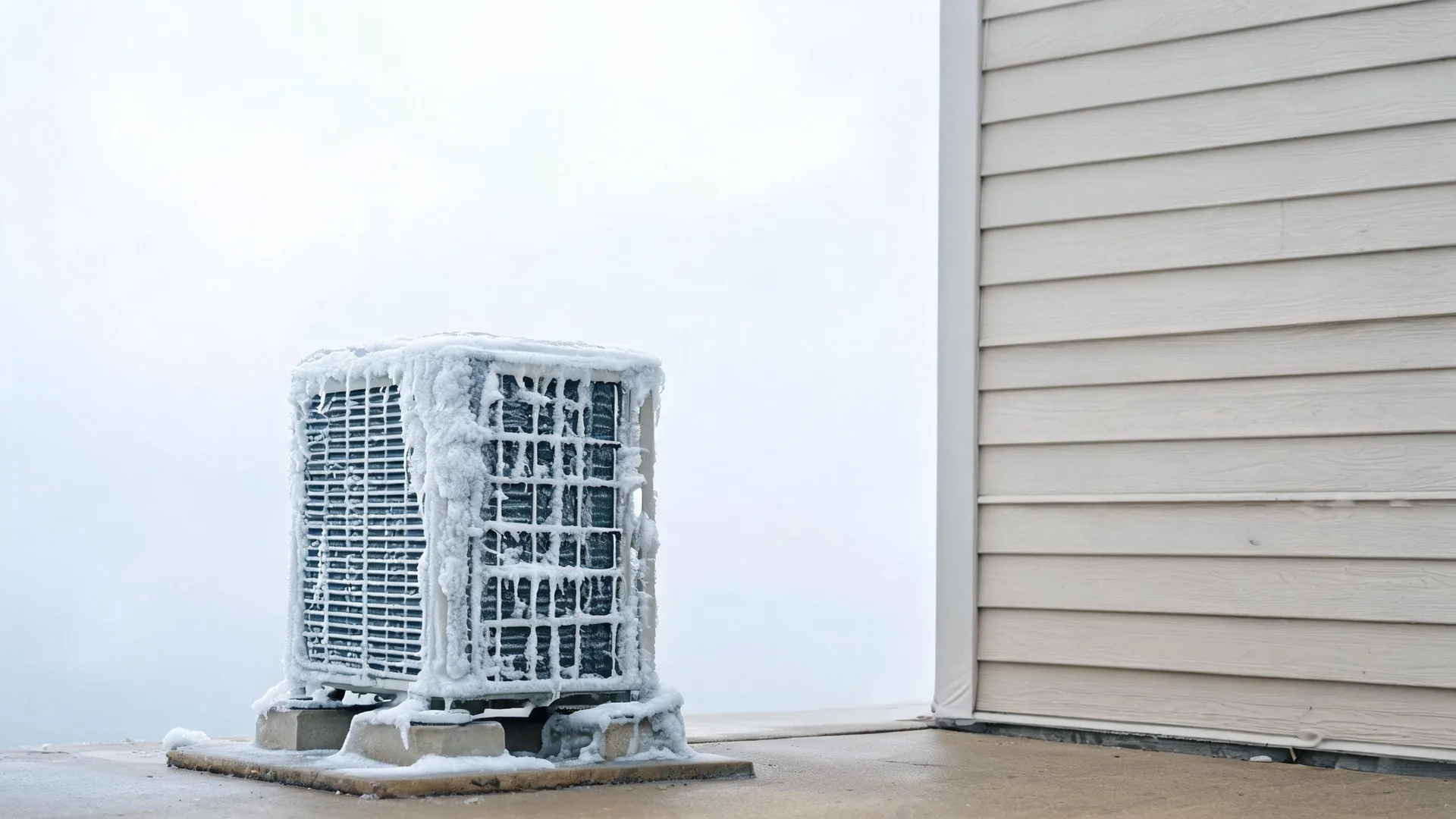
Watch for the heat pump running long stretches without the house ever feeling warm. That points to a system losing its grip on heating capacity, often a refrigerant charge that's dropped or a compressor on its way out. Ice building up on the outdoor unit and not clearing during the defrost cycle is another one. A little frost is normal. A solid sheet of ice that stays through a full defrost cycle means the reversing valve or the defrost control board isn't doing its job. Listen for the outdoor fan struggling to start, or a compressor that hums but won't kick in. Short cycling, where the system turns on and off every few minutes instead of running a full cycle, usually means a failing component is tripping a safety switch. Any of these is worth a call before the part it's straining fails outright.

Most failures start outside

The outdoor unit carries the compressor and the reversing valve, and both sit exposed to weather all year. A compressor wears out from age and from short cycling long before it quits outright. The reversing valve sticks when its coil weakens, leaving the system stuck in one mode or caught between heating and cooling. Low refrigerant charge, usually from a slow leak at a fitting or coil, shows up as the same long-run, never-warm pattern a failing compressor causes, which is why a tech checks the charge before condemning the compressor.

Backup heat hides the real problem

Most heat pumps have a secondary heat source that kicks in when the system can't keep up on its own. If that backup is doing most of the work, the house still feels warm even while the heat pump side has failed. That delays the call. A thermostat that shows which stage is running is often the first way to catch that the heat pump itself has stopped carrying its share.

There are a few things worth checking before a call. Go outside and look at the outdoor unit. If the fan isn't turning, or it's buried under a layer of ice that isn't clearing, that's worth telling the tech up front. Inside, pull the air filter and hold it up to a light. A filter clogged with dust chokes off airflow and can mimic a much bigger failure. Check the thermostat is set to heat and not accidentally switched to cooling or fan only, since that alone can make a working heat pump seem dead. If the house has a breaker panel that's easy to reach, look for a tripped breaker near the outdoor unit. None of this fixes a bad compressor or a low refrigerant charge, but it rules out the simple stuff before a tech gets there.

A diagnostic visit starts outside at the unit itself, not with a clipboard of guesses. A tech hooks up gauges to check the refrigerant charge, since that reading rules out or confirms several common problems right away. From there it's a look at the reversing valve, checking whether it actually shifts between heating and cooling when told to. Electrical readings on the compressor and the outdoor fan motor show whether either one is drawing power the way it should, or straining to start. Inside, the tech checks the thermostat's call against what the system is actually doing, since a miscommunication there can look exactly like a failed part. The goal is to find the one component actually causing the symptom, not to replace parts until something works.