







Stone and timber luxury homes with glowing windows line a mountain street at dusk, with evergreen trees and a rocky mountain range in the background.

Heat Pump Repair in Gypsum, CO

Tell us about the job

Takes about a minute. No obligation.

RepairHeat PumpEagle County, CO
Step 1 of 2

What ZIP code is the job in?

July is the last quiet month before heat kicks on here, and that makes it a good time to get a heat pump looked at. Once the weather turns, this system runs almost nonstop through June. A part that was already weak, a failing capacitor or a low refrigerant charge, tends to give out in those first cold weeks when the system has to work hardest. Getting it checked before that load hits means catching the problem on your terms instead of at two in the morning when the heat won't come on.

11 months
August through June, your system heats
11°F
the average winter night it heats against
73°F
the average summer afternoon it cools against
Isometric line illustration of a cutaway single-story house showing interior ductwork, an indoor air handler unit, and an outdoor condenser connected by refrigerant lines, with a dark shingled roof.

Gypsum sees winter storms, ice and all, but that's normal mountain weather, not a strain this system wasn't built for.

When a heat pump here quits in the cold, the cause is almost always a worn part, not the weather.

At 14.92 cents a kilowatt-hour, a heat pump running wrong is a bill you'll notice

Power costs 14.92 cents a kWh statewide
130 winter storms from 2015 to 2024
Winter nights average 11°F
Newer homes, newer systemsHalf the homes in Eagle County were built in 1993 or later.

A heat pump in trouble usually tells you in ways that are easy to miss at first. It might run long stretches without ever feeling like it's caught up, blowing air that's warm but not hot enough to satisfy the thermostat. Ice building up on the outdoor unit and not clearing during the defrost cycle is another sign, especially if that ice keeps coming back. Listen for the system switching between heating and cooling on its own, or for a clicking or buzzing when it tries to start and fails. A hissing sound near the lines usually points to a refrigerant leak, and that's not something that gets better on its own. If the outdoor fan isn't spinning when the system calls for heat, or the whole unit goes quiet while the indoor blower keeps running, that's worth a call before it turns into a system that won't start at all.

A heat pump running wrong costs more here every day you wait

A worn part doesn't fix itself, and at 14.92 cents a kilowatt-hour it keeps costing you while it sits broken. Get it looked at now and you fix it on your schedule, not during the next cold snap.

Find a contractor
A man in a gray long-sleeve shirt, brown work pants, boots and a dark cap walks up porch steps toward a red door, carrying a worn canvas tool bag.
A gray heat pump condenser unit mounted on a concrete pad against the gray lap-siding exterior wall of a house.

Check the age before you assume the worst

If your heat pump came with the house, there's a good chance it's still within its working life. That changes the math on a repair call. A worn capacitor, a stuck reversing valve, a low charge, none of that means the unit is done, especially if it's not an old system to begin with. Worth having the contractor confirm the age and condition of the unit before anyone talks about replacing it.

Check the thermostat settings first

Make sure it's set to heat, not auto or cool, and that the set point is actually above room temperature. A battery running low in the thermostat can also cause it to lose its schedule or stop calling for heat at all. Swap the batteries if it's been a while.
Look at the outdoor unit and the filter

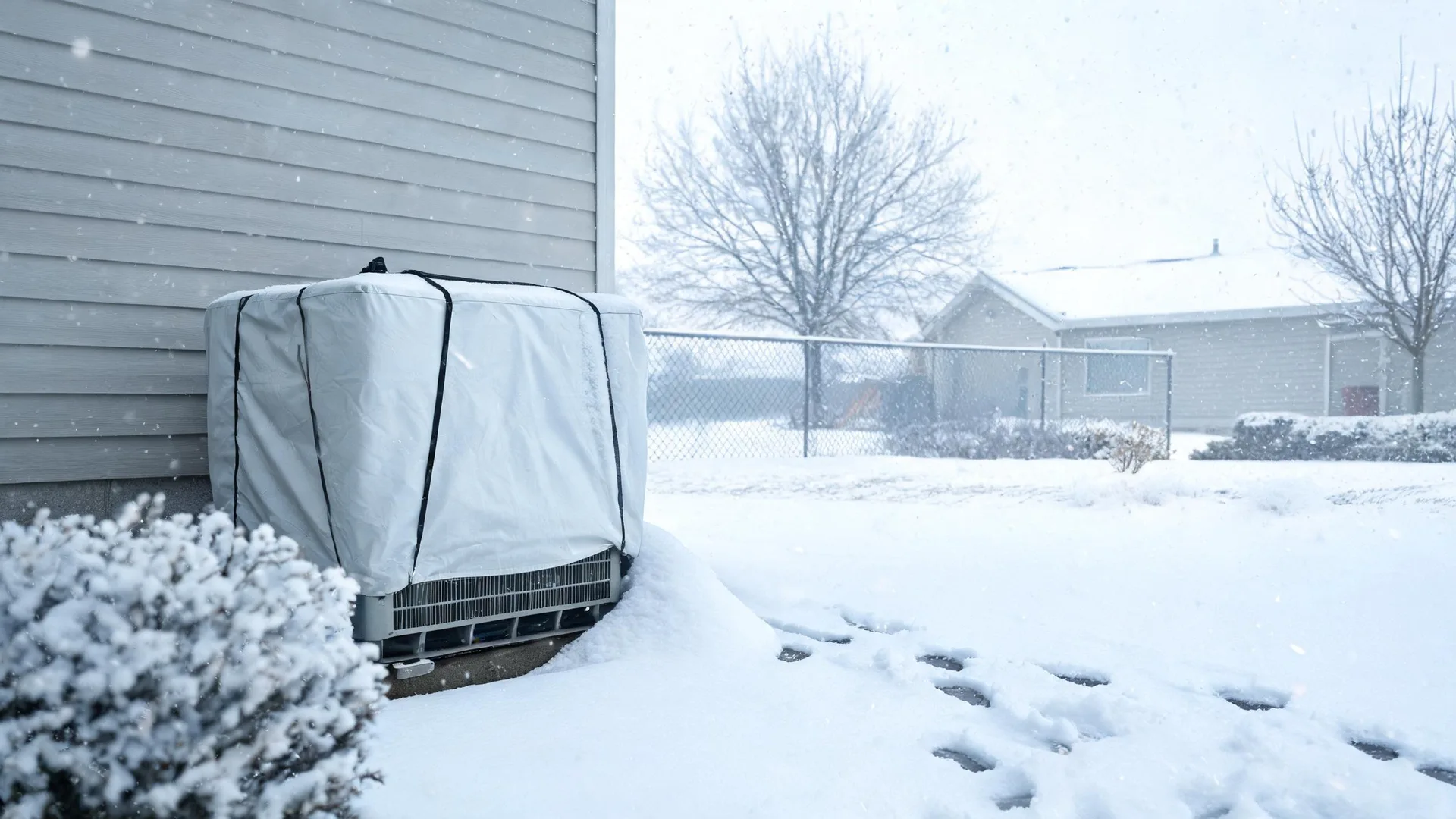
Clear away any leaves, ice or debris blocking the outdoor coil so air can move through it. Check the breaker if the unit seems dead. Then pull the air filter and hold it up to light. If you can't see through it, replace it, since a clogged filter can make the system struggle in ways that look like a bigger problem.

Most heat pump failures trace back to a handful of parts that wear out doing the same job over and over. The reversing valve is a common one, since it's what switches the system between heating and cooling, and the coil inside it can get stuck or the valve itself can fail to shift. Capacitors wear out too, and when one goes, the compressor or the outdoor fan motor can't start even though it's getting power. Refrigerant charge is another. A system doesn't use up refrigerant, so a low charge almost always means a leak somewhere in the lines, and that leak only gets worse left alone. The defrost board and its sensor can fail as well, and when they do, the outdoor coil ices over and never gets the signal to clear itself. None of this is tied to a calendar. A part that's been wearing down quietly for a while is just as likely to give out on a mild day as a cold one.

A diagnostic visit starts outside at the unit itself, checking refrigerant pressures and the electrical draw on the compressor and fan motor while the system runs. A gauge set shows whether the charge is right, low, or overcharged, and each of those points somewhere different. From there it's a matter of watching the reversing valve actually shift when commanded, confirming the defrost board is sending the signal it should, and checking the sensor that tells it when to stop. Wiring gets checked at the connections, since a loose or corroded one can cause the exact same stall or short-cycling as a bad part. The indoor side gets a look too, since airflow across the coil affects how the whole system performs. By the end, the cause should be narrowed to one part, not a guess at several.