






Warmly lit timber-frame and stone houses line a street at dusk, with evergreen trees and a snow-capped mountain range in the background.

Heat Pump Repair in Greeley, CO

Tell us about the job

Takes about a minute. No obligation.

RepairHeat PumpWeld County, CO
Step 1 of 2

What ZIP code is the job in?

Weld County saw 637 severe weather events between 2015 and 2024. Most of that was hail and wind: 388 hail events and 172 damaging wind events in that same stretch, plus 34 tornadoes. Your heat pump's outdoor unit sits outside through all of it, with the coil fins and fan exposed to whatever comes down. Hail can bend those fins or chip the fan blades without stopping the unit from running that day. A system that still turns on isn't the same as one that's fine. If you know a storm came through hard, that's a reason to have the outdoor unit looked at, whether or not you've noticed a problem yet.

8 months
October through May, your system heats
3 months
June through August, it cools
16°F
the average winter night it heats against
86°F
the average summer afternoon it cools against
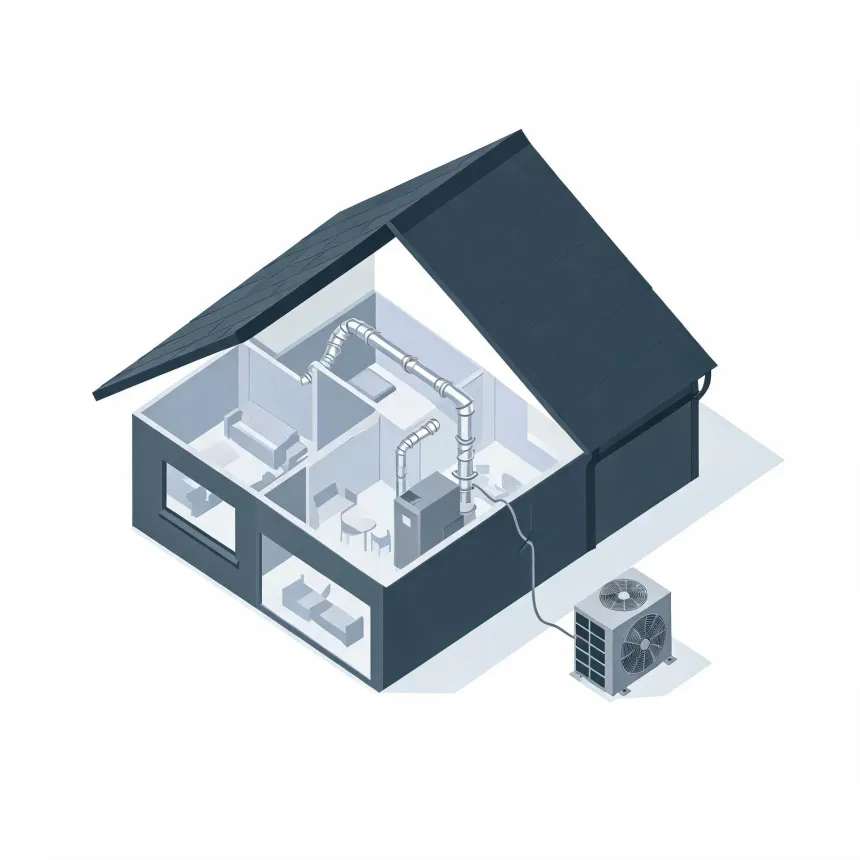
Isometric illustration of a cutaway house showing interior rooms with furniture, a furnace and ductwork, connected by a line to an outdoor condenser unit on the ground outside.
Your system heats October through May and cools June through August.

NOAA nClimDiv, 1991–2020 normals

Weld County's outdoor units sit through 42 winter storms a decade, plus hail and wind on top of that.

A heat pump that struggles after weather like that usually isn't broken from one thing, it's worn from all of it.

Half the homes here were built by 2001, so most heat pumps still have years left to give

Half the homes here were built by 2001
172 damaging wind events from 2015 to 2024
388 hail events from 2015 to 2024
June asks the most of a heat pump that limped through winterHeat pumps here run eight months of heat before cooling even starts in June.

Have the outdoor unit checked properly rather than just reset. A bent fin or a chipped fan blade from hail won't always stop a heat pump from running, so it can keep going for weeks after a storm before it quits for good. Someone who knows what storm damage looks like can catch that early, before it takes the compressor or the fan motor with it. That's worth doing here even on a unit with plenty of good years left, since it's the storms it sits through, not just its age, that decide how it holds up. A repair that only treats the symptom tends to come back. One that accounts for what the unit has actually been through usually doesn't.

Had the unit checked since the last storm came through

If a storm has come through recently, that's reason enough to get the outdoor unit checked before it tells you itself. Power cuts are part of this too. 13% of Colorado households lost power for a day or more in 2024, and a heat pump can't heat or cool through that. Worth knowing before the next one hits.

Find a contractor
A man in a cap, dark jacket and tan work pants carries a worn duffel bag as he steps up onto a porch toward a red front door, with a potted shrub beside the entry.
A white mini-split heat pump outdoor unit mounted on a concrete pad beside a gray-sided house, surrounded by gravel and green shrubs.

A newer system is worth fixing, not replacing

If your heat pump came with the house, and the house is newer, that's a reason to lean toward repair. A system with years left on it isn't one to pull out over a bent fin or a bad capacitor. Have the technician confirm what's actually wrong first, and let that answer decide, not the age of the unit. Most of the heat pump work in this county is on standard systems in houses built this century, since mobile homes are a small share of the homes here. That's worth telling whoever comes out, since it points them toward what's likely before they even open the panel.

A struggling compressor only gets worse by running

A compressor that's low on charge or starting hard draws more current than it should every time it kicks on. The motor windings heat up past where they're built to run. Run it long enough in that state and the windings break down for good, which turns a repair into a full replacement.
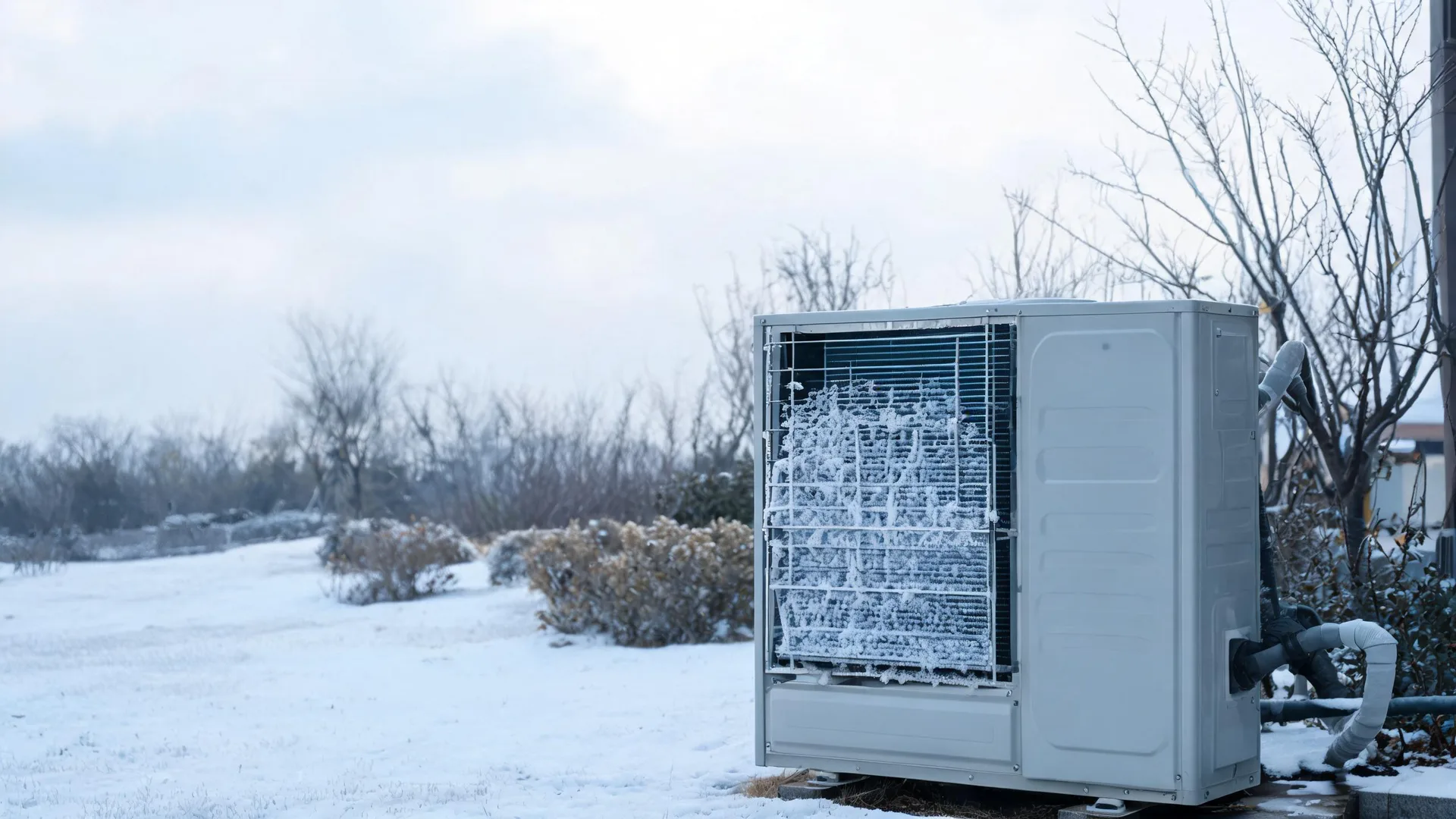
A small ice problem can take out the whole unit

If the defrost cycle isn't clearing the outdoor coil, ice keeps building on it. A thin layer limits airflow. Left alone, that ice closes off the coil entirely, and the compressor ends up working against a unit that can barely move air. Shutting it off and calling someone beats letting it push through a cycle it can't finish.

Before anyone comes out, check a few things yourself. Look at the thermostat first. Make sure it's set to heat or cool as intended and the batteries aren't dead, since a blank or frozen display can look like a bigger problem than it is. Go outside and look at the unit itself. If the outdoor coil is caked in ice or snow, or leaves and debris are packed against the fins, that alone can stop it from working right. Check that the circuit breaker for the unit hasn't tripped, and look at the indoor air filter. A filter clogged with dust chokes airflow enough to make the whole system struggle, and it's the one part you're meant to check yourself. If the outdoor fan isn't spinning at all while the indoor unit runs, or you hear it humming without turning, stop there and call someone rather than poking at it further.

A heat pump is two machines sharing one job, and either half can be the one that failed. Age alone doesn't tell you which. A compressor that's original to the unit can still be sound, while a control board or a capacitor, both much younger parts, can fail outright. What matters is what's actually broken and whether that part is still available for the unit you have. A refrigerant leak in the outdoor coil is a different repair than a failed run capacitor or a bad defrost control board, and they don't cost the same to fix or mean the same thing for what's left of the unit's life. Ask the technician to name the part and explain what failing it means for the rest of the system, rather than accepting a flat answer of fix it or replace it.