






An outdoor air conditioning condenser unit mounted on a concrete pad in front of a single-story suburban house.

Heat Pump Repair in Granby, CO

Tell us about the job

Takes about a minute. No obligation.

RepairHeat PumpGrand County, CO
Step 1 of 2

What ZIP code is the job in?

Winter nights in Granby average 8°F, and that's cold enough for a heat pump to lean hard on its backup heat or a defrost cycle to run more often. That's normal operation, not damage. Grand County sees its share of heavy snow and wind, but neither one is the usual reason a heat pump stops working right. Most calls out here come down to a thermostat setting that doesn't match the system, a dirty filter, low refrigerant, or a defrost control that's failing. A tech can usually tell which one it is within a few minutes of looking at the unit.

8°F
the average winter night it heats against
72°F
the average summer afternoon it cools against
Isometric line illustration of a cutaway house showing interior rooms with furniture, ceiling ductwork, and an outdoor condenser unit connected by lines along the exterior wall.

Half the homes in Grand County were built in 1990 or later.

A heat pump that age still has a lot of working life, so repair is usually the right move.

A heat pump running wrong costs more here at 14.92 cents a kWh

Power costs 14.92 cents a kWh statewide
56 damaging wind events from 2015 to 2024
139 winter storms from 2015 to 2024

Grand County logged 139 winter storms and 56 damaging wind events over the years on record, and only 1 hail event. That pattern doesn't point at the heat pump itself. Snow and wind can knock out power, and a heat pump that loses power and comes back running wrong usually just needs a setting reset, not a repair for storm damage. Hail is what tends to dent a condenser's fins or crack a fan blade, and this county barely sees any. So if the outdoor unit looks fine but isn't heating right, the thermostat and the defrost board are worth checking before the weather gets the blame.

Your heat pump likely has years left in it

If your heat pump came with the house, there's a good chance it's not old enough to be the problem. Get the real cause found and fixed.

Find a contractor
A man in a dark shirt and tan cargo pants carries a canvas and leather duffel bag up wooden porch steps toward a red front door, with a potted shrub in a red planter beside the entry.
A gray air-source heat pump mounted on a concrete pad next to a house with gray vinyl siding, surrounded by gravel and flanked by green shrubs and white hydrangea flowers.

What a heat pump tells you before it fails

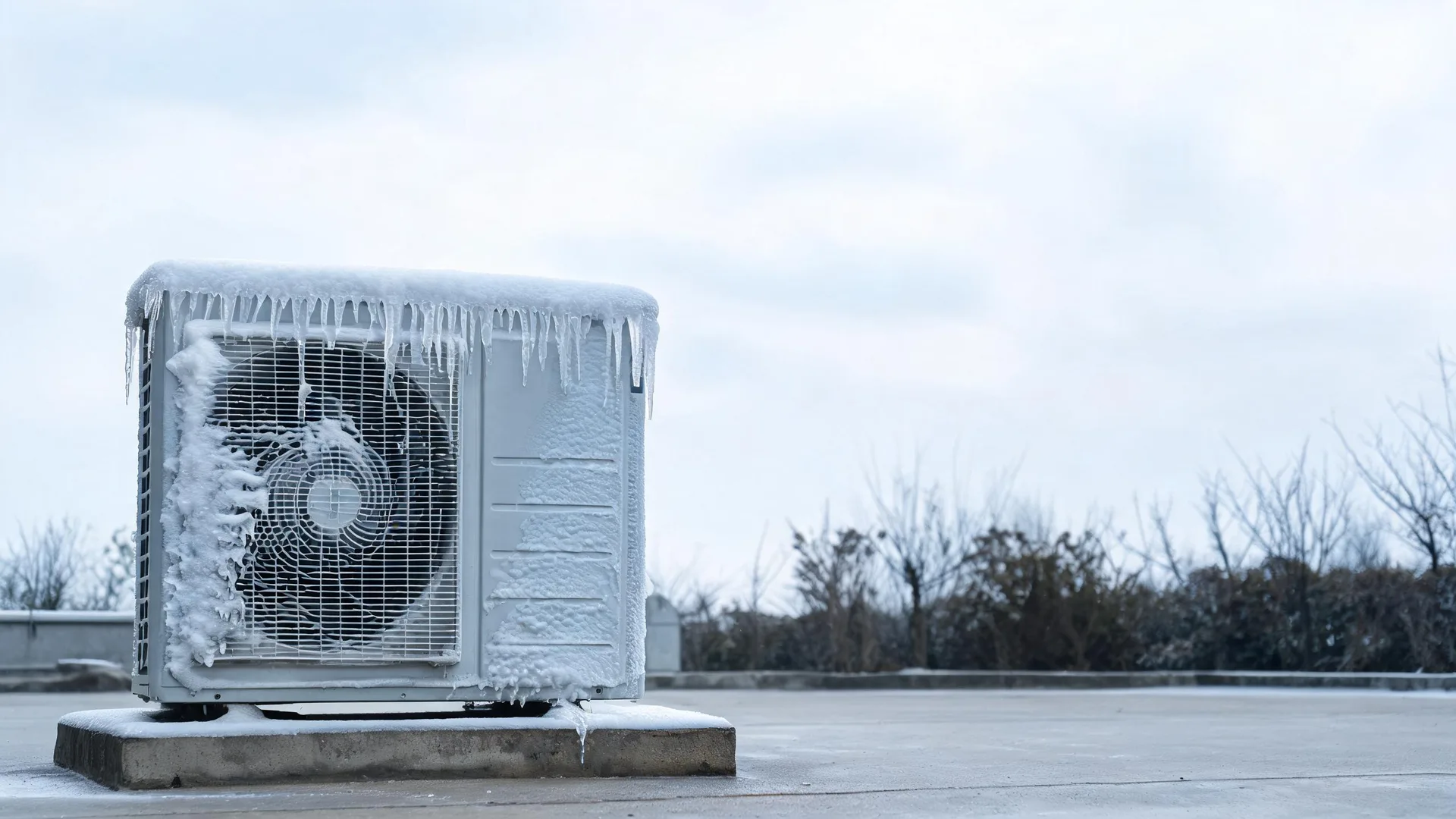
A heat pump that runs year round doesn't get a break between seasons, so wear shows up gradually, not all at once. Short cycling is usually the first thing an owner notices. The unit kicks on, runs a few minutes, shuts off, then starts again before the house ever feels it. Ice building up on the outdoor coil and staying there past a defrost cycle is another sign, especially if the fan sounds like it's working harder than usual. Airflow that feels weak at the vents often traces back to a blower motor losing strength or a filter that's choked down. If the system blows air that isn't warm enough to matter, that's worth a call rather than waiting it out. Usually that means the reversing valve or the refrigerant charge is off, and neither one fixes itself.

Check the thermostat first

Make sure it's set to heat and not fan only, and that the temperature is actually set above room temperature. A heat pump thermostat often has an emergency heat setting too, and if that got switched on by accident the system will run differently than expected.
Look at the filter and the outdoor unit

Pull the filter and hold it up to light. If you can't see through it, it's choking airflow and the system has to work harder to move heat. Then walk outside and look at the unit itself. Leaves, mulch, or anything piled against the cabinet blocks airflow the same way a dirty filter does, and clearing it away is easy to do yourself.

A heat pump that's struggling doesn't fix itself by staying on. If ice is building up on the outdoor coil and the defrost cycle isn't clearing it, that ice just keeps building, and it blocks airflow across the coil that the system needs to move heat at all. A reversing valve stuck halfway doesn't get less stuck with more runtime. It's either letting refrigerant leak past the seal or it isn't, and running the system harder only pushes refrigerant through a path that's already failing. Low refrigerant charge is the same problem. The compressor keeps trying to move a full cycle of refrigerant with less than it needs, and that makes it run hotter than it's built for. None of these get better on their own, and a compressor that overheats enough times can fail for good, which turns a repair into a full replacement.

A compressor failure is usually the line between repair and replacement. Everything else on a heat pump gets replaced on its own. A capacitor, a contactor, even a reversing valve can be swapped out without touching the rest of the system. The compressor is sealed, and swapping it costs close to what a whole new unit runs, so most owners replace the system instead of just that part. What broke matters more than how old the unit is. A unit that's been maintained but just had a defrost board die is worth fixing no matter how many winters it's seen. One that's lost its charge more than once probably has a slow leak in the coil, and that's worth weighing against starting fresh.