Illuminated timber-frame and stone houses along a residential street at night, with snow-capped mountains visible in the background.

Heat Pump Repair in Fairplay, CO

Tell us about the job

Takes about a minute. No obligation.

RepairHeat PumpPark County, CO
Step 1 of 2

What ZIP code is the job in?

Winters here are ordinary, just cold

Fairplay sees overnight lows averaging 9°F through December, January and February. That's cold, but it's the kind of cold heat pumps across Colorado run in every winter. A heat pump struggling at these temperatures usually has a specific problem, not a climate problem.

So the fix is usually straightforward

When a heat pump in Park County stops keeping up, the cause is something a technician can find and repair. It might be a low refrigerant charge. It might be a failing defrost control or a worn contactor. Finding the actual part at fault matters more than guessing based on the weather.

9°F
the average winter night it heats against
72°F
the average summer afternoon it cools against
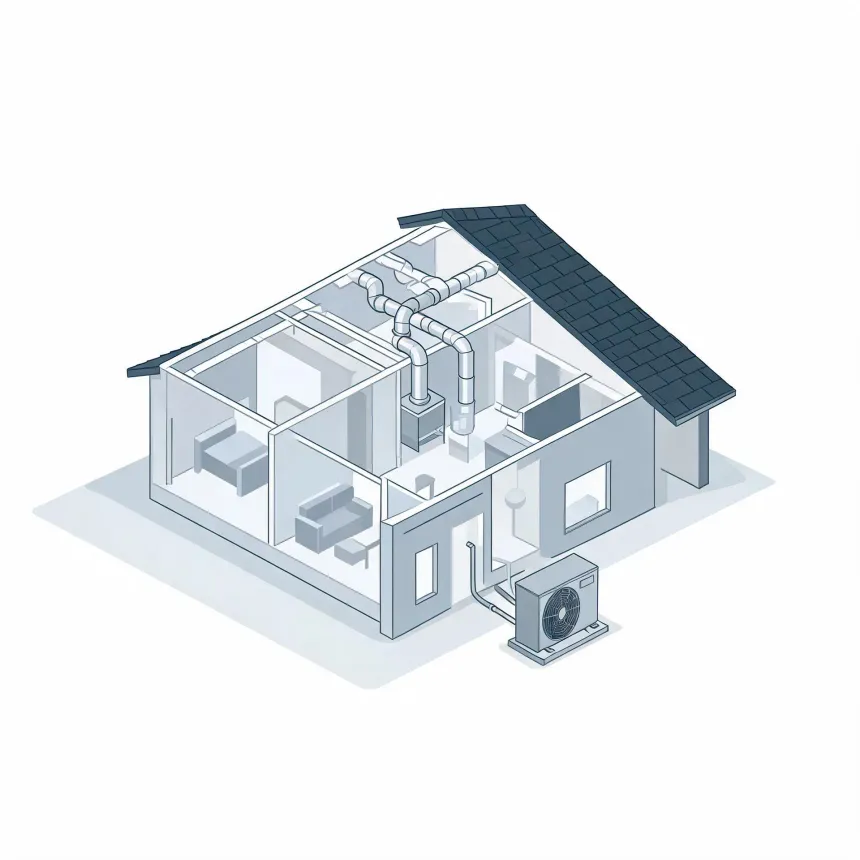
Isometric line illustration of a cutaway house showing interior rooms with furniture, ceiling ductwork connected to an indoor air handler, and an outdoor condenser unit linked by refrigerant lines.

Park County logged 80 winter storms between 2015 and 2024, more than any other severe weather in the county.

A heat pump is built to run through storms like that, so a breakdown here points to a worn part, not the weather outside.

At 14.92 cents a kilowatt-hour, a heat pump that's struggling costs you more here than almost anywhere else

Power costs 14.92 cents a kWh statewide
74 damaging wind events from 2015 to 2024
80 winter storms from 2015 to 2024
Newer homes, newer systemsHalf the homes in Park County were built in 1992 or later.

A heat pump that's short on refrigerant or running on a weak contactor still pulls power the whole time it's on, it just does less with it. At 14.92 cents a kilowatt-hour, that difference shows up on the bill fast. Waiting a few months to deal with it costs more here than it would most places. Have a technician find the actual part at fault and fix it, rather than letting it run the way it is.

Your heat pump is likely worth repairing

A heat pump that came with a newer house still has a repair worth making. Get the part that's failing diagnosed and fixed before it takes anything else down with it.

Find a contractor
A gray heat pump outdoor unit mounted on a concrete pad next to a residential house with lap siding and stone accents.

The signs show up before the system quits

A heat pump that needs attention usually tells you before it quits outright. It blows air that isn't as warm as it used to be, or it runs long stretches without the house catching up to the thermostat. Outside, the unit cycles into defrost more often than it should, or frost builds up on the coil and stays there. You might hear it click on and off instead of running a steady cycle, which points to a failing contactor or capacitor. A hissing sound or ice on the lines usually means refrigerant is low, and that's not something that tops itself off. None of these mean the system is at the end of its life. They mean a specific part is failing, and the sooner a technician gets eyes on it, the less chance it takes another part down with it.

Age of the part, not age of the system

A heat pump fails one part at a time. The compressor can be sound while a contactor burns out or a capacitor weakens. Replacing the whole unit over one bad part means paying for a compressor and coil that still had years left in them.

When replacement is the honest answer

If the compressor itself is failing, that's the one repair that usually doesn't make sense on its own. A compressor swap costs close to a new system, and the rest of the unit is the same age as the part that just failed. That's the case worth asking a technician about directly, not guessing at from the symptoms.

A low refrigerant charge doesn't stay a low refrigerant charge if the system keeps cycling on it. The compressor needs that refrigerant to carry heat away from itself as it runs, and with less of it circulating, the compressor runs hotter than it was built to run. Keep that up long enough and the problem isn't the charge anymore, it's the compressor itself. A weak contactor wears the same way. It's already arcing a little every time it closes, and every cycle after that pits the same worn contacts further until they fail to close at all. A system that's struggling and left running isn't holding steady. It's wearing down the one part a heat pump can't really do without.

A diagnostic visit starts with the thermostat and works outward. A technician checks what the system is actually doing against what it's supposed to do, then moves to the equipment itself. Outside, that means checking refrigerant pressures, looking at the compressor and reversing valve, and checking the coil for frost or ice. Inside, it means checking airflow across the indoor coil and testing the electrical parts, the contactor and capacitor, for wear. Gauges and a multimeter tell the story more than the sound the unit makes or how old it is. Once the failing part is found, the technician can say what it takes to fix it and whether anything else is at risk from the strain of running compromised.