





A single-story black board-and-batten house with a standing-seam metal roof and timber-post covered entry, surrounded by pine trees, dry grasses and a gravel foreground.

Heat Pump Repair in Durango, CO

Tell us about the job

Takes about a minute. No obligation.

RepairHeat PumpLa Plata County, CO
Step 1 of 2

What ZIP code is the job in?

A heat pump here isn't fighting Phoenix-style heat for months on end. The strain that wears a system down fastest is long stretches of extreme temperatures, and Durango's winters, cold as the nights get, average 16°F rather than well below zero. That's real cold, but it's steady, manageable cold, not the kind that pushes a system past what it's built for. When a heat pump here is acting up, age or a skipped maintenance call is usually the reason, not years of the system working harder than it should have to. That makes most repairs worth doing rather than a sign the whole unit is on its way out.

10 months
September through June, your system heats
16°F
the average winter night it heats against
79°F
the average summer afternoon it cools against
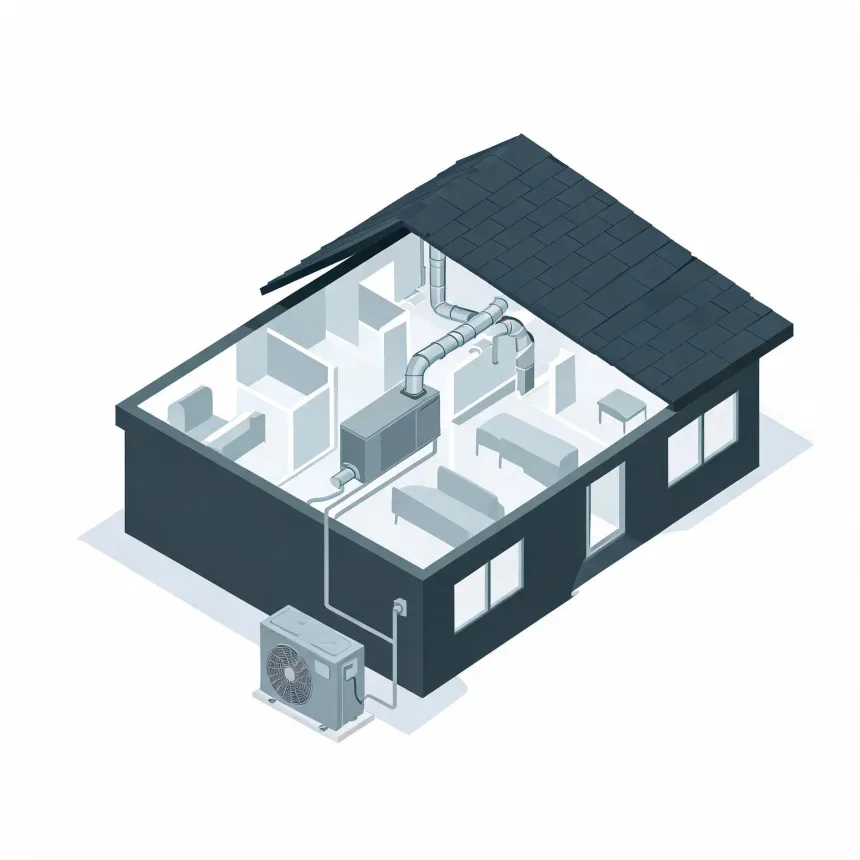
Isometric cutaway illustration of a single-story house showing interior rooms, ceiling ductwork connected to an air handler, and an outdoor condenser unit linked by a line set.

Half the homes in La Plata County were built in 1993 or later.

A heat pump installed with a newer home here still has years of work left in it, which is why a repair call usually makes more sense than a replacement quote.

At 14.92 cents a kilowatt-hour, a heat pump running wrong costs you every month it's ignored

Power costs 14.92 cents a kWh statewide
30 damaging wind events from 2015 to 2024
8 hail events from 2015 to 2024

Mobile homes make up 12.7% of the housing in La Plata County, and the same repair-first logic doesn't always hold for them. A heat pump paired with a mobile home can have different hookups and clearances than one set up for a site-built house, so a part swap that's routine on one isn't automatically routine on the other. If yours is in a mobile home, say so when you call. It changes what the tech expects to find before they ever get to the unit.

It's usually worth repairing

It has an easier job here than in most places, so your heat pump is often in decent shape. Repair is usually worth it.

Find a contractor
A man in a dark jacket, cap and tan work pants climbs porch steps toward a red front door, carrying a canvas tool bag in his right hand, with a potted shrub at left.
A gray heat pump outdoor unit mounted on a concrete pad next to the stone-accented exterior wall of a house.

It's been through 128 storms and still running

Winter storms have rolled through this county 128 times over the last decade, heavy snow, ice, blizzards. A heat pump that's kept running through that kind of weather has already shown what it can handle. If it's acting up now, that points to a worn part or a skipped maintenance call, not years of strain catching up with it. That's reason enough to get the part fixed rather than write off the system.

A weak part doesn't stay weak

A failing capacitor or a pitted contactor will keep a heat pump running, just worse. Every cycle it runs on a bad part puts more load on what's next to it, the compressor especially. Letting it ride rarely means the problem stays the same size.
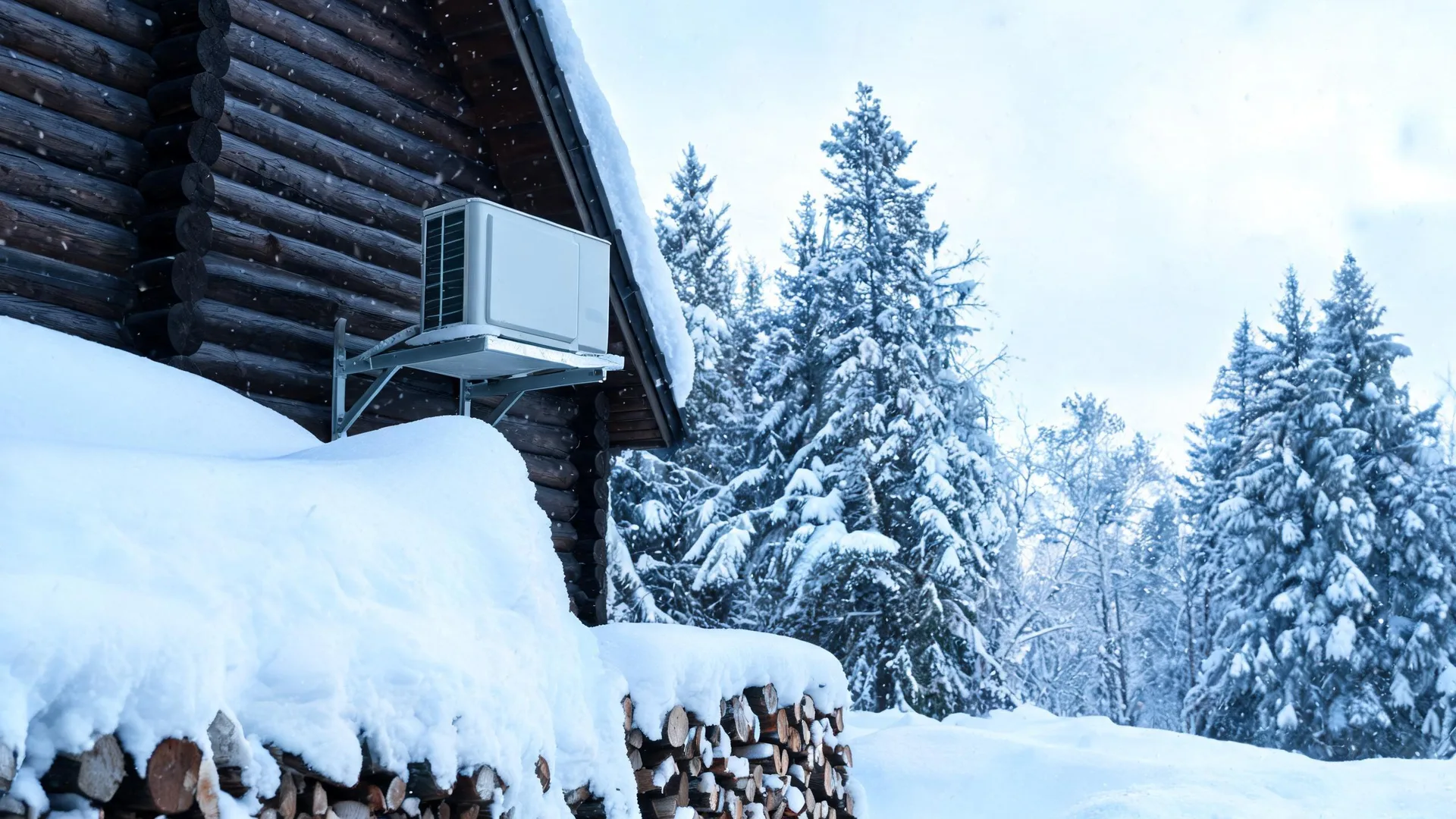
The compressor is the one you don't want to lose

Most of what fails on a heat pump, a capacitor, a contactor, a sensor, is a straightforward swap. The compressor is not. It's the part everything else protects, and it often shuts the system down early when something upstream is off. Keep forcing it to run through that and a small repair turns into a full system replacement.

Before you call anyone, there are a few things worth checking yourself. Go outside and look at the outdoor unit. If it's packed with snow, ice, or leaves, clear it off and see if that changes anything, since a blocked unit can't move air no matter what's wrong inside it. Check your thermostat is actually set to heat and the temperature is set above room temperature, since a setting bumped by accident looks exactly like a broken system. Pull the air filter and hold it up to a light. If you can't see light through it, swap it, because a clogged filter chokes airflow and can cause a heat pump to ice up or shut off on its own. Check your breaker panel for a tripped breaker while you're at it. None of that fixes a bad capacitor or a failing sensor, but it rules out the things that aren't actually broken before you pay someone to come find that out.

A diagnostic call starts outside at the unit and works in. The tech checks refrigerant pressures, reads the voltage and amp draw on the compressor, and tests the capacitor and contactor under load rather than just looking at them, since a part can look fine and still be failing. Inside, they'll check the airflow across the coil and look at what the system is doing through a full cycle, not just whether it turns on. Most of what's wrong shows up in those readings before anyone touches a wrench. Once the bad part is found, they can tell you straight whether it's a quick swap or something that points to bigger trouble, and what it'll take to fix it right.