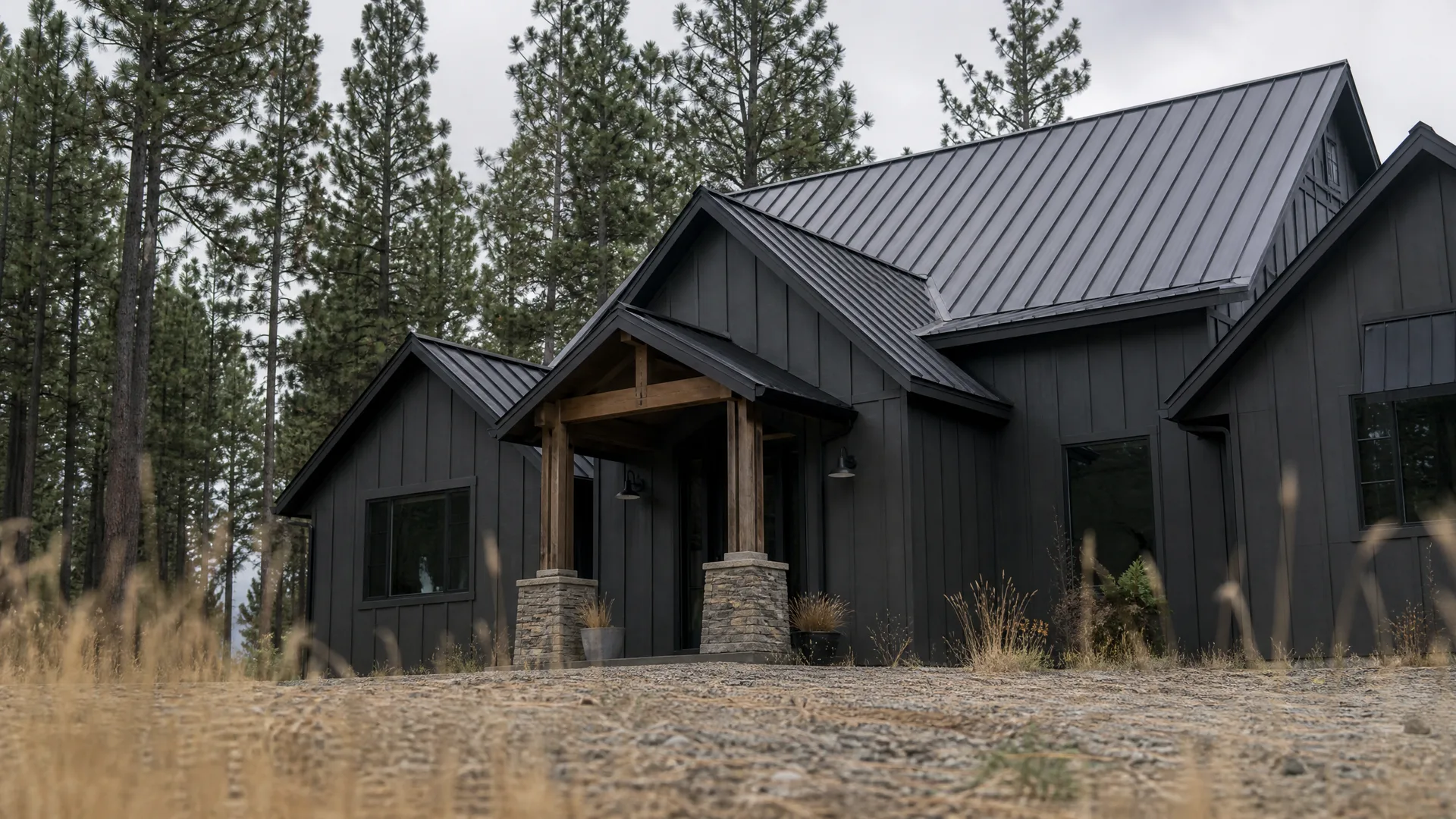






A single-story black board-and-batten house with a dark standing-seam metal roof, timber entry porch posts on stone bases, set among tall pine trees with dry grass in the foreground under an overcast sky.

Heat Pump Repair in Delta, CO

Tell us about the job

Takes about a minute. No obligation.

RepairHeat PumpDelta County, CO
Step 1 of 2

What ZIP code is the job in?

Heat pumps here cool the house in July and August, then switch over to heat from September through May. That switch is when trouble tends to show up. A reversing valve or defrost control that was already marginal all summer can fail outright once it has to hold up through a Delta winter. The same thing happens in reverse come July, right as cooling starts after months of sitting idle. If your system is acting up right at one of these turns, that is not bad luck. It is usually a part that was already weak, now carrying a load it could not quite handle before.

9 months
September through May, your system heats
2 months
July through August, it cools
17°F
the average winter night it heats against
82°F
the average summer afternoon it cools against
Isometric line illustration of a cutaway single-story house showing interior rooms, ceiling ductwork connected to an indoor air handler, and refrigerant lines running to an outdoor condenser unit on a pad.
Your system heats September through May and cools July through August.

NOAA nClimDiv, 1991–2020 normals

Winters here average 17°F overnight, not the deep cold that pushes a heat pump to its limit.

A heat pump breaking down in Delta has usually hit a weak part, not a workload it couldn't handle.

Electricity here runs 14.92 cents a kilowatt-hour, so a heat pump limping along costs you every month it stays that way

Power costs 14.92 cents a kWh statewide
42 damaging wind events from 2015 to 2024
192 winter storms from 2015 to 2024
Nothing unusual here, just the usual fixHalf the homes in Delta County were built in 1979 or earlier, and that doesn't change what's wrong with your heat pump

Delta County has logged 234 severe weather events over the last ten years, with winter storms making up most of that count. It sounds like a lot until you look at what it actually does to a heat pump. Wind and snow can knock out power, and when power drops, a heat pump shuts down with it. Most come back on their own once power is restored, sometimes needing nothing more than the control board to reset. That kind of outage does not wear out a reversing valve or a compressor. If your system is down, look first at what was already struggling before the weather had anything to do with it.

This is usually a fixable problem, not a worn-out system

A weak part is worth fixing here more often than not, since the machine itself was never pushed hard. Get the actual cause diagnosed before you consider replacing anything.

Find a contractor
A gray heat pump outdoor unit mounted on a concrete pad next to a residential house with lap siding and stone accents.

What actually gives out in a heat pump

A heat pump runs far longer over a year than a furnace or an air conditioner alone, since it is doing both jobs in turn. That extra run time falls hardest on a few parts. The reversing valve shifts the system between heating and cooling, and every shift is a chance for it to stick. The defrost control cycles the outdoor coil through heat on a schedule, and a failing sensor or control board throws that timing off, so the coil either frosts over or never gets the chance to. The run capacitor that helps start the compressor and fan motors weakens gradually from heat and from simple age, then fails without much warning. None of these parts wear out because the system is undersized or overworked. They wear out because they cycle constantly, on and off, heat and cool, year after year, and eventually one of them does not reset the way it is supposed to.

Check the thermostat and the breaker first

Make sure the thermostat is set to heat or cool as needed and the setpoint is actually past room temperature. Then check the breaker for the outdoor unit and the one for the air handler. A tripped breaker or a thermostat bumped into the wrong mode leaves a system sitting idle with no damage done, and it rules out the simplest cause before anyone comes out.
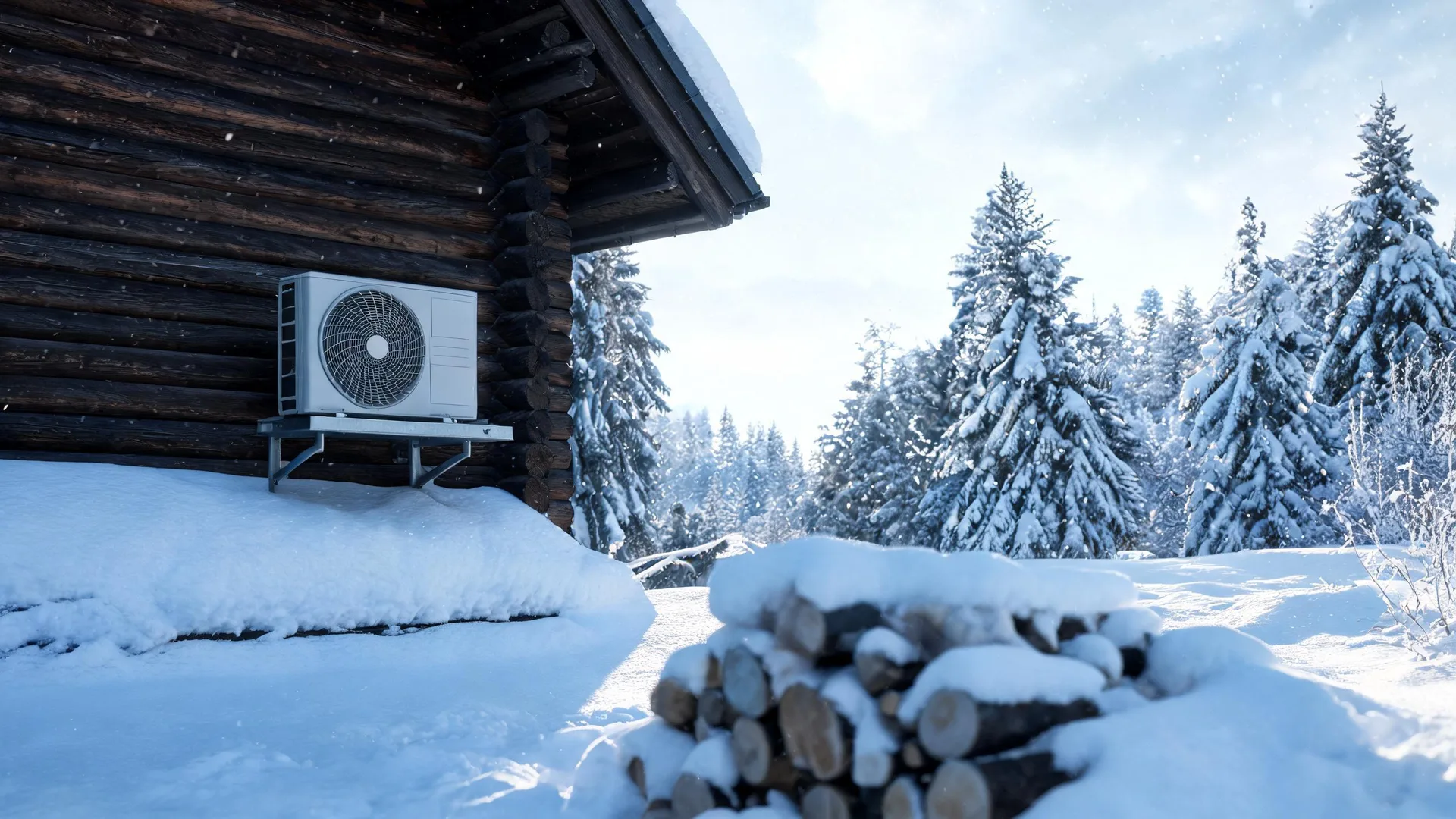
Look at the outdoor unit before you decide it's broken

Walk outside and look at the coil and the fan. Snow, leaves or ice packed around the unit blocks airflow and can shut it down or make it run poorly, and clearing that away yourself is safe. A thin layer of frost during a defrost cycle is normal. A thick coat of ice that never seems to melt off is not, and that detail is worth telling the technician when they arrive.

A heat pump that is struggling does not fix itself by staying on. If the reversing valve is sticking partway, the system keeps calling for a full shift that never quite happens, so the compressor works against itself instead of just moving refrigerant where it needs to go. Run it like that for days and the compressor is what pays for it, and a compressor is not a part anyone wants to replace. The same goes for a defrost cycle that is not timing right. Ice builds on the outdoor coil a little more each cycle, airflow drops, and the system pulls harder to do the same job, which only adds to the frost. A weak capacitor behaves the same way. It lets the compressor or fan motor start rough instead of clean, and every rough start wears the motor a little more than the last one. None of this announces itself. The system keeps running, just worse, until the part it was leaning on gives out completely.

A repair makes sense when one part failed and nothing else got dragged into it. A reversing valve, a defrost control, a capacitor, these go bad on their own and swapping one back in brings the unit back to normal. The harder case is when a failing part has been straining the system for a while before anyone noticed. A reversing valve that sticks for days can make the compressor fight itself, and if that compressor comes out damaged, the repair is no longer just the valve. Ask the technician what actually failed and whether it took anything else down with it. A bad capacitor swapped out clean is one answer. A compressor damaged by something else failing first is a different one, and it changes what the repair is actually worth doing.