






An outdoor heat pump unit mounted on a concrete pad in front of a two-story suburban house.

Heat Pump Repair in Craig, CO

Tell us about the job

Takes about a minute. No obligation.

RepairHeat PumpMoffat County, CO
Step 1 of 2

What ZIP code is the job in?

June is the last quiet month before a heat pump here goes to work. July is the only month it runs cooling, and that's usually when a capacitor that's been weakening all year finally quits, or a low charge shows up as a system that runs and runs without cooling the house. August gives it a short rest, then September starts nine months of heat. A unit that struggled in July and was never looked at often carries that same fault into fall, where it shows up as short cycling or air that isn't as warm as it should be. Getting it fixed before the switch to heat matters more than the July discomfort does.

9 months
September through May, your system heats
1 months
July through July, it cools
13°F
the average winter night it heats against
81°F
the average summer afternoon it cools against
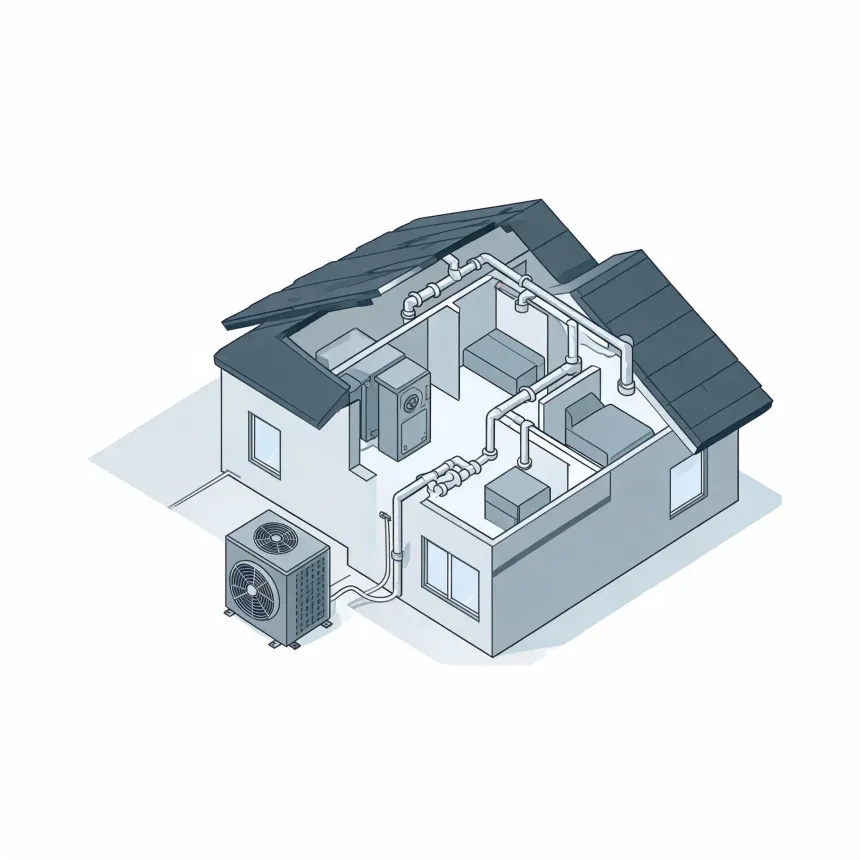
Isometric grayscale illustration of a cutaway two-story house showing interior ductwork, an indoor air handler unit, and an outdoor condenser unit on a pad beside the building.
Your system heats September through May and cools July through July.

NOAA nClimDiv, 1991–2020 normals

A heat pump that keeps running on a weak capacitor forces the compressor to pull hard on every start.

Enough bad starts and the compressor itself fails, turning a small repair into a full replacement.

At 14.92 cents a kWh, a heat pump running on a bad part burns money every month it's ignored

Power costs 14.92 cents a kWh statewide
82 damaging wind events from 2015 to 2024
191 winter storms from 2015 to 2024
Craig winters are cold, but nothing a heat pump isn't built forOvernight lows here average 13°F across December, January and February.

Half the homes in Moffat County were built in 1977 or earlier, and half since. A heat pump doesn't care which. It cares about the thermostat wiring, the breaker, and the refrigerant line set, and those get replaced or patched over the years no matter when the house went up. About one in five homes here is a mobile home, often running a heat pump matched to a smaller space with shorter duct runs. That changes what a technician checks first, not what's likely wrong. A failing capacitor or a low charge shows up the same way either way, and the fix is the same too.

A bad part costs more here every month it runs

That cost doesn't stop on its own, and it doesn't show up as one big bill, just a higher one every month the fault runs. Getting the actual cause diagnosed and fixed is what ends it.

Find a contractor
A man in a dark shirt and tan work pants carries a worn leather tool bag up porch steps toward a red front door, with a potted shrub beside the entry.
A gray heat pump condenser unit mounted on a concrete pad against the gray lap-siding exterior wall of a house.

Age tells you less than the pattern of failures does

A heat pump run constantly behaves differently from one that only comes on now and then, and that matters when you're deciding whether to fix it or replace it. Every start puts load on the compressor, and a unit that's been cycling on and off for years has racked up a lot of starts most owners never think about. Worn parts tend to show themselves as a pattern, not a single failure. A capacitor that's weakening will make starts harder over time before it actually quits. A refrigerant leak that's been slow for a while will make the system run longer and longer to hit the same temperature before anyone notices. If a repair fixes the part that failed and the rest of the system is sound, that's money well spent. If the compressor itself is damaged, or if this is the second or third repair on an older unit, replacement usually makes more sense than chasing one worn part after another.

Most failures start electrical, not mechanical

A capacitor weakens slowly, long before it quits outright. It loses its charge a little at a time, and each start pulls harder on the compressor than the last. A contactor can also pit and burn from years of arcing every time it closes, until one day it stops making contact. Either one can take the whole system down.
The other common failure is slow and easy to miss

Refrigerant doesn't get used up, so a system that's low is losing it somewhere, usually a slow leak at a fitting or coil. The system doesn't stop working right away. It just runs longer and longer to hit the same temperature, which gets mistaken for the unit getting old rather than a leak getting worse.

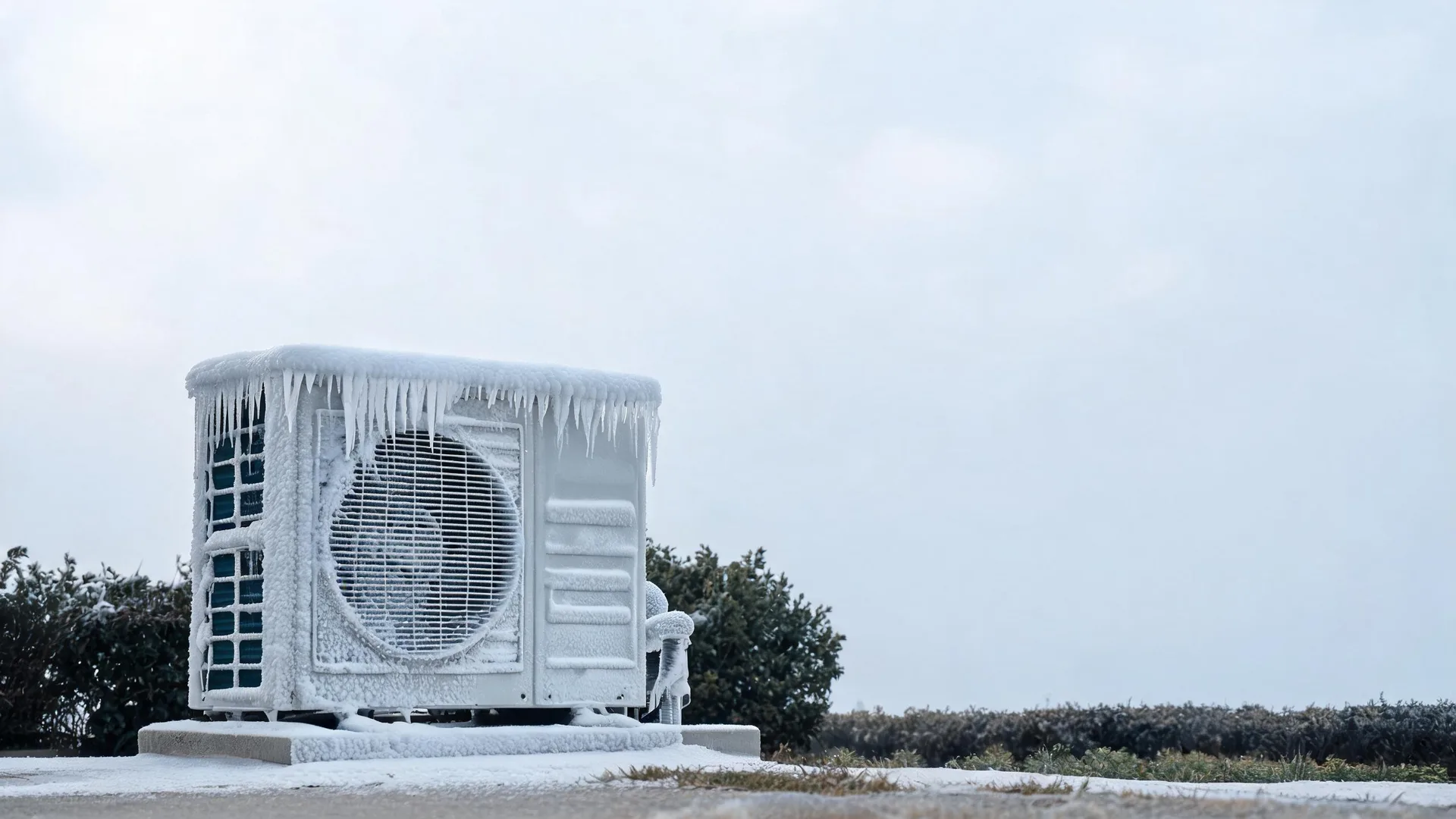
A heat pump in trouble rarely just shuts off. It tells you first. Air coming out of the vents that's lukewarm instead of properly warm or cool is usually the earliest sign, especially if the system is running longer than it used to and still not catching up. Listen for it cycling on and off more than it used to, or for a hum when it tries to start but doesn't. Ice on the outdoor unit when it shouldn't be there points to airflow or refrigerant trouble, not just cold weather. A burning smell or a breaker that trips when it kicks on means stop running it and get it looked at. Any of these on their own is worth a call. Several at once means the fault has been building for a while.

A diagnostic visit starts with questions. When does it act up, how long has it been doing it, and does it happen in heating or cooling. Then the technician checks the electrical side first, since that's where most failures start. Readings on the capacitor, a look at the contactor for pitting or burn marks, and a check of the wiring at the disconnect. If that's clean, next comes refrigerant pressure and a check for ice on the coils or the line set. Airflow gets checked too, since a dirty filter or blocked return can mimic a refrigerant problem without being one. By the end the technician should be able to point to the actual part at fault, not just guess at a category.