



Stacked firewood along the dark vertical-board exterior wall of a house, with two outdoor condenser units, a gravel path, dry grass and pine trees under an overcast sky.

Heat Pump Repair in Colorado Springs, CO

Tell us about the job

Takes about a minute. No obligation.

RepairHeat PumpEl Paso County, CO
Step 1 of 2

What ZIP code is the job in?

El Paso County saw 1,277 severe weather events between 2015 and 2024. That includes 717 hail events, 324 damaging wind events and 10 tornadoes. A heat pump keeps its outdoor unit outside all year, through whatever comes across the front range. Hail dents the fins on the coil. Wind drives branches and debris into the cabinet. A unit can take a hit like that and keep running for a while before it shows up as a problem. If a storm has come through and the outdoor unit took hail or debris, it's worth having someone look at it even if it still runs fine right now.

9 months
September through May, your system heats
2 months
July through August, it cools
17°F
the average winter night it heats against
83°F
the average summer afternoon it cools against
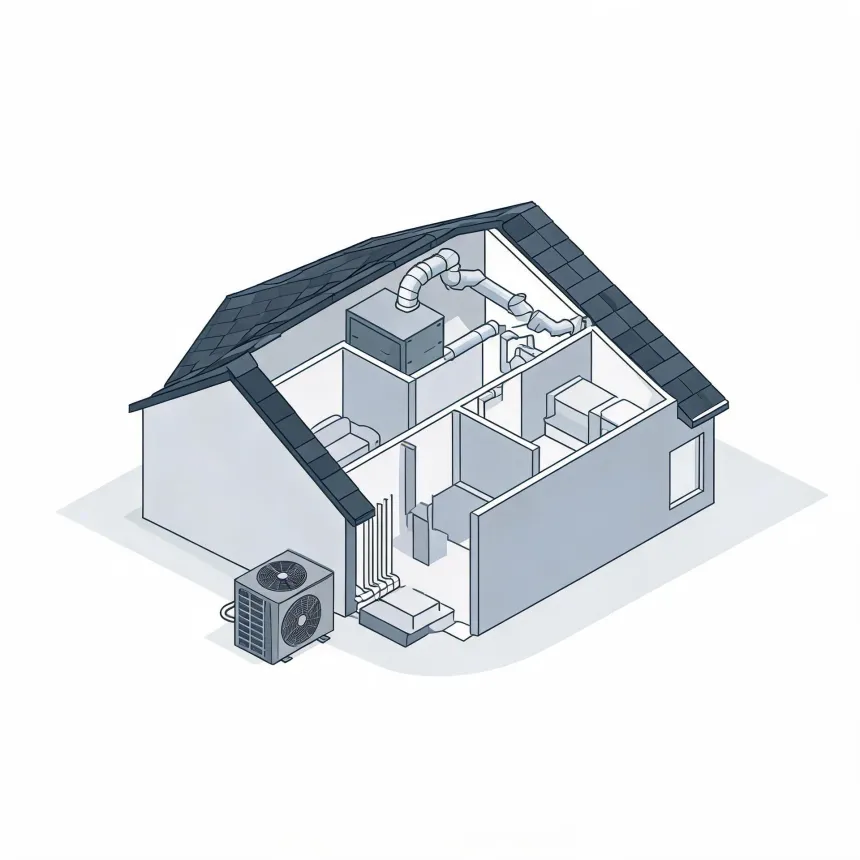
Isometric line illustration of a cutaway house showing interior rooms, an air handler with ductwork in the attic space, and an outdoor condenser unit beside the exterior wall.
Your system heats September through May and cools July through August.

NOAA nClimDiv, 1991–2020 normals

El Paso County took 324 damaging wind events and 717 hail events between 2015 and 2024.

Your outdoor unit sits through all of that with no cover, so weather is usually the first thing worth ruling out.

Half these homes were built in 1989 or later, so the system is often newer than the damage suggests

Half the homes here were built by 1989
324 damaging wind events from 2015 to 2024
717 hail events from 2015 to 2024

Heat here starts up in September, and August is the last easy month to find a weak part before it has to work. A heat pump that limped through a mild stretch can fail outright once it has to run most of the day, and overnight lows averaging 17°F across December and January push it harder than anything else it does all year. The same goes in reverse come July, when cooling starts after nine months of sitting idle on the heating side. A part that was already failing usually waits for that first real demand to quit. If yours is short cycling, not keeping up, or making noise right as the season turns, that timing is the clue, not a coincidence.

If a storm came through, get the outdoor unit checked before it fails on its own

If hail or wind has come through and the outdoor unit took a hit, get it looked at even if it's still running. A dented coil or a cracked fan blade can run fine for weeks before it quits outright, and that's a worse time to find out.

Find a contractor
A man in a cap, dark jacket and tan work pants walks up concrete steps toward a red front door, carrying a worn canvas tool bag, with a potted shrub beside the entry.
A gray heat pump outdoor unit mounted on a concrete pad next to a residential house with lap siding and stone accents.

The age most of these systems are at now

A heat pump built with the house doesn't age out quickly. If yours came with a home from the newer half of the county, parts failure is more likely than a system near the end of its life. That's worth knowing when a repair bill shows up and the question is whether to fix it or replace it. Most of the time here, fixing it is the right call.

Most failures start with the outdoor unit

The outdoor unit has the compressor, the fan motor and the coil, and it runs exposed all year. A capacitor weakens and the fan or compressor struggles to start. The contactor pits from years of switching and stops making a clean connection. The coil gets caked with debris until it can't shed heat properly, and the system works harder until something gives out. These parts fail on their own timeline, from age and wear, not just from a single event.
A reversing valve problem looks like something else

The reversing valve is what lets a heat pump switch between heating and cooling, and when it sticks, the system keeps running but stops doing its job right. It might blow cold air when it should be heating, or never fully switch over. Homeowners often think the whole unit is dying when it's one stuck valve. It's worth having someone check the valve itself before assuming the compressor is the problem, since a compressor replacement costs a lot more than a valve.

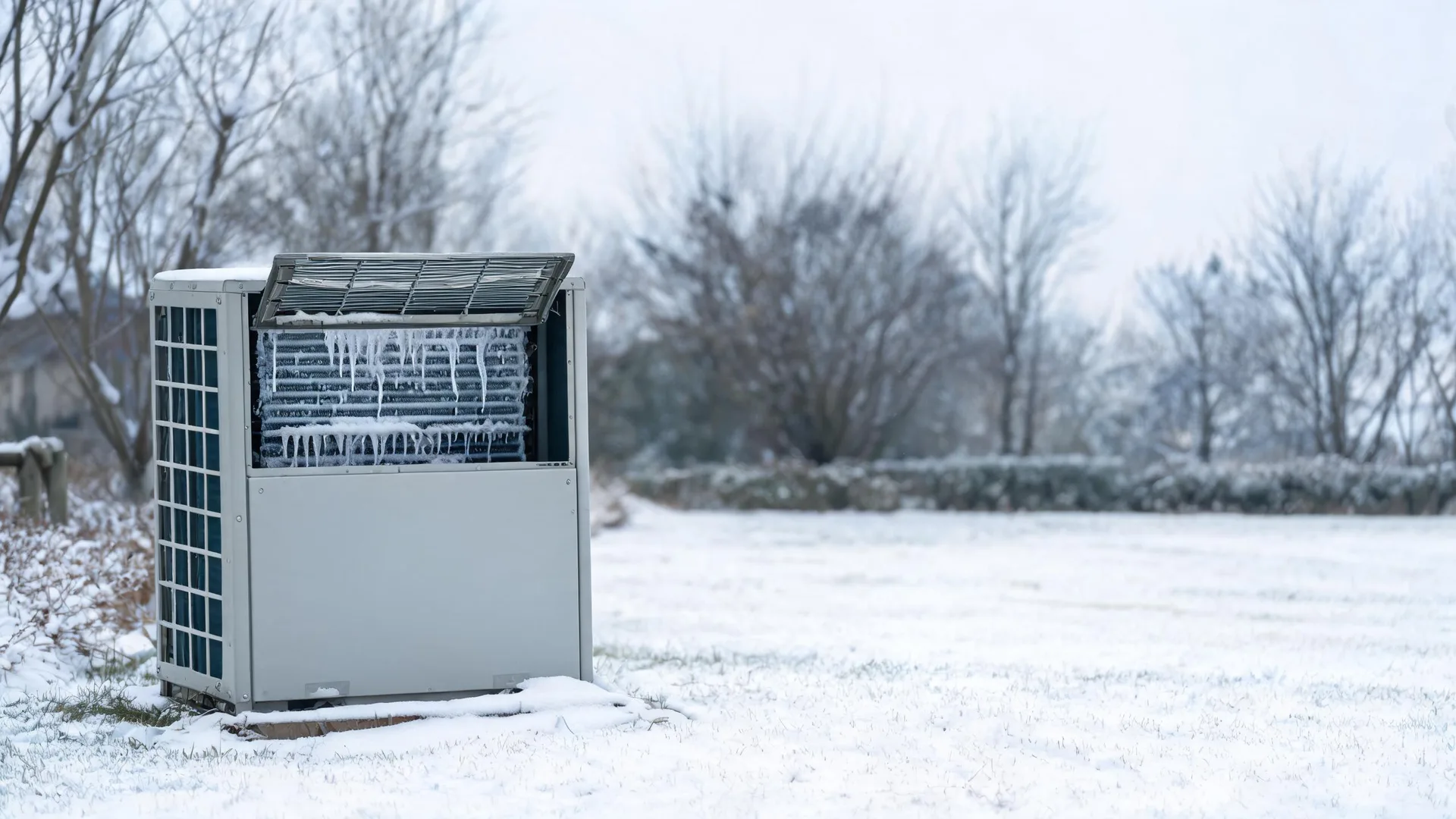
A heat pump that's struggling doesn't fail cleanly. It compensates. If the airflow is restricted or the charge is low, the compressor works harder to hit the same temperature, and that extra strain is what turns a minor fault into a burned-out compressor. A refrigerant leak behaves the same way. Running low makes the system pull harder to move heat, and that lowers pressure in the compressor further, which can damage it permanently if it keeps running. Ice on the outdoor coil has its own version of this. Once ice starts building, it blocks airflow across the coil, so the system loses efficiency and builds more ice, and that cycle doesn't stop on its own. A strange noise or a system that won't hold temperature is worth shutting down and calling about, not riding out until the next service visit.

Winter storms hit El Paso County 223 times between 2015 and 2024, and a heat pump doesn't get to sit those out. The outdoor unit still has to run, pulling heat from air that might be well below freezing, right as snow and ice are loading onto the coil and cabinet. That's harder duty than a sunny, calm day asks of it. If something's already marginal, a storm like that is usually when it gives out rather than before. A diagnosis after a storm should check for actual damage first, not just assume the cold itself is the cause.