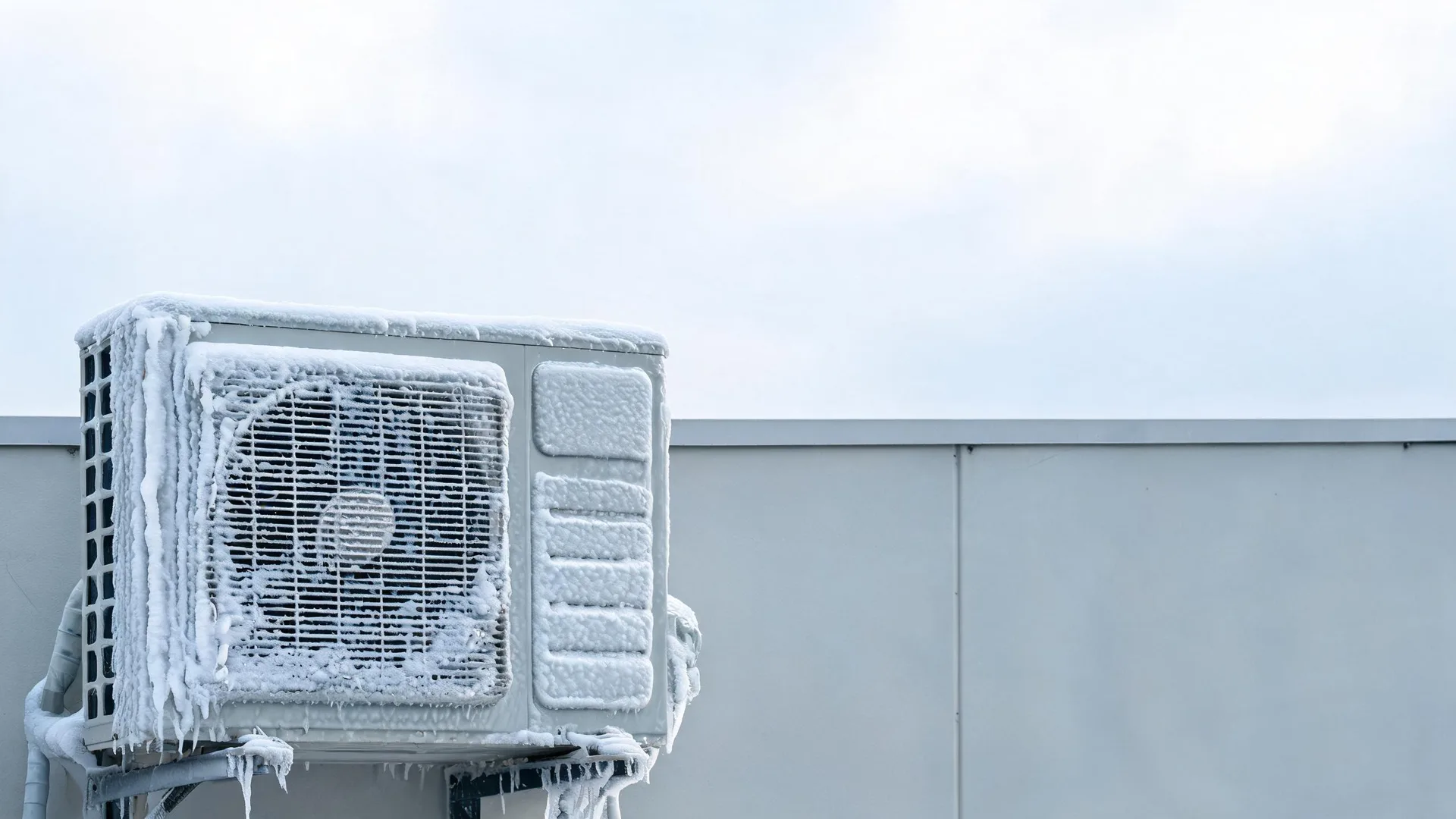
Cold nights, same as anywhere else
Winter nights in Gilpin County average 15°F. That's normal heat pump duty, not a special strain. A unit sized and maintained right runs through it fine.
Takes about a minute. No obligation.
Winter nights in Gilpin County average 15°F. That's normal heat pump duty, not a special strain. A unit sized and maintained right runs through it fine.
When a heat pump struggles here, it's usually a low charge, a failing defrost control, or a dirty coil, the same things that trip up this machine anywhere. A contractor checking those first will find the answer faster than guessing at anything unusual.

Half the homes in Gilpin County were built in 1984 or later.
A heat pump in a newer Gilpin County home still has plenty of working life, and that makes repair the first thing worth trying.



A heat pump that's low on charge or icing over in defrost has to run longer to put out the same heat. On a Gilpin County power bill, that difference shows up fast. It's worth getting someone out before it goes another month like that. If it's been struggling for a while, you're probably not seeing the full cost of it yet.
If your system came with a newer house, repair is the first thing to ask a contractor about, not replacement. Get the actual cause fixed, then decide if anything more is needed.
Find a contractor
A heat pump that's low on refrigerant keeps running because the thermostat still calls for heat and the system can't satisfy it. The compressor stays on longer than it should, and that extra runtime adds wear a properly charged system wouldn't see. A coil icing over does something similar. Ice blocks airflow, so the system works harder to move the same heat. If the defrost control isn't clearing that ice on schedule, it builds up instead of melting back off, and the system works harder still the next cycle. Left alone, neither problem stays where it started. A compressor that's been running long and hot for weeks is a harder repair than the one you'd have had at the start.
Make sure the thermostat is set to heat and the temperature is set above room temperature. Check the breaker panel for a tripped switch on either the indoor or outdoor unit. Both take a minute to rule out before anyone needs to look at the equipment itself.
Clear away leaves, ice or snow piled against the outdoor coil, since blocked airflow there makes the whole system work harder. Some frost on the coil in winter is normal. A thick layer of ice that doesn't melt off during the defrost cycle is not, and that's worth telling the contractor when they arrive.
A heat pump that needs attention usually tells you in how it runs, not just whether it runs. Listen for air coming out of the vents that feels cool when it should feel warm, especially right after a defrost cycle ends. Watch for short cycling too. The unit kicks on, runs for a few minutes, shuts off, then starts again before the house has actually warmed up. Pay attention to noise. A light click at startup is normal. A grinding, squealing or banging is not, and it usually points to something mechanical wearing out. If the outdoor fan isn't spinning when the system is calling for heat, or it's spinning but no warm air is coming out inside, that's worth a call rather than a wait.
A contractor starts by hooking up gauges to check refrigerant pressure. A low charge shows up there before it shows up anywhere else. From there they check the defrost board, the reversing valve, and the temperature at the supply vents compared to the return. Amp draw on the compressor and fan motor matters too, since a motor can be struggling long before it fails outright. Most of this happens at the outdoor unit and the air handler, and a lot of it gets checked with the system running, because some problems only show up under load. By the end, the contractor should be able to point to the one part causing the trouble, not just describe the symptom you called about.