




A twilight street scene featuring illuminated timber-frame and stone houses with a mountain range visible in the background.

Heat Pump Repair in Cañon City, CO

Tell us about the job

Takes about a minute. No obligation.

RepairHeat PumpFremont County, CO
Step 1 of 2

What ZIP code is the job in?

Winter nights in Cañon City average 15°F, and that's the range where a heat pump has to work hardest to keep up. If yours is blowing cool air or running nonstop without catching up, that's often a low refrigerant charge, a failing defrost control, or a reversing valve stuck in one position. None of that is unusual for this machine in this kind of cold. It's the same short list of causes a tech would check in any county with winters like this one. Getting the actual cause right the first time is what keeps it from becoming a repeat call.

9 months
September through May, your system heats
15°F
the average winter night it heats against
80°F
the average summer afternoon it cools against
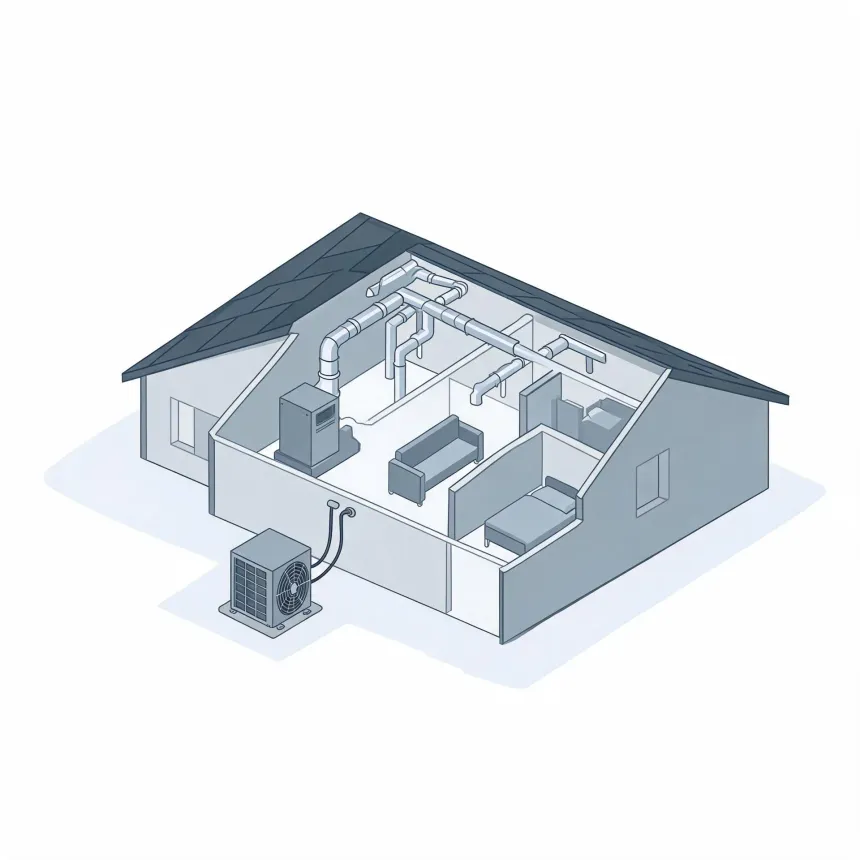
Isometric cutaway illustration of a single-story house showing interior rooms with furniture, an attic duct network connected to a furnace or air handler, and an outdoor condenser unit linked by lines outside the wall.

Heat here starts up in September and runs through May.

A heat pump that limped through last season tends to fail in the first cold snap of this one.

Half these homes were built by 1981, and age isn't what's wearing on your heat pump

Half the homes here were built by 1981
165 damaging wind events from 2015 to 2024
28 hail events from 2015 to 2024

A heat pump running wrong keeps costing you until it's found

Get the actual cause checked now, not after another month of bills shows it.

Find a contractor
A white mini-split heat pump outdoor unit mounted on a concrete pad beside a gray-sided house, surrounded by gravel and green shrubs.

What to check yourself before the diagnosis starts

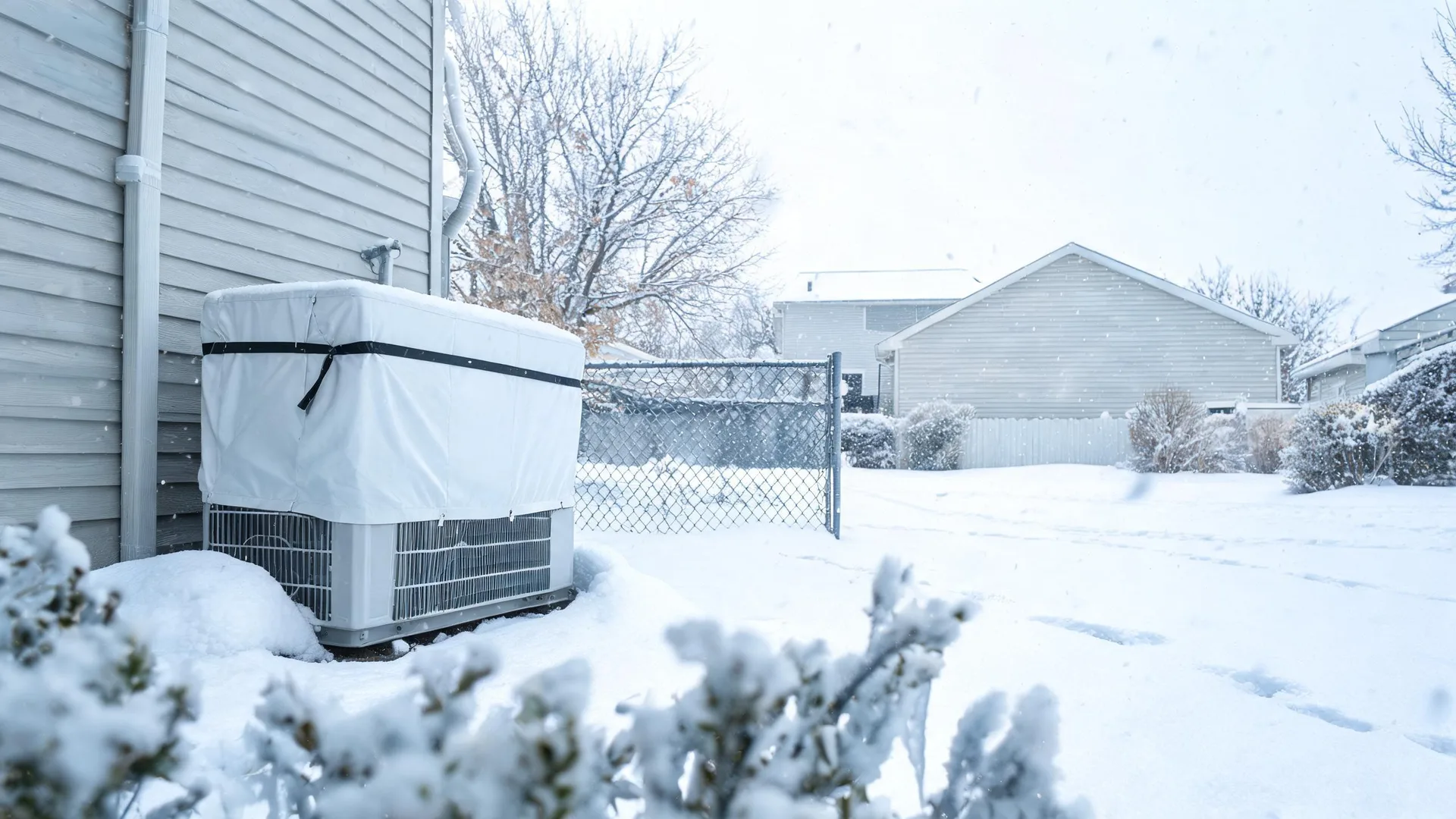
Before anyone comes out, go stand by the indoor unit and feel the air. If it's blowing cold instead of warm, check the thermostat is actually set to heat and not fan only. Outside, look at the outdoor unit. If it's caked in ice or snow beyond a thin frost layer, that's worth noting, but don't chip at it or hose it off. A heat pump defrosts itself on a timer and a sensor, and normal frost comes and goes. Ice that never clears is a sign, not a problem you fix with a scraper. Check your breaker panel for a tripped breaker, and check that any furnace or air handler filter isn't packed with dust, since restricted airflow can make a healthy system act like a failing one. Walk around outside and clear anything stacked against the outdoor unit so it can pull air through. None of this tells you exactly what's wrong inside the system, but it rules out the simple stuff before someone has to drive out and check the refrigerant charge or the reversing valve themselves.

Short cycling wears on the compressor

A heat pump that kicks on, runs a few minutes, and shuts off again isn't completing a full cycle. That pattern points to a refrigerant leak, a failing capacitor, or a thermostat sensor reading wrong. Each short cycle loads the compressor without actually moving much heat, and the compressor is the one part a heat pump can't run without.
A sound that wasn't there before means something came loose

Clicking at startup is normal. A grinding, screeching, or banging sound from the outdoor unit usually means a motor bearing is going or a fan blade is hitting something it shouldn't. These don't fix themselves and they don't stay quiet. Left alone, a failing motor tends to seize completely.

A heat pump that's low on refrigerant or stuck in one mode doesn't fail all at once. It runs long hours trying to reach the setpoint, and that strain lands on the compressor, the one part a heat pump can't run without. A reversing valve stuck halfway puts hot gas where cold should be, and the compressor pushes against pressure it isn't built to fight. Ice that won't clear adds weight and blocks airflow across the coil, so the system keeps calling for heat it can't deliver. Every hour it runs wrong is an hour closer to the compressor itself going, and once that happens the question stops being repair and starts being replacement.

A diagnostic visit starts with questions, not tools. A tech wants to know when the problem started, whether it's worse in the morning or overnight, and whether the system is heating at all or just running without catching up. Then comes the gauges, checked at the outdoor unit to see what the refrigerant pressure is actually doing against what it should be doing. From there it's the reversing valve, tested to see if it's switching fully between heating and cooling or hanging halfway. The defrost control gets checked too, since a sensor or timer that's failed will either skip defrost entirely or run it too often. None of this takes guesswork once the gauges are on. It takes knowing what the numbers mean for this unit, on this day, and narrowing down from there.