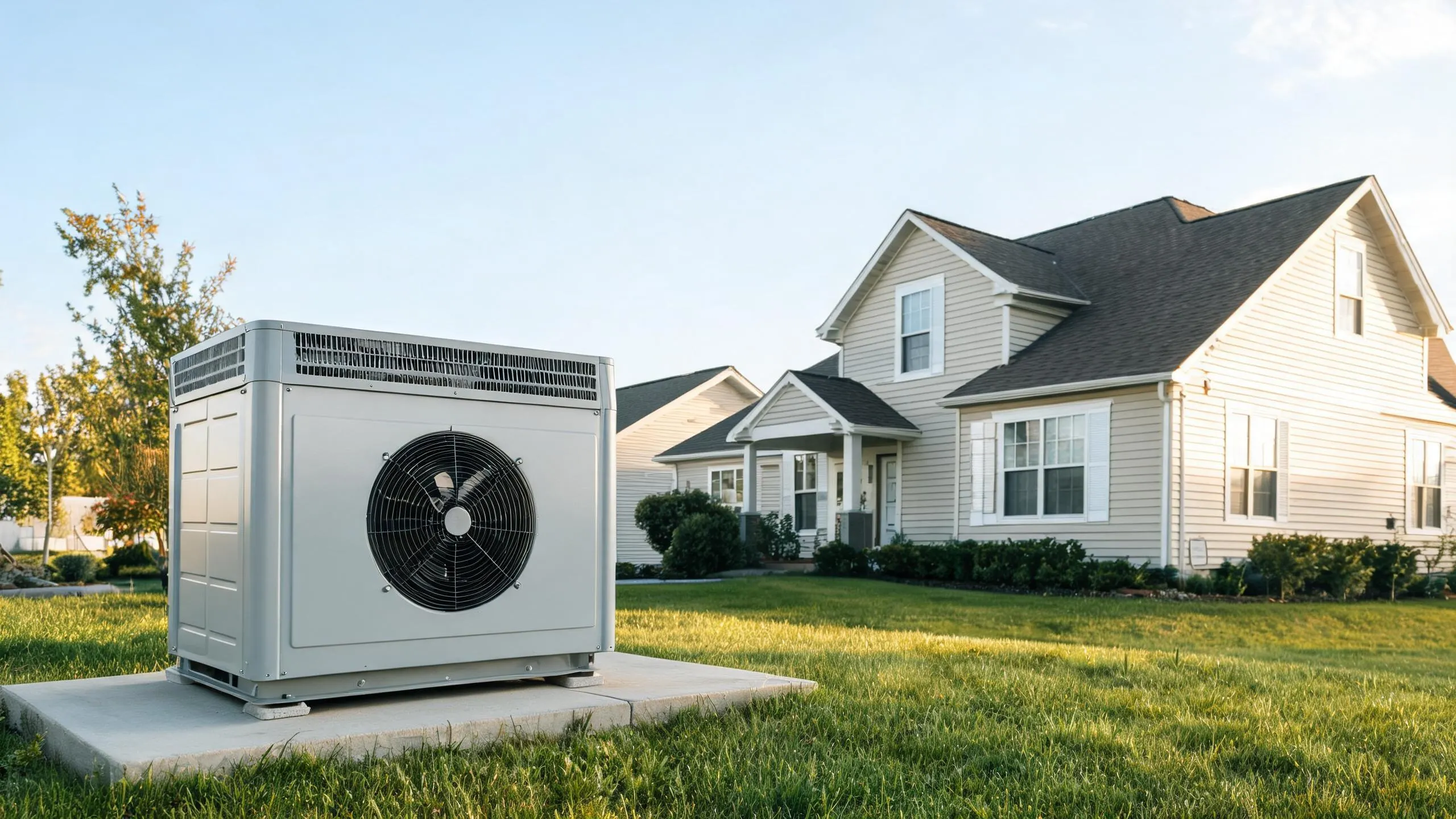






An outdoor heat pump unit mounted on a concrete pad in the front yard of a gray suburban house.

Heat Pump Repair in Broomfield, CO

Tell us about the job

Takes about a minute. No obligation.

RepairHeat PumpBroomfield County, CO
Step 1 of 2

What ZIP code is the job in?

Heat pumps in Broomfield earn their keep both ways, with heat running October through May and cooling picking up June through August. That switchover in September and May is when a weak part tends to fail. The reversing valve or the defrost control may have been struggling for months without enough load to show it, and the first cold snap or the first real heat finally asks for more than it can give. If your heat pump is acting up right as the season turns, that timing is the clue, not a coincidence.

8 months
October through May, your system heats
3 months
June through August, it cools
20°F
the average winter night it heats against
86°F
the average summer afternoon it cools against
Isometric grayscale illustration of a cutaway house showing interior rooms, ceiling ductwork connected to an indoor air handler, and an outdoor condenser unit beside the exterior wall.
Your system heats October through May and cools June through August.

NOAA nClimDiv, 1991–2020 normals

Winters here average 20°F overnight, and that's well within what a heat pump is built to handle.

So when a heat pump in Broomfield breaks down, the cold isn't the reason. A worn part or a failing control is.

Power here runs 14.92 cents a kWh, so a heat pump working harder than it should costs you all month long

Power costs 14.92 cents a kWh statewide
60 damaging wind events from 2015 to 2024
17 hail events from 2015 to 2024
This is a newer countyHalf the homes in Broomfield County were built in 2002 or later.

A heat pump that's short cycling or running constantly doesn't fix itself, and it doesn't pause the bill while it struggles. If yours is kicking on and off more than it used to, or running long stretches without the house actually getting warmer or cooler, that's the strain showing up on your meter before it shows up as a full breakdown. Waiting through a few more weeks of that costs you something every one of those weeks. Getting a technician out to find the actual part at fault, the reversing valve, the defrost control, whatever it turns out to be, stops the bleeding sooner than letting it ride.

Your heat pump is probably still worth fixing

If your house went up in 2002 or later, the system likely has years left in it. Fixing the part that's actually failing makes more sense than replacing a unit that's nowhere near the end of its life.

Find a contractor
A gray outdoor HVAC unit mounted on a concrete pad beside a house with gray lap siding and a stone foundation.

Switching modes wears different parts than the weather does

A heat pump works on both sides of the thermostat, so the reversing valve and the defrost control stay busy in every season, not just the hard ones. Watch for the system blowing cold air when you asked for heat, or the outdoor unit humming without actually switching modes. That points to the reversing valve sticking. The defrost control is the other part worth watching. It melts frost off the outdoor coil on a schedule, and when it fails you'll either see thick ice building up on that coil or a unit that defrosts too often and can't keep up with the heat it owes you. Short cycling, the system kicking on and off faster than it used to, usually means a capacitor or a sensor is cutting things off early. None of these faults improve with time. A reversing valve that sticks occasionally will stick more often. A defrost control running on the wrong timing will keep icing the coil until the unit can't pull heat from outside at all.

The outdoor coil takes the abuse

The outdoor coil sits outside through everything, rain, dirt, cut grass, ice. A coil caked with debris can't pull heat from the air in winter or dump it in summer, so the system runs longer to do the same job. Bent fins block airflow the same way. A coil that stays dirty or damaged year after year is one of the most common reasons a heat pump stops keeping up.
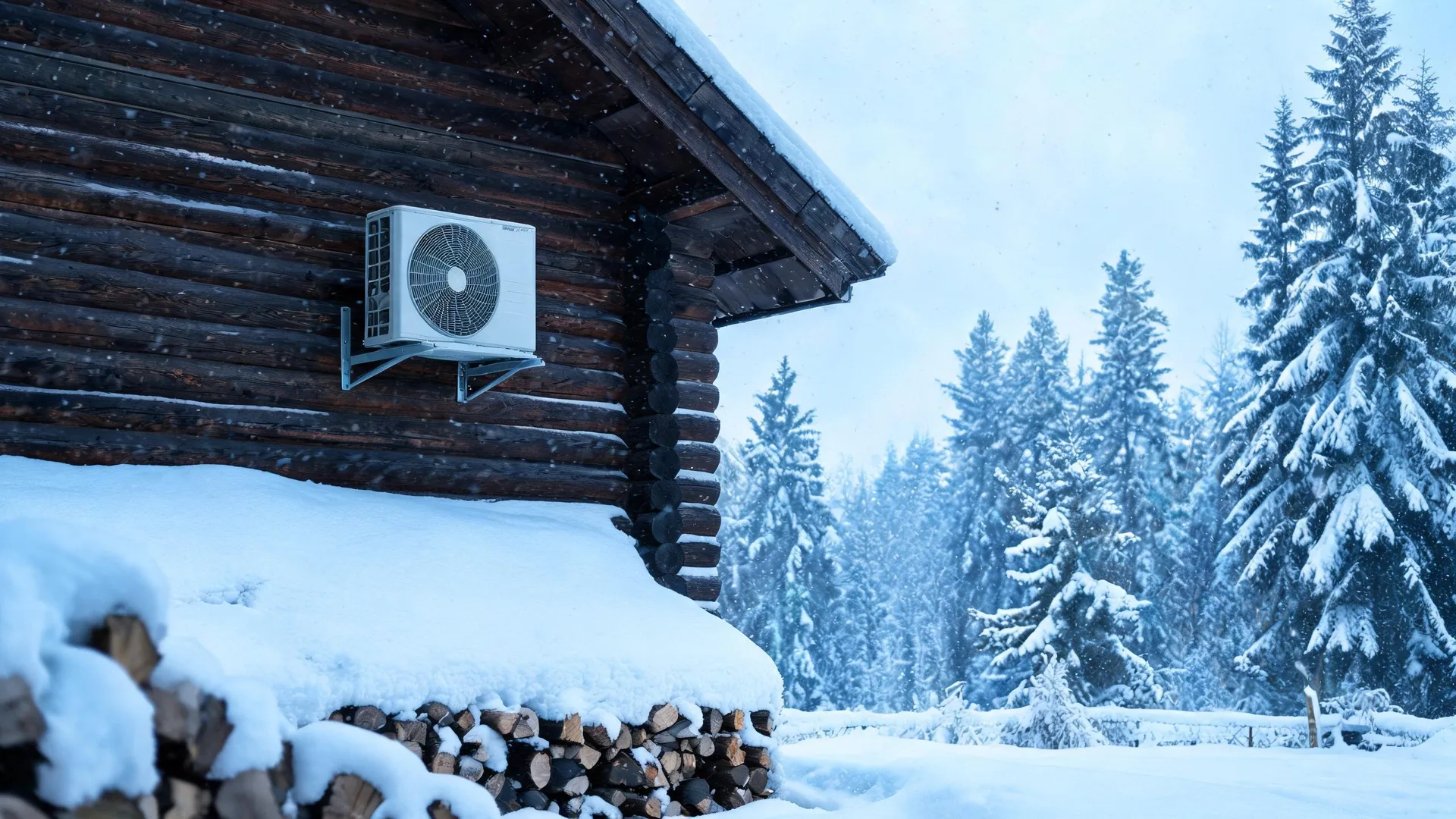
Refrigerant doesn't run out, it leaks out

A heat pump is a sealed system. It doesn't use up refrigerant the way a car uses gas, so a unit that's low on charge has a leak somewhere, usually at a fitting, a coil, or a line joint. Low charge shows up as weak heating or cooling, ice on the outdoor unit, or the compressor running long without catching up. Topping it off without finding the leak just buys a little time before the same problem comes back.

Before you call anyone, look at the outdoor unit. If the coil is packed with leaves or grass clippings, that alone can keep the system from heating or cooling right, and clearing it is fair game to do yourself. Check the thermostat is actually set to call for heat or cool, not just on, and swap the batteries if it's been a while. Look at your air filter. A filter that's clogged chokes airflow across the indoor coil and the system will struggle no matter what else is right with it. If you see ice on the outdoor unit, don't chip at it. Some frost is normal and the defrost cycle should clear it on its own within an hour or so. If it's still iced up well past that, that's worth mentioning to the technician, not something to fix yourself. Flip the breaker off and back on once if the unit isn't responding at all, but if it trips again right away, leave it off and call. That's the electrical system telling you something's wrong downstream.

Most heat pump problems come down to one part failing, not the whole system giving out. A reversing valve, a defrost control, a capacitor, a contactor, these are replaceable parts bolted to a cabinet that outlasts most of them. Replacing the whole unit over one bad part is like junking a car over a dead battery. The harder call is a unit that's needed a few of these repairs already. Each part has its own lifespan, and a heat pump old enough to be losing its second or third part in a few years is telling you the rest aren't far behind. One failed part is a repair. A pattern of them is the system wearing out.