







An outdoor heat pump unit mounted on a concrete pad in front of a single-story suburban house with beige siding.

Heat Pump Repair in Alamosa, CO

Tell us about the job

Takes about a minute. No obligation.

RepairHeat PumpAlamosa County, CO
Step 1 of 2

What ZIP code is the job in?

Heat here runs from September through May, nine months of the year. August is the one real stretch of rest this system gets. When homeowners switch it back on for the season, any part that was already wearing out tends to show itself fast, often in the first cold snap. A heat pump that struggles to keep up or short cycles in those early weeks usually isn't reacting to anything new. It's showing a problem that was sitting there all along, waiting for the load of a full season to bring it out.

9 months
September through May, your system heats
8°F
the average winter night it heats against
80°F
the average summer afternoon it cools against
Isometric grayscale illustration of a cutaway house showing interior rooms, ceiling ductwork and an air handler, connected by lines to an outdoor condenser unit on a pad outside.

Air coming out of the vents feels barely warm, or no warmer than the room.

A heat pump blowing weak heat like that usually has a reversing valve or compressor that isn't doing its job anymore.

Cold nights here, but the wear is the ordinary kind

82 damaging wind events from 2015 to 2024
96 winter storms from 2015 to 2024
Winter nights average 8°F
Power here isn't cheap to wasteColorado homes paid 14.92 cents per kilowatthour in 2024, and a heat pump running wrong burns it every day you wait

Alamosa County has seen 96 winter storms and 82 damaging wind events over the past ten years. That sounds like a lot, but it's not out of line for a cold climate, and the outdoor unit is built to sit through snow and wind without trouble. What actually wears a heat pump down is the ordinary cycle of running most of the year, not the occasional storm. If the power drops during one of those storms, most heat pumps come back on by themselves once it's restored. The breakdowns that bring people to a repair call are almost always the same handful of parts giving out from age and use.

Half the homes here were built in 1982 or later, yours may be one of them

Half the homes in Alamosa County were built in 1982 or later. If yours is one of them, the heat pump itself is likely still well within its working life, broken part and all. That points toward fixing what's wrong rather than replacing the system.

Find a contractor
A man in a cap, dark shirt and olive work pants carries a canvas tool bag up porch steps toward a red front door of a gray clapboard house, with a potted shrub at left.
A white mini-split heat pump outdoor unit mounted on a concrete pad beside a gray-sided house, surrounded by gravel and green shrubs.

What to check before you pick up the phone

Before anyone comes out, look at the outdoor unit first. If snow or ice has built up around the base or the coil is caked over, that alone can choke a heat pump and make it struggle to heat. Clear leaves or debris away from it too, since anything blocking airflow through the coil makes the system work harder for less heat. Inside, check the thermostat is actually set to heat and not accidentally switched to cool or fan only, and change the air filter if it looks gray or clogged. A dirty filter starves the system of airflow and can make it seem like the heat pump itself is failing. Walk around the house and check that no vents are closed or blocked by furniture or rugs. If the system is running but the air feels cool, let it run a few minutes longer before judging it, since heat pump air is naturally cooler than a furnace's. None of this fixes a bad reversing valve or a failing compressor, but it rules out the simple stuff first.

A struggling compressor doesn't rest, it strains

A heat pump that's losing capacity will run longer to make up for it, cycling almost constantly instead of shutting off between calls for heat. That extra running time doesn't give a weak compressor a chance to recover. It just adds more hours of strain on a part that's already failing, and pushes it toward a harder stop instead of a clean one.
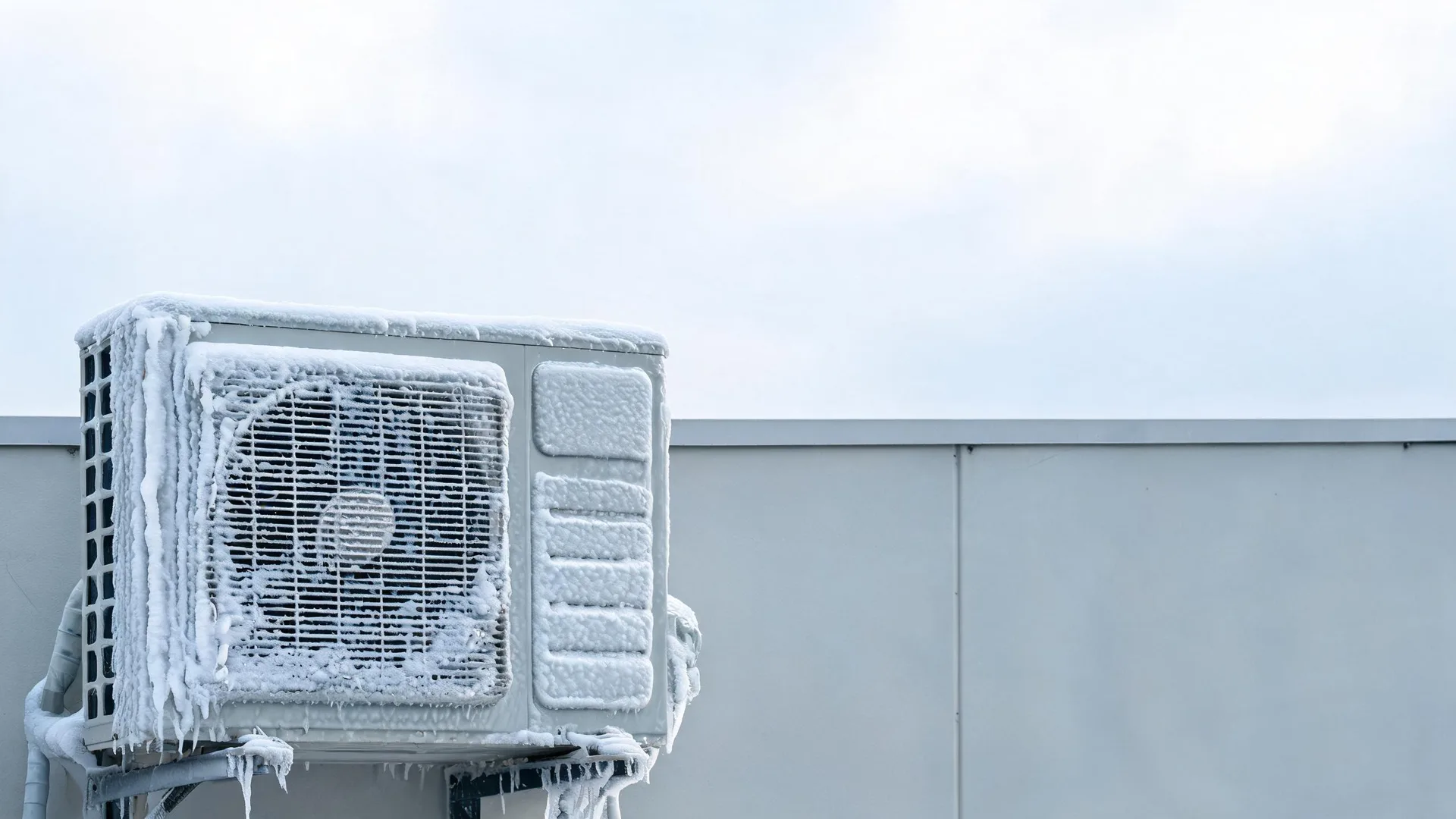
Ice left alone spreads past the coil

When a heat pump can't run a proper defrost cycle, frost on the outdoor coil doesn't stay put. Left running, it builds up around the fan and base pan too, and ice in those spots can crack a fan blade or seize the motor. What starts as a coil needing a defrost can turn into a fan replacement if the system keeps cycling instead of getting shut off and looked at.

Most heat pump failures trace back to the same few parts doing the same job year after year. The reversing valve is a common one. It switches the system between heating and cooling, and the coil inside it wears from being thrown back and forth every time the mode changes. A valve that's stuck or sticking will often heat and cool at the same time, or get stuck in one mode entirely. The compressor is the other big one. It's the heart of the system, and when it weakens, the whole unit loses capacity and starts running longer to make up for it. Capacitors and contactors fail too, smaller parts, but a failed one can stop a heat pump cold. Motors wear out from years of spinning, bearings dry out, and refrigerant lines develop slow leaks at the fittings. None of this is unusual. It's just what happens to a machine that runs most months of the year, for as long as it's been running.

A heat pump breaking down doesn't automatically mean it's done. Most of what fails, a capacitor, a contactor, a reversing valve, a weak compressor, can be replaced on its own without touching the rest of the system. The question worth asking is how many of those parts have already been swapped out, and how old the unit is relative to how long these systems typically last. One failed part on a system that's otherwise been reliable is a repair. A string of failures close together, especially once the compressor is involved, is usually the system telling you it's near the end of its working life. A tech who's actually looked at the unit can tell you which one you're dealing with.