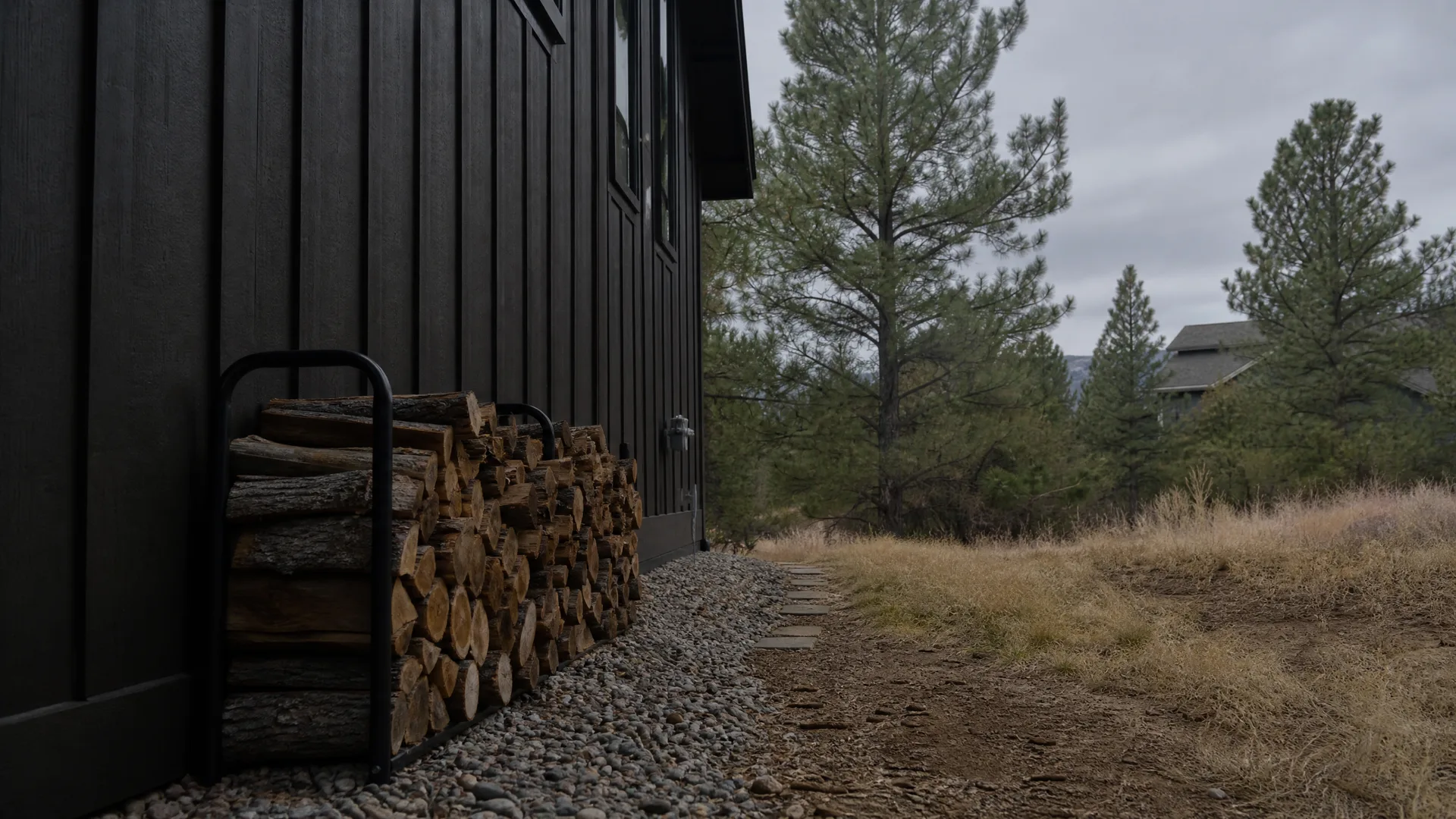
A stack of split firewood in a black metal rack sits on a gravel bed against the dark vertical board siding of a house, with dry grass, pines and an overcast sky beyond.

AC Maintenance in Woodland Park, CO

Tell us about the job

Takes about a minute. No obligation.

Tune-up, service, or cleaningCentral ACTeller County, CO
Step 1 of 2

What ZIP code is the job in?

Short runtime here

Afternoon highs average 73°F through June, July and August, and the dew point sits at 41°F, well below most of the country. Your air conditioner barely has to fight the air here. It cycles less than the same unit would in a muggier, hotter county.


Light duty still needs a check

A compressor that runs less still has a capacitor that ages, a coil that collects dust, and a drain line that can clog. None of that depends on how hard the machine works. A yearly check catches those before they turn into a breakdown in July.

73°F
the average summer afternoon it cools against
26 hail events
in ten years, and hail bends the fins on outdoor coils
99 wind events
in ten years, and wind drives debris into outdoor units
Isometric cutaway illustration of a single-story house showing interior ductwork and an air handler connected by lines to an outdoor condenser unit on a pad beside the building.
Your air conditioner works hardest from June through July.

NOAA nClimDiv, 1991–2020 normals

A clean filter is the one thing a homeowner can actually check without opening a panel.

Swap it when it looks gray, and leave the refrigerant, the coil and the capacitor to someone licensed to touch them.

Storms here are hard on an outdoor unit

249 severe weather events from 2015 to 2024
13% of homes statewide lost power a day or more in 2024
99 damaging wind events from 2015 to 2024
Newer homes, newer systemsHalf the homes in Teller County were built in 1990 or later.

Before the check, walk outside and look at the unit itself. Hail dents the fins, wind throws branches and grit into the cabinet, and a winter's worth of ice and snow can settle debris around the base that never gets cleared. A tech can straighten bent fins, clear the housing, and check that nothing worked loose over the winter. This is worth doing every year, not just after a storm you noticed. Some of what damages a condenser does it slowly, a little at a time, and you won't see it from the kitchen window.

Light duty is still worth a yearly check

A system that runs this little still needs someone to look at it once a year. Get it checked before summer and it's one less thing to think about when the heat shows up.

Find a contractor
A man in a dark cap, dark shirt and tan work pants, seen from behind, carries a canvas tool bag up steps toward a red front door of a gray clapboard house, with a potted shrub to the right.
A gray residential air conditioner condenser unit mounted on a concrete pad in an open grass field.

A newer system still needs someone looking at it

If your system came with the house, there's a decent chance it's one of the newer ones. A yearly check is what keeps it that way. A capacitor or a coil doesn't fail because a system is old. It fails because nobody looked at it. Catch the wear early and a newer system has no reason to need replacing soon.

The filter is step one, not the whole job

A dirty filter chokes airflow across the coil. Once that happens the coil can't pull heat out of the air the way it should, and ice can start forming on the coil itself. That ice blocks airflow even more, and the system ends up running long cycles trying to cool a house it can't keep up with.

The drain line fails quietly

The coil pulls moisture out of the air as it cools it, and that water has to go somewhere. It drips into a pan and runs out through a drain line. Algae and dirt build up inside that line over time, and when it clogs, the pan overflows. Most systems have a float switch that shuts the unit off when that happens, so a clogged drain usually shows up as a system that just stops cooling.

Most of the time an air conditioner gives some warning before it quits outright. A musty smell when it first kicks on usually means moisture sitting somewhere it shouldn't, often in the ductwork or around the coil. A hissing sound points to refrigerant escaping from a line that should be sealed. Short cycling, where the system shuts off a minute or two after starting, is often a sign the compressor is overheating or a safety switch is tripping. Warm air out of the vents with the thermostat set low can mean a failing compressor or a refrigerant charge that's dropped. None of these mean the system is done. They mean it's asking for a look before the part that's struggling takes something else down with it.

A tune-up starts with the electrical side. A tech checks the capacitor's output against what it's rated for, because a weak capacitor makes the compressor strain to start and that strain shortens its life. Contactors get checked too, since the points inside them pit and burn with use and that pitting adds resistance that builds heat. On the refrigerant side, the charge gets checked against what the system calls for. Too little and the coil runs cold enough to ice over. Too much and the compressor works harder than it should every single cycle. The condenser coil gets cleaned, because dust and grime across those fins make it harder for the unit to shed heat, and a coil that can't shed heat makes the whole system run longer to do the same job. Last comes a look at the blower wheel and the belt if it has one, since a wheel caked with dust moves less air no matter how clean the coil is.