June starts the real work
AC in Trinidad runs from June through August. That is the whole season, so the system has no slow weeks to ease into.
Takes about a minute. No obligation.
AC in Trinidad runs from June through August. That is the whole season, so the system has no slow weeks to ease into.
Have the AC checked in May, before June hits. Anything wrong gets found while the system is sitting idle instead of in the first week it is needed.
NOAA nClimDiv, 1991–2020 normals
Trinidad gets three months of real cooling, June through August.
One visit before June covers the stretch that matters.




If your AC came with a house built decades ago, nobody can tell you how long it's been since anyone looked at it. A yearly check is how you find out. A tech can tell you the age of the system and the shape it's in once they're standing in front of it. Older systems have had more years to develop a weak capacitor or a slow refrigerant leak, the kind of problem that's easy to miss until the unit is running flat out. Catching it on a check gives you a choice. Catching it mid-summer does not.
It starts running hard in the first month of the season here. Book the check the month before.
Find a contractorA quick visit means someone swaps the filter, glances at the outdoor unit, and leaves. A thorough one means the capacitor gets tested under load, not just looked at, because a capacitor can read fine sitting still and still fail the moment the compressor asks something of it. It means the refrigerant charge gets measured, not assumed. It means someone actually pulls the blower wheel or gets a light on it, since a coated wheel moves less air even when it sounds no different running. A quick check tells you the system turned on. A thorough one tells you what it will do the day it has to run without stopping.
If the air coming out doesn't feel as cold as it used to, or the system runs longer to reach the same temperature, that's worth a look before it stops entirely. A unit losing capacity is usually low on refrigerant or losing airflow somewhere, and both get worse left alone.
A hum when the compressor should be running, a rattle that wasn't there before, a musty smell when the air kicks on. Each one points to something specific, a failing motor mount, a loose part, moisture sitting somewhere it shouldn't. A tech can trace it back before it becomes a breakdown.
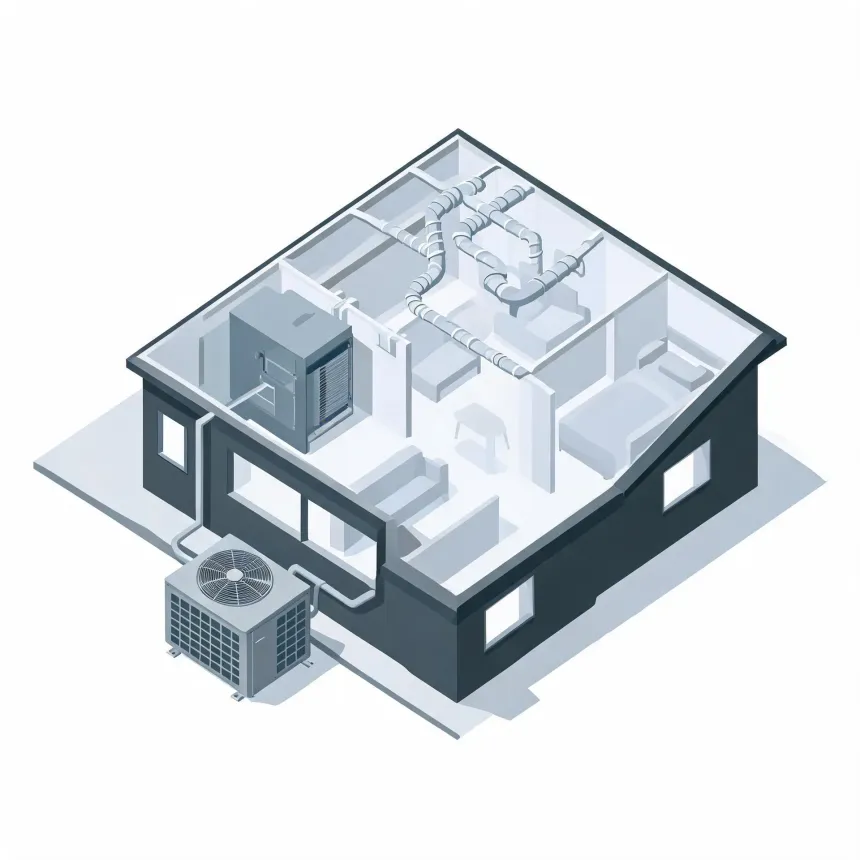
A tune-up checks the refrigerant charge, cleans the coils, tests the capacitor and tightens the electrical connections.
A real tune-up starts outside at the condenser. The tech pulls the top and checks the fan motor, then looks at the capacitor, the part that gives the compressor and fan the jolt they need to start. A weak capacitor still works most days, right up until the one it doesn't. Refrigerant gets checked too, not topped off out of habit but measured against what the system is supposed to hold, since too much is as hard on the compressor as too little. Inside, the tech checks the coil for buildup and confirms the blower is moving the air it should. Electrical connections get tightened, since a loose one generates heat on its own. None of this takes long when nothing is wrong. It takes a lot longer the one year something is.