Aerial view of a gray central air conditioning condenser unit on a concrete pad next to a house with vinyl siding.

AC Maintenance in Rifle, CO

Tell us about the job

Takes about a minute. No obligation.

Tune-up, service, or cleaningCentral ACGarfield County, CO
Step 1 of 2

What ZIP code is the job in?

Weather here is hard on outdoor units

Garfield County logged 405 severe weather events between 2015 and 2024. Winter storms accounted for 258 of those, and damaging wind hit the county 144 times. An outdoor condenser sits outside through all of it, taking wind-blown debris and snow load year after year.

Power doesn't always stay on

In 2024, 13% of Colorado households lost power for 24 hours or more. A furnace needs electricity to run even on gas, and a system already strained by a bad season has less to give when the power finally comes back.

77°F
the average summer afternoon it cools against
3 hail events
in ten years, and hail bends the fins on outdoor coils
144 wind events
in ten years, and wind drives debris into outdoor units
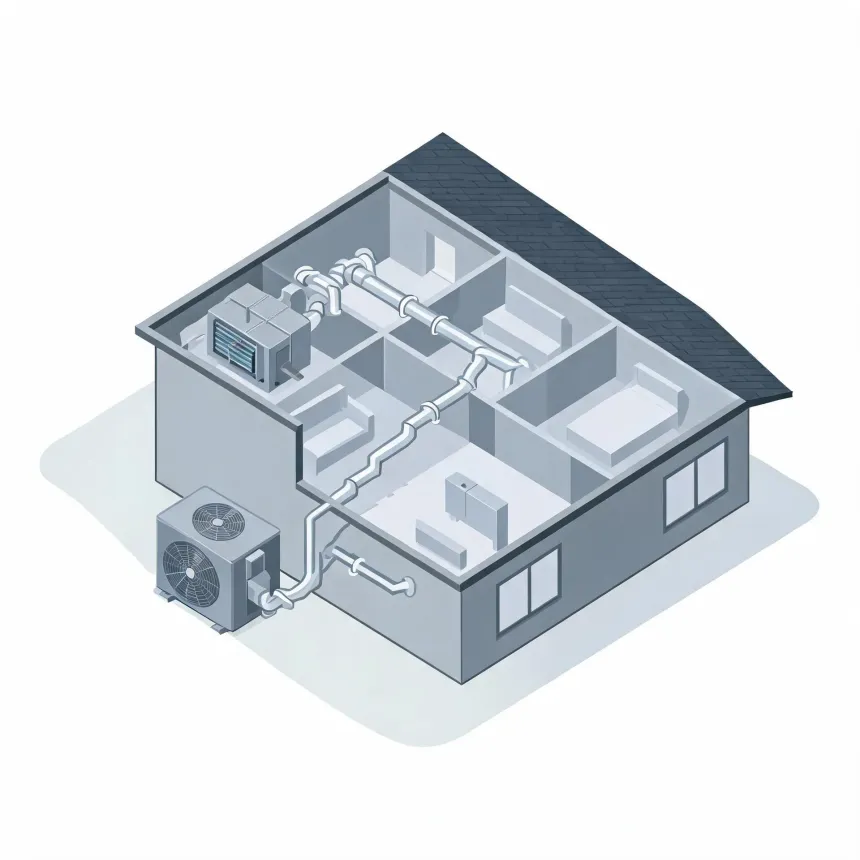
Isometric grey illustration of a cutaway single-story house showing interior rooms, ceiling ductwork connected to an indoor air handler, and an outdoor condenser unit linked by lines outside the wall.
Your air conditioner works hardest from July through August.

NOAA nClimDiv, 1991–2020 normals

Half the homes in Garfield County were built in 1993 or later.

A system that age is usually still worth protecting with a yearly check.

An easy summer here still leaves parts that need a yearly look

Summer afternoons average 77°F
144 damaging wind events from 2015 to 2024
3 hail events from 2015 to 2024
Keep a newer system newerA yearly check is cheap insurance on a system that still has years ahead of it.

At 77°F average highs, the compressor here isn't working hard, so a yearly check is less about fighting strain and more about catching small things early. A technician can spot a loose connection or a worn contactor before it leaves you without cooling on a hot afternoon. It's also a chance to look over the cabinet and coil for damage, since wind hit the county 144 times between 2015 and 2024 and hail hit it 3 times in that same stretch. A bent fin or a cracked line is cheap to fix when it's caught early and expensive once it isn't.

Have it checked before the next storm, not after

Get the outdoor unit checked for bent fins, loose panels or debris before the next storm rolls through, and have the electrical connections looked over so the system comes back clean once the power does.

Find a contractor
A man in a cap, dark shirt and brown work pants walks up porch steps toward a red door, carrying a worn canvas tool bag, with a potted shrub in a red planter beside him.
An outdoor air conditioning condenser unit mounted on a concrete pad surrounded by gravel, photographed against a partly cloudy blue sky.

Between checks, it's filters and airflow, not the machine itself

Between visits, the filter is the one job that's really on you. A dirty filter chokes airflow across the coil, and a coil that can't breathe has to run longer to do the same job. Check it monthly and swap or rinse it when it's visibly gray. Outside, keep the area around the condenser clear so air can pull through the coil fins. Grass clippings, leaves and seed fluff build up on those fins over a season and nobody notices until the unit is working harder than it should. A gentle rinse with a hose, sprayed from inside out, clears a lot of that without bending anything. Keep plants and shrubs back from the cabinet so there's open air on all sides. Inside, listen for anything new: a rattle, a hum that wasn't there before, a musty smell from the vents. None of that means shut it off and panic, but it's worth mentioning at the next check instead of waiting for it to get worse. What you shouldn't touch is anything behind the access panel. The capacitor inside a condenser holds a charge even with the power off, and refrigerant lines aren't a do-it-yourself fix. Leave the inside of the cabinet, the refrigerant charge and the electrical connections to a licensed technician.

A warm start means something's off

Air that isn't as cold as it used to be rarely means the unit is dying. More often it's a coil caked with dust, a refrigerant level that's dropped from a slow leak, or a fan motor losing strength. Caught at a check, any of those is a small fix. Ignored, the compressor ends up working past what it's built for.

Short cycles wear it out faster

An AC that kicks on, runs a few minutes and shuts off again isn't resting, it's struggling. That pattern points to a dirty sensor, a clogged filter choking airflow, or a unit sized wrong for the space it's cooling. Each start draws a hard pull of current, and a compressor doing that over and over wears down years before it should.

A technician checks things a homeowner has no way to test. Refrigerant charge is one of them. Too little and the system loses cooling capacity while the compressor works harder to make up for it. There's no gauge on the wall to tell you that's happening, only a slow decline you might chalk up to a hot day. Electrical connections are another. Screws and spade terminals loosen with vibration over time, and a loose connection builds heat at that point every time the unit runs. Left alone, that heat damages the wire or the part it's feeding. A check also means pulling the actual readings: the pressure in the lines, the temperature drop across the coil, the current draw on the compressor. Those numbers either sit where they should or they don't, and a trained eye knows the difference long before the system starts acting up.

A full tune-up starts outside at the condenser. The technician pulls the top or side panel and checks the capacitor and contactor, since those two parts cause more no-cool calls than anything else in the cabinet. The coil gets a real cleaning, not just a glance, because dirt packed between the fins acts like a blanket and makes the system work to shed heat it should be shedding easily. Inside, the evaporator coil and the blower wheel get checked too, since a wheel caked with dust moves less air even at full speed. The technician measures refrigerant pressure and the temperature drop across the coil, checks the condensate drain for a clog that would otherwise back up and overflow, and tightens any electrical connection that's worked loose. None of this fixes something broken. It finds the small failures before they turn into the big one.