





A two-story black wood-clad house with a gabled roof stands behind a wire fence, backed by dense green deciduous trees, with a blurred grassy field in the foreground.

AC Maintenance in La Junta, CO

Tell us about the job

Takes about a minute. No obligation.

Tune-up, service, or cleaningCentral ACOtero County, CO
Step 1 of 2

What ZIP code is the job in?

A dirty condenser coil can't shed heat the way it should, so the compressor runs hotter and works harder to do the same job. A clogged filter cuts airflow across the evaporator coil, and a coil that stays too cold can ice over, which cuts airflow even further. None of this shows up as a breakdown right away. It builds over seasons, and by the time something fails, a capacitor or the compressor itself, the fix is a repair instead of a cleaning. Regular maintenance catches the dirty coil and the clogged filter while they're still just dirt and dust, not yet a failed part.

4 months
June through September, your air conditioner is on duty
91°F
the average summer afternoon it cools against
54 hail events
in ten years, and hail bends the fins on outdoor coils
82 wind events
in ten years, and wind drives debris into outdoor units
Isometric cutaway illustration of a single-story house showing interior rooms, ceiling ductwork connected to an indoor air handler, and an outdoor condenser unit beside the exterior wall.
Your air conditioner works hardest from June through August.

NOAA nClimDiv, 1991–2020 normals

Air conditioners in La Junta start running in June.

Have yours checked in May, before it has to work.

One tune-up before June covers the season

Power costs 14.92 cents a kWh statewide
Cooling runs June through September
Summer afternoons average 91°F

A quick visit gets you a filter swap and a glance at the readings. A thorough one gets the condenser coil actually washed out, not just looked at, and the fins checked for dirt packed down between them. The refrigerant charge gets checked against what the system calls for, not just whether the air blowing out feels cold. The contactor and capacitor get tested under load, since a capacitor can read fine sitting still and still be the part that strands you on the hottest day. The condensate drain gets cleared too, because a clogged one backs up and shuts the system down on its own. If the visit is over before any panels come off, it was the quick version.

In an older home, a yearly check is what catches it early

Half the homes in Otero County were built in 1958 or earlier. A system installed when a home like that was built, or even one put in years later, has had a long time to drift out of tune. A yearly check catches a weak capacitor or a coil going dirty while it's still a cleaning, not a repair.

Find a contractor
A gray residential air conditioning condenser unit mounted on a concrete pad outdoors, surrounded by green grass under a partly cloudy blue sky.

A full day's run shows what the years have done

Watch this system run from afternoon into night and a half-century of drift shows up in how it behaves, not just whether it starts. Short cycling, a compressor that won't shut off, a stretch where it runs longer than it used to for the same heat outside. None of that means a breakdown is close. It means the yearly check is due, so whatever is drifting gets found while it's still an adjustment.

The blower wheel nobody ever looks at

Dust builds up on the blower wheel blade by blade, and it's inside the housing where no one sees it. A caked wheel moves less air even with a clean filter and a clear coil, and the only way to find it is to open the housing and look. Left alone, it just means weaker airflow for years. Found during a tune-up, it gets pulled and cleaned before the motor has to strain against it.

What a static reading tells a tech

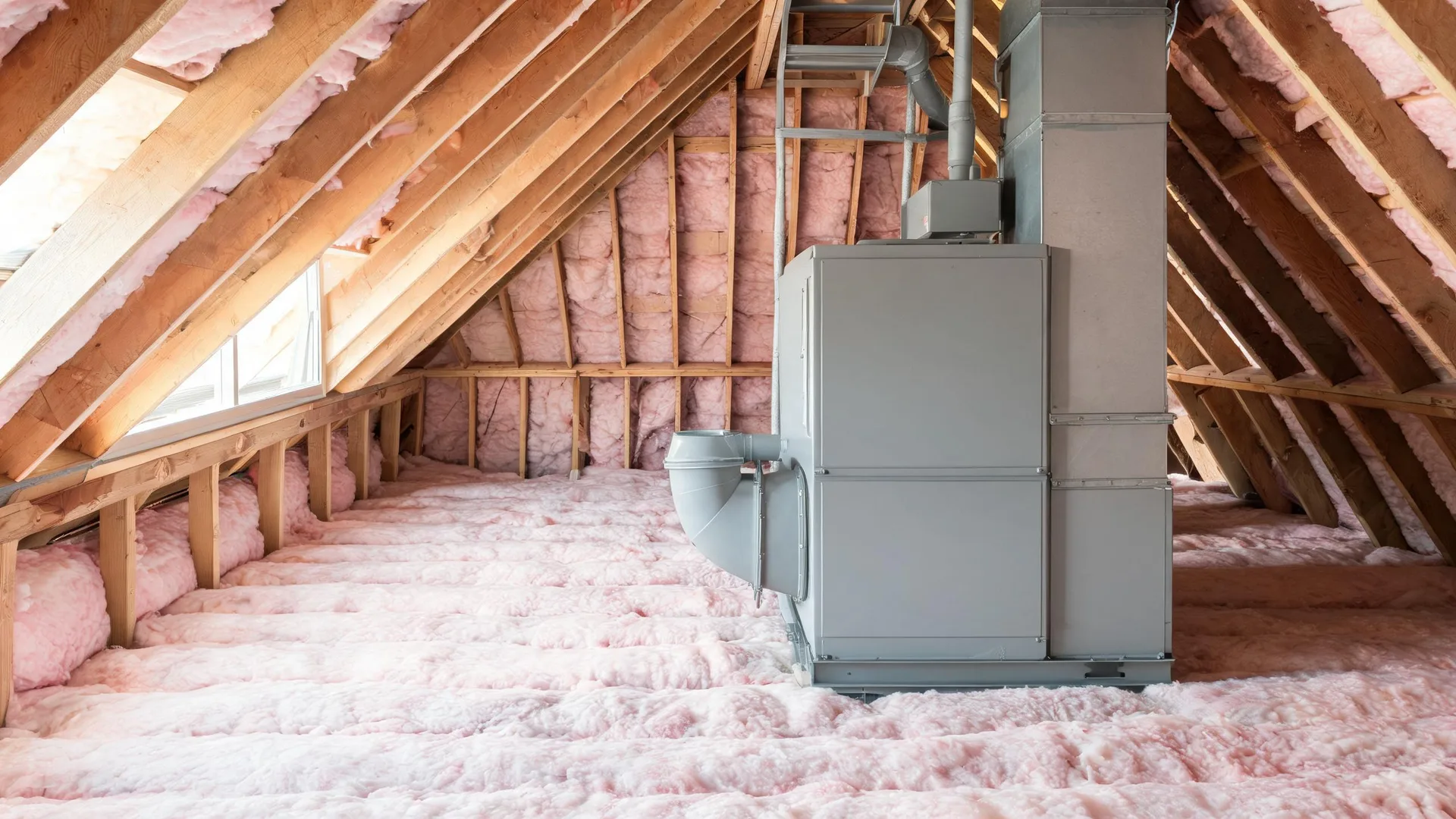
A tune-up includes checking static pressure in the ductwork, a number a homeowner has no way to see or feel. High static means something downstream is restricting airflow, a clogged filter, a dirty coil, ducts too small for the system. The reading points to which one before any part gets pulled apart. Without it, a tech is guessing between a few different problems that all feel the same from the thermostat.

An outdoor air conditioning condenser unit mounted on a concrete pad next to a blue-sided residential house at sunset.

Book your AC tune-up in May, before homes here start needing cooling in June.

  1. Jan
  2. Feb
  3. Mar
  4. Apr
  5. May
  6. Jun
  7. Jul
  8. Aug
  9. Sep
  10. Oct
  11. Nov
  12. Dec

A tune-up checks the refrigerant charge, cleans the coils, tests the capacitor and tightens the electrical connections.

Every tune-up should end with the system running, not just sitting there with panels off. A tech checks the temperature split between the air going into the return and the air coming out of the vents, because that number says whether the system is actually moving heat the way it should. Electrical connections get tightened too, since a loose one heats up under load and that heat damages the wire and the part it feeds. The outdoor fan motor gets checked for play in the bearing, because a motor that wobbles on its shaft is a motor close to seizing. None of this takes long when it's done right, and none of it shows up if the visit skips straight to topping off refrigerant and calling it done.