






Warmly lit timber-frame and stone houses line a street at dusk, with evergreen trees and a snow-capped mountain range in the background.

AC Maintenance in Granby, CO

Tell us about the job

Takes about a minute. No obligation.

Tune-up, service, or cleaningCentral ACGrand County, CO
Step 1 of 2

What ZIP code is the job in?

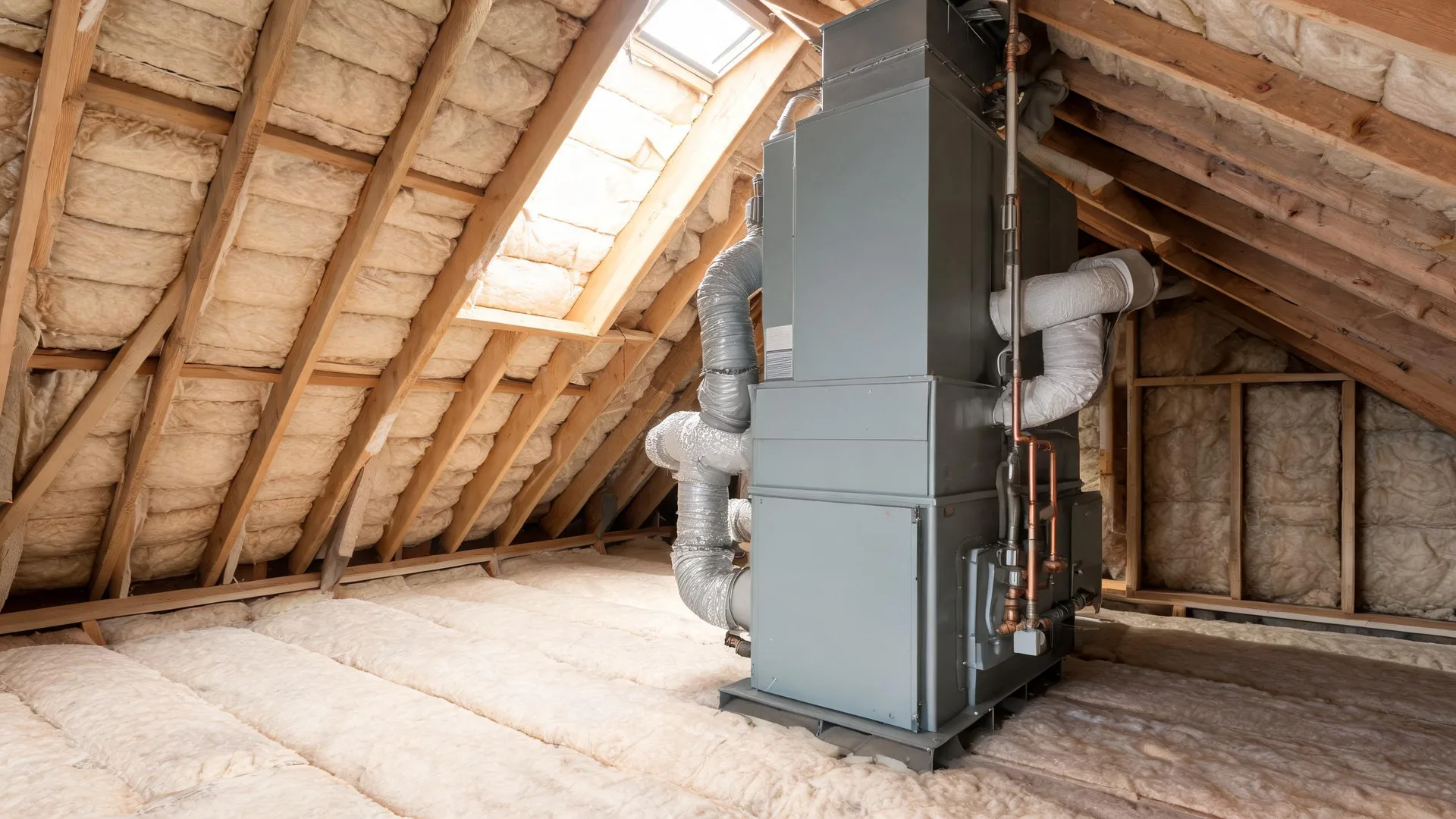
A dirty filter is the start of most service calls. Once it's clogged, airflow drops, and the coil behind it can start collecting dust too. A coated coil can't pull heat out of the air the way a clean one does, so the system runs longer to do the same job. Keep going and that coil can get cold enough to ice over, which blocks airflow even more. The drain line matters just as much, since it carries away the water the coil pulls out of the air. Let that line clog with algae or sludge and the pan backs up, sometimes right into the house. None of these parts fail on their own. They wear on each other.

72°F
the average summer afternoon it cools against
1 hail events
in ten years, and hail bends the fins on outdoor coils
56 wind events
in ten years, and wind drives debris into outdoor units
Isometric cutaway illustration of a single-story house showing interior rooms with furniture, attic ductwork connected to an indoor air handler, and an outdoor condenser unit on a pad linked by refrigerant lines.
Your air conditioner works hardest from July through July.

NOAA nClimDiv, 1991–2020 normals

A capacitor can be weeks from failing and still start the compressor every time you ask it to.

A gauge reading during a tune-up catches that before the compressor takes the damage with it.

Half the homes here were built in 1990 or later, and the AC in them is usually worth keeping in shape

Half the homes here were built by 1990
Summer afternoons average 72°F
56 damaging wind events from 2015 to 2024
An Easy Summer for Your ACAfternoon highs average 72°F here in June, July and August, well below what most units are built to handle.

Skip maintenance long enough and the compressor is what pays for it. It's the most expensive part in the system, and it depends on the refrigerant charge and the electrical contacts staying in good shape. Low refrigerant makes the compressor work harder to move the same amount of heat. Electrical contacts that get overlooked can pit and arc until they stop closing clean, and a rough start wears on the compressor every time it happens. None of this shows up as a sound or a smell right away. A technician checking the charge and testing the contacts during a tune-up catches it while it's still a small fix.

Light duty still needs a yearly check

An AC that barely has to work still needs a yearly check. A tune-up catches a weak capacitor or a slow refrigerant leak while it's still a small fix, before either one takes the compressor with it. Mild summers mean less wear here. They don't mean no wear.

Find a contractor
An outdoor air conditioning condenser unit mounted on a concrete pad surrounded by gravel, photographed against a partly cloudy blue sky.

Still Early In Its Life

If your house is one of the half built in 1990 or later, the AC in it hasn't had to work as long as most. A yearly check is what keeps it that way. The same two things get looked at each time, the refrigerant charge and the electrical contacts, and each year that passes clean is a year the compressor didn't take damage it won't recover from. A system with that much life still ahead of it is worth the hour it takes.

A Gauge Set Tells You What a Glance Can't

A quick visit checks that the system turns on and blows cold, then moves on. A thorough one connects gauges to the lines and reads the actual refrigerant charge against what the system is supposed to hold. It also tests the capacitor's output instead of assuming it's fine because the compressor started today. Those numbers are the only way to catch a charge that's drifted low or a capacitor that's weakening before either one puts a strain on the compressor.
What Gets Opened Up and What Gets Skipped

A fast tune-up wipes the visible part of the coil and calls it done. A thorough one pulls the panel, checks the drain line for algae and sludge, and looks at the electrical contacts for pitting and arcing, since those are the parts that cause trouble later but don't show it now. Tightening electrical connections and confirming the blower wheel is clean matter too. Skipping that work doesn't save the system anything. It just moves the cost down the road to the compressor.

Between visits, the filter is the one thing worth checking yourself. Pull it out, hold it up to a light, and if you can't see through it, swap it in. A fresh filter protects the airflow the rest of the system depends on. Outside, keep the area around the condenser clear of grass clippings, leaves and anything else that can block the fins. Rinsing the outdoor unit off with a hose when it looks dusty helps too, as long as the power is off first. Beyond that, leave the panel closed. The refrigerant charge, the capacitor and the electrical contacts aren't something to check without gauges and training, and opening that part of the system up without them does more harm than good.

A tune-up has a set order because each part affects the next one. The technician starts outside, checking that the condenser fan spins freely and the fins around it aren't crushed shut, since bent fins choke airflow the same way debris does. Next comes the refrigerant charge, checked against gauges rather than guessed at, because both a low charge and an overcharged system make the compressor work harder than it should. The electrical side gets tested under load, not just looked at, since a capacitor or contactor can pass a visual check and still fail the next time the system calls for cooling. Inside, the technician checks that the blower wheel is clean and spinning at the right speed, because a slow or dirty blower starves the coil of airflow no matter how clean that coil is. Last comes a check of the thermostat's calling and cycling, making sure the system starts, runs and shuts off the way it's supposed to instead of short cycling. Each step exists because the one before it can hide a problem the next one catches.