





Illuminated timber-frame and stone houses along a residential street at night, with snow-capped mountains visible in the background.

AC Maintenance in Fort Collins, CO

Tell us about the job

Takes about a minute. No obligation.

Tune-up, service, or cleaningCentral ACLarimer County, CO
Step 1 of 2

What ZIP code is the job in?

Larimer County saw 155 hail events and 102 damaging wind events between 2015 and 2024. Two tornadoes touched down in that same stretch, along with 97 winter storms. Your outdoor unit sits outside through all of it, exposed to whatever the sky does that year. Hail dents fins and bends the cabinet. Wind drives branches, gravel and grit into the coil. None of that announces itself right away. A tune-up before summer is when a contractor can look the unit over and catch what the weather left behind.

76°F
the average summer afternoon it cools against
155 hail events
in ten years, and hail bends the fins on outdoor coils
102 wind events
in ten years, and wind drives debris into outdoor units
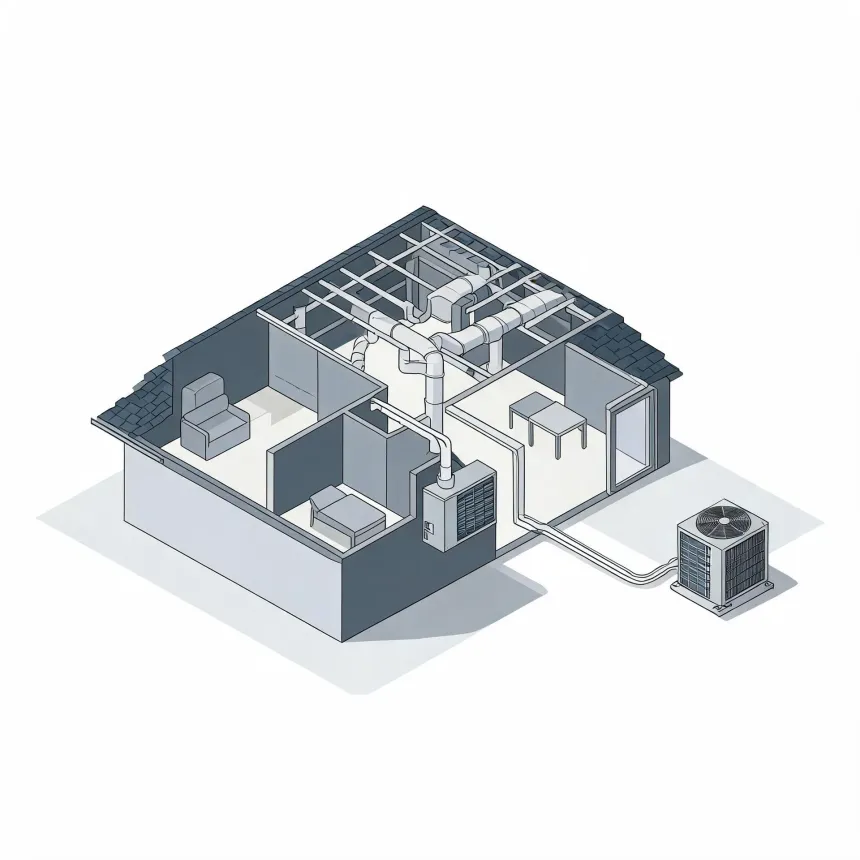
Isometric cutaway illustration of a house showing attic ductwork, an indoor air handler, and an outdoor condenser unit connected by lines.
Your air conditioner works hardest from July through July.

NOAA nClimDiv, 1991–2020 normals

A unit that short cycles, running a few minutes then shutting off, isn't finishing a proper cooling cycle.

That pattern wears the compressor faster, and a tune-up catches the cause before the compressor pays for it.

Half these homes are young enough that a yearly check is worth it

Half the homes here were built by 1993
Climate zone 5B
Power here costs 14.80 cents per kilowatt-hour

Half the homes in this county were built in 1993 or later, which means a lot of AC units here are still well inside their working life. That's worth protecting with a yearly check rather than waiting for a breakdown. A tune-up before the heat sets in lets a contractor catch a weak capacitor, a low refrigerant charge, or a dirty coil while it's still a small fix. Skip a few years of that and a newer system starts acting like an old one. If your unit came with the house, a yearly visit is the cheapest way to keep it running the way it was built to.

Have the unit checked before summer puts it to work

Your outdoor unit just sat through another season of whatever the sky did. Get it checked before summer so a contractor can catch hail dents, debris in the coil, or anything else the weather left behind.

Find a contractor
A man in a dark t-shirt and tan work pants carries a worn canvas tool bag up wooden porch steps toward a red-orange front door of a gray-sided house, with a red ceramic planter holding a shrub to the right.
A gray cylindrical air conditioning condenser unit mounted on a concrete pad next to a light-colored vinyl-sided house exterior.

Skip enough tune-ups and small wear turns into a compressor problem

A dirty coil makes the compressor work harder to move the same heat, and it runs longer to reach the set temperature. That extra strain is what shortens a compressor's life more than age does. A clogged filter does similar damage from the other side, starving airflow until the evaporator coil gets cold enough to ice over. Once ice builds on the coil, the system cools worse, not better, no matter how long it runs. Belts aren't part of this. Most outdoor fans and compressors drive directly, so there's no belt to inspect or replace. What actually wears are the capacitor, which weakens with age and heat cycles, and the contactor, which pits a little every time it closes. A tune-up catches those while they're still working, not after they've failed on the hottest afternoon of the year.

Change the filter

A dirty filter is the one thing worth checking without waiting for a contractor. Pull it out, hold it up to a light, and if you can't see through it, swap it. A filter clogged with dust and pet hair starves the system of airflow, and that's what pushes the evaporator coil toward icing over.

Keep the area around the outdoor unit clear

The outdoor unit needs open air on all sides to shed the heat it's pulling out of the house. Grass clippings, leaves, and anything stacked against the cabinet block that airflow and make the compressor work harder than it should. Walking past with a hose to rinse grit off the fins between visits is safe and worth doing.

The filter, the coils and the drain all do one job between them: keep air and heat moving through the system the way it was designed to. A clean filter lets the right volume of air cross the evaporator coil, which is what keeps that coil at the right temperature to pull moisture out of the air. Let the coil get dirty, inside or out, and it can't shed heat properly, so the compressor runs longer to hit the same set temperature. The condensate drain matters just as much and gets ignored more. It carries away the water the evaporator coil pulls out of the air, and algae or dust can clog that line without any warning sign until the pan backs up and overflows. A tune-up includes clearing that drain and washing down both coils, because a system can look fine and still be working harder than it should on all three fronts.

A tune-up is a fixed list, not a once-over with a flashlight. A contractor checks refrigerant charge against what the system calls for, since too little or too much both make the compressor work harder than it should. They test the capacitor and contactor under load rather than just looking at them, because both can seem fine sitting still and fail the moment the system starts. They check static pressure across the filter and coil to see whether airflow is actually moving the volume the system was built for. They inspect the condensate drain and pan, tighten electrical connections that loosen from vibration over time, and confirm the thermostat is calling for the right temperature and getting it. None of that shows up from across the yard. It only turns up when someone opens the cabinet and measures it.