





A row of illuminated timber-frame and stone houses photographed at dusk, with evergreen trees and a mountain range in the background.

AC Maintenance in Fairplay, CO

Tell us about the job

Takes about a minute. No obligation.

Tune-up, service, or cleaningCentral ACPark County, CO
Step 1 of 2

What ZIP code is the job in?

A few signs mean it's time to get the air conditioner looked at before it quits outright. Warm air coming out of the vents when it should be cold is the clearest one. A hissing or bubbling sound near the indoor coil can mean the refrigerant is low and leaking somewhere in the line. If the system runs longer than it used to, or cycles on and off more than it should, the compressor or the airflow is struggling. Ice forming on the copper line outside points to restricted airflow, often from a dirty filter or a coil that needs cleaning. Any burning smell or a breaker that trips when the unit starts is worth having checked right away, since that usually traces back to the electrical components or the motor itself.

72°F
the average summer afternoon it cools against
11 hail events
in ten years, and hail bends the fins on outdoor coils
74 wind events
in ten years, and wind drives debris into outdoor units
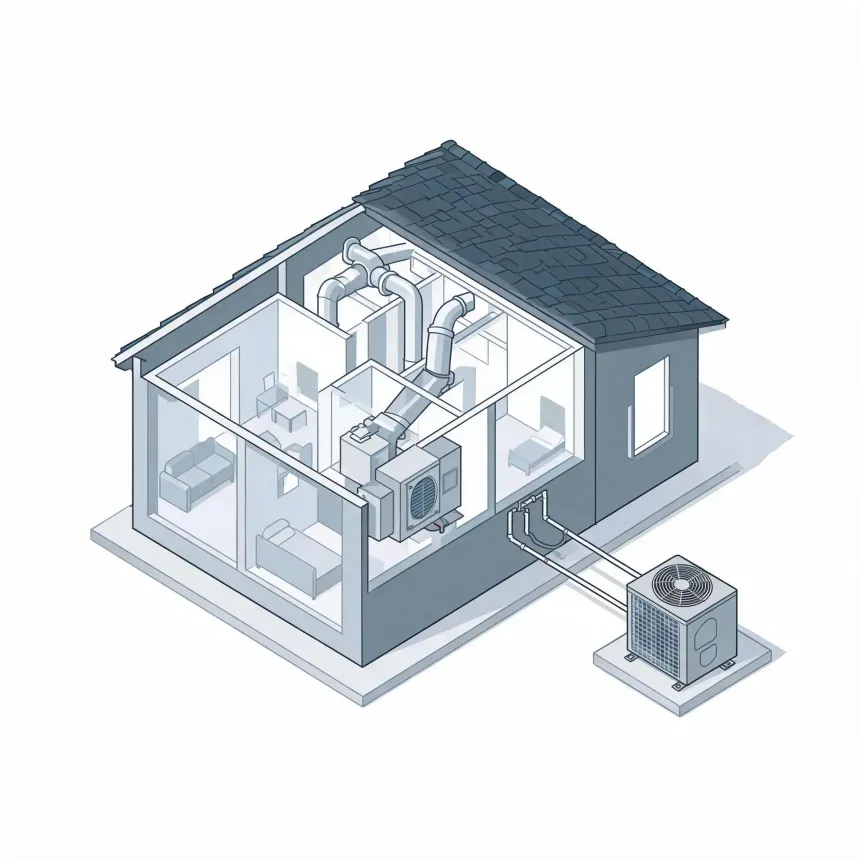
Isometric cutaway illustration of a small house showing interior rooms with furniture, an indoor air handler with ducts in the attic space, and refrigerant lines running to an outdoor condenser unit on a pad.
Your air conditioner works hardest from June through July.

NOAA nClimDiv, 1991–2020 normals

A clean filter is the one thing between visits that actually protects the system.

Swap it every month or two through the summer and the coil behind it stays free of the dust that chokes airflow.

Half these homes are new enough that a yearly check is time well spent

Half the homes here were built by 1992
Summer afternoons average 72°F
74 damaging wind events from 2015 to 2024
An Easy Life for Your ACAfternoon highs average 72°F here in June, July and August.

The filter protects the coil, and the coil protects everything else. Once airflow drops, the indoor coil runs colder than it should and frost starts to build on it, and that frost blocks airflow even further. It feeds on itself until the coil is a block of ice and the system is barely cooling at all. The outdoor coil has its own problem: it sits outside and collects leaves, grass clippings and dust on its fins, which makes the whole system work harder to shed heat. The condensate drain is the part people forget. It carries off the water the indoor coil pulls out of the air, and if it clogs with algae or dirt, that water backs up into the pan and can overflow into the house. A tune-up includes clearing that line, straightening the outdoor fins if they're bent, and washing both coils down so the system can breathe the way it was built to.

Easy duty still calls for a yearly check

The mild summers mean this system isn't working hard, but the parts inside it still age year to year. A yearly check catches a weak capacitor or a dirty coil while it's still a simple fix, before it turns into a system that won't start.

Find a contractor
An outdoor air conditioning condenser unit mounted on a concrete pad beside a house, with electrical conduit running to a wall-mounted disconnect box.

Light Use Still Needs a Look

An air conditioner doesn't wear out from age sitting on a calendar. It wears out from hours running and cycles started. Every time the compressor kicks on, it's a small jolt to the motor and the electrical parts that feed it, and every hour it runs is time a dirty coil or a weak capacitor gets pushed a little harder. A system that starts less often and runs fewer hours across its life is simply putting fewer of those jolts and fewer of those hours on itself. Skip maintenance on a machine like that and the parts that would have failed eventually still fail eventually, just on a longer clock. That's not a reason to skip the check. It's the reason a yearly look stays ahead of trouble instead of chasing it, catching the slow leak or the weakening capacitor while the system still has plenty of life left to protect.

What the Gauges Show

A tech checks refrigerant pressure with gauges on the lines, something no homeowner can eyeball from the thermostat. A system can be low on charge and still blow cold air for a while, just not as cold as it should, and not for as long. The gauges also show if the compressor is working harder than it should to move that refrigerant, which is an early sign of trouble long before the system fails to cool at all.
What the Meter Finds

The capacitor that kicks the compressor and fan motor on doesn't fail all at once most of the time. It weakens, and a weak capacitor makes the motor strain every time it starts, which shortens its life. A meter reads the capacitor's actual output against what it should be, catching the kind of wear that never shows up as a symptom until the day the unit just hums and doesn't start at all.

A quick tune-up usually means someone swaps the filter, glances at the outdoor unit, and leaves. A thorough one takes a lot longer because there's more to check than the eye can see. The tech should hook up gauges to read refrigerant pressure, not just feel the lines with a hand. They should pull the capacitor's actual reading on a meter instead of assuming it's fine because the fan spins. Electrical connections get tightened, since a loose one heats up and burns a terminal over time. The condensate line gets flushed, not just looked at, because a clog doesn't show until the pan overflows. If the visit is over in a few minutes and nobody touches the coils or opens the panel to check wiring, that's a filter change, not a tune-up.

A tune-up is really a short list of checks, each catching a different way the system fails. The thermostat gets tested to make sure it's calling for cool and the system is answering, since a bad sensor or miscalibration can throw off the whole cycle without any part actually breaking. The blower motor and its wheel get checked for wear and for the dust that builds up on the blades, because a dirty or tired blower can't move the air the rest of the system depends on. Refrigerant lines get looked over for oily residue, which is usually the first sign of a slow leak long before the charge drops enough to matter. The outdoor fan motor gets checked for noise and end play, since a motor with worn bearings will run louder and hotter until it seizes. None of these show up on a thermostat display. They show up on a gauge, a meter, or in a tech's hands, which is the difference between a system that's actually sound and one that just happens to be running today.