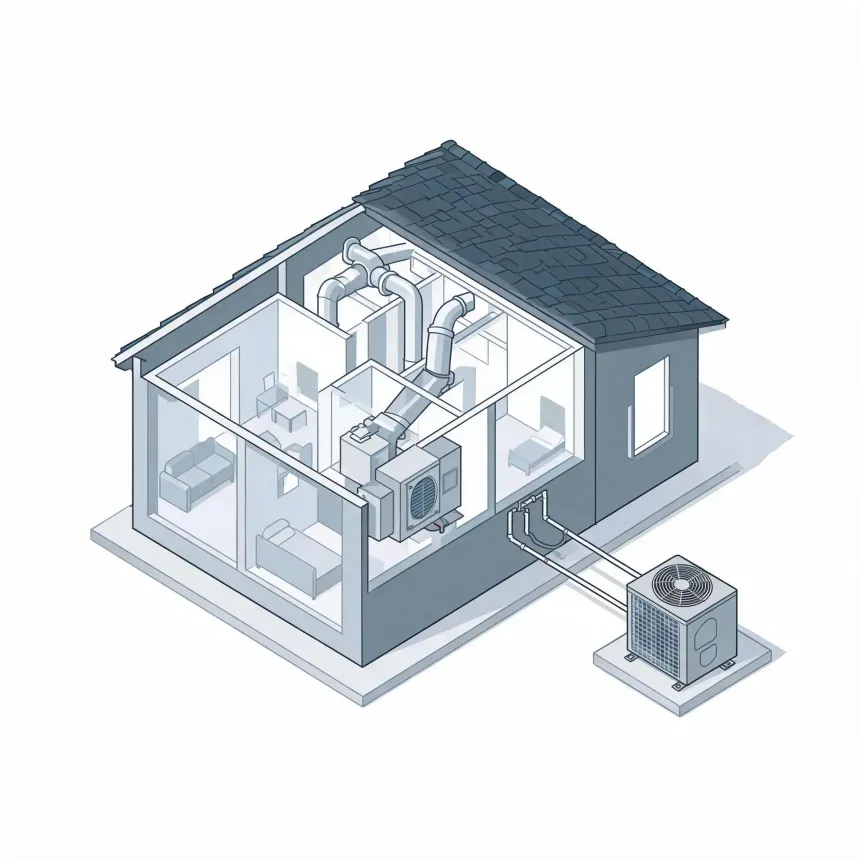
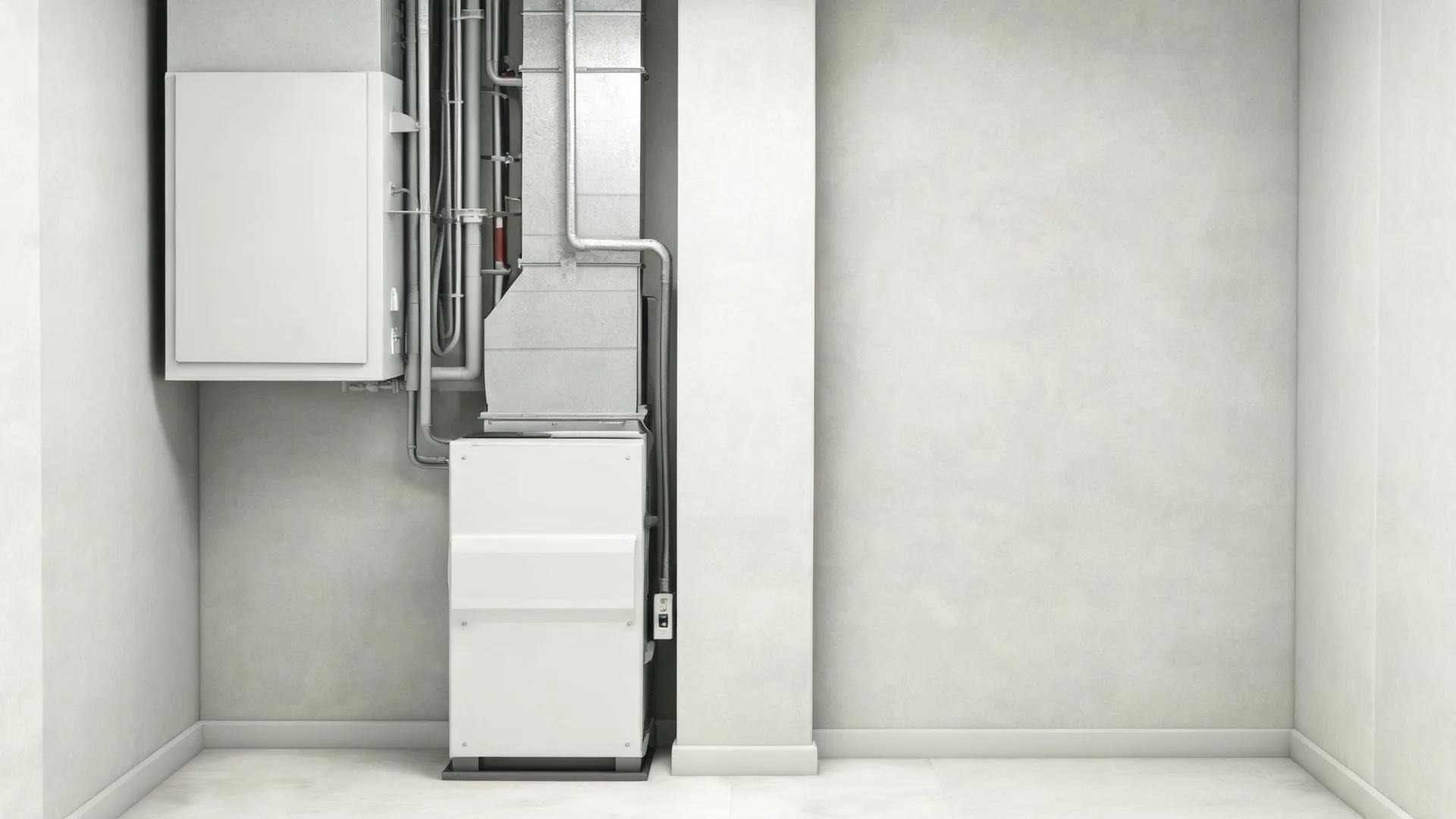
When the filter clogs, less air moves across the indoor coil. That coil needs steady airflow to pull heat out of the house. Starve it long enough and it can ice over, and once it's frozen the whole system stops cooling until it thaws.
The drain line has one job
The indoor coil sheds water as it works, and that water has to reach the drain and leave the house. If the line clogs with algae or dirt, water backs up into the pan and can spill out near the unit. Clearing that line is part of what a maintenance visit checks before it becomes a problem.
2 months
July through August, your air conditioner is on duty
84°F
the average summer afternoon it cools against
165 hail events
in ten years, and hail bends the fins on outdoor coils
83 wind events
in ten years, and wind drives debris into outdoor units
Your air conditioner works hardest from July through August.
Jan
Feb
Mar
Apr
May
Jun
Jul
Aug
Sep
Oct
Nov
Dec
NOAA nClimDiv, 1991–2020 normals
AC here runs about two months a year, July and August.
One visit before July is enough to get ready for them.
Half the homes here were built in 1996 or later, so a lot of this equipment is still young
Half the homes here were built by 1996Cooling runs July through AugustSummer afternoons average 84°F
Book the check in JuneJune is the month before cooling starts here.
With a system that young, a yearly check is what keeps it that way. A technician can catch a weak capacitor or a refrigerant charge that's drifted low before either one leaves the house without cooling. That matters more here than in a county full of older equipment, because the system has the rest of its working life ahead of it, not behind it. Skip a few years of checks and small problems sit there, and a coil or a compressor that should have lasted decades wears down faster than it needs to. If your system came with the house, a once-a-year visit is what keeps it running like new for longer.
Checking the filter is the one job that's really on the homeowner. Pull it out, hold it up to a light, and if you can't see through it, swap it. A clean filter is the easiest way to keep full airflow moving across the indoor coil between visits. Outside, keep the area around the condenser clear. Grass clippings, leaves, and anything piled against the cabinet block the airflow that unit needs to shed heat, and a condenser that can't breathe works harder than it should. Skip the rest. Opening the cabinet, checking refrigerant, or testing the capacitor is a technician's job, not because the steps are secret but because doing them wrong can damage the system or void a warranty.
The capacitor gets tested, not guessed at
A capacitor can still start the compressor and fan while it's weak, so the system runs and nothing seems wrong. A gauge reads its actual strength against what it should be. One that's drifted too far gets caught before it fails outright and leaves the compressor straining to start.
Electrical connections loosen on their own
Every time the system cycles on and off, the metal in its wiring and terminals heats and cools and shifts slightly. Over time a connection that was tight comes loose. A loose connection runs hotter than it should and can burn the contact or trip the system off, and there's no way to see it without opening the panel and checking each one.
Book your AC tune-up in June, before homes here start needing cooling in July.
Jan
Feb
Mar
Apr
May
Jun
Jul
Aug
Sep
Oct
Nov
Dec
A tune-up checks the refrigerant charge, cleans the coils, tests the capacitor and tightens the electrical connections.
A tune-up starts outside at the condenser. The technician checks refrigerant pressure against what the system calls for, because a charge that's even a little low makes the compressor work harder without cooling any better. The fan motor and blades get inspected for wobble or wear, since a fan that's struggling can't pull enough air through the coil. Inside, the evaporator coil gets looked over for dirt or ice, and the drain line gets checked so condensation has somewhere to go. The thermostat gets tested too, to make sure it's actually telling the system to do what the homeowner thinks it's doing. None of this is guesswork. Each check has a number it's supposed to hit, and the technician compares what the system is doing against what it should be doing.