





Aerial view of a residential air conditioning condenser unit mounted on a concrete pad next to a house with vinyl siding and a sliding glass door.

AC Maintenance in Durango, CO

Tell us about the job

Takes about a minute. No obligation.

Tune-up, service, or cleaningCentral ACLa Plata County, CO
Step 1 of 2

What ZIP code is the job in?

Summer afternoons here average 79°F. That is mild work for an air conditioner built to handle much hotter air. The dew point averages just 35°F, so the system isn't fighting heavy, damp air the way units do in most of the country. Less heat and less moisture both mean less strain on the compressor and coils. That said, parts still age, dust still builds up, and a unit that sits unused most of the year can develop problems you won't notice until the first hot day. A yearly check catches those early, before they turn into a breakdown.

79°F
the average summer afternoon it cools against
8 hail events
in ten years, and hail bends the fins on outdoor coils
30 wind events
in ten years, and wind drives debris into outdoor units
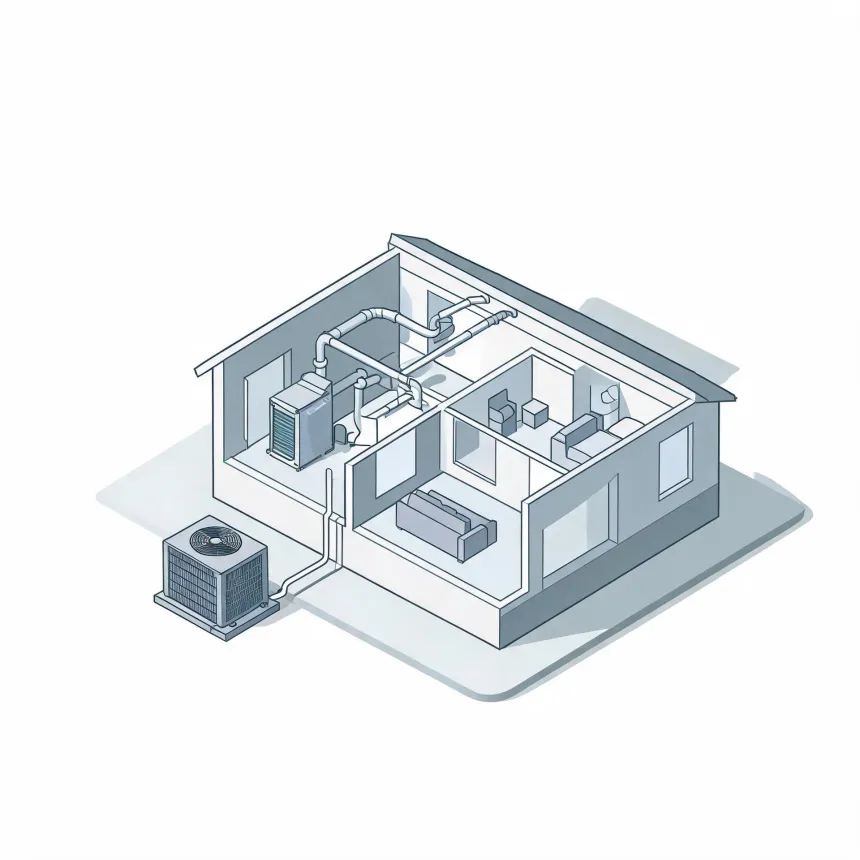
Isometric line illustration of a cutaway house showing interior rooms, a furnace or air handler with ductwork, and an outdoor condenser unit beside the building.
Your air conditioner works hardest from July through August.

NOAA nClimDiv, 1991–2020 normals

A dirty filter is the one thing between visits that actually hurts the system.

Check it monthly and swap it when it looks gray, that's the whole job until the next tune-up.

Newer homes here mean most systems still have years left in them

Half the homes here were built by 1993
Climate zone 5B
Power here costs 17.98 cents per kilowatt-hour

The filter protects the coil, and the coil is what actually cools the air. Once it's coated in dust, the coil can't pull heat out the way it should, so the system runs longer to reach the same temperature. Behind that coil sits a drain pan and a drain line, there to carry away the condensation that cooling naturally produces. That line can grow algae or catch dust and clog, slow enough that nobody notices until water backs up and spills over the pan. Some systems shut themselves off when that happens, others just leak until someone finds the stain. A tune-up includes flushing that line and checking the coil, the two things a homeowner can't see and won't think about until the water shows up.

Light duty is still worth a yearly check

A system working this little still needs a yearly look. Light duty means fewer problems, but it doesn't mean none, and a tune-up now means nothing surprises you on the first hot day.

Find a contractor
A man in a dark cap, dark long-sleeved shirt and tan work pants walks up porch steps toward a red front door, carrying a worn canvas tool bag.
An outdoor residential air conditioning condenser unit mounted on a concrete pad, surrounded by gravel with a blue sky in the background.

A few years in, not a few years left

If your AC went in when the house was built, a yearly check is what keeps it running toward the end of a normal working life instead of cutting it short. A system that's a few years old can still have a decade or more ahead of it, but only if the coil stays clean and the refrigerant charge stays right. Skipping a year doesn't break anything by itself. It just means small wear gets found later, after it's cost the system more hours of running harder than it needed to.

Gauges and readings, not just a glance

A thorough tune-up checks refrigerant pressure against the manufacturer's spec, measures the temperature drop across the evaporator coil, and tests capacitor and contactor readings against their rated values. A quick visit might swap the filter, hose off the outdoor unit, and call it done. Without the readings, there's no way to know if the compressor is working harder than it should or if the charge has drifted low.
What that difference means for you

A system that looks fine from the outside can still be losing capacity underneath, and only the numbers catch that early. Skip the readings and a weak capacitor or a slow refrigerant leak gets found the hard way, on the first hot afternoon when the system can't keep up. A real tune-up finds that problem while it's still cheap to fix.

Skip enough tune-ups and the system doesn't quit all at once. The capacitor weakens a little more each season until it finally can't kick the compressor on. Dust keeps building on the coil until the system is running on borrowed capacity, pulling more current to do the same job. A refrigerant leak that started as a pinhole keeps leaking, slow enough that nobody notices until the air coming out isn't cold anymore. None of that shows up from the outside. The unit still hums, the thermostat still clicks it on, and everything looks normal right up until the day it can't keep up and the compressor itself gives out, which is the expensive part to replace.

A proper tune-up starts outside, with the condenser coil itself. A tech straightens bent fins with a comb and clears away anything blocking airflow, because the outdoor coil has to release heat as fast as the indoor coil absorbs it. The fan motor and blade get checked for wobble or noise, since a motor working off balance wears its bearings out early. Belts aren't part of this, most of these systems drive the fan directly off the motor shaft, but the electrical connections at the disconnect box get tightened and checked for corrosion either way. Inside, the blower wheel gets inspected for dust buildup, because a dirty blower moves less air even when the motor behind it is running fine. Every one of these steps is checking something that fails slowly and quietly, long before the system stops cooling altogether.