




A single-story black board-and-batten house with a dark standing-seam metal roof, timber entry porch posts on stone bases, set among tall pine trees with dry grass in the foreground under an overcast sky.

AC Maintenance in Broomfield, CO

Tell us about the job

Takes about a minute. No obligation.

Tune-up, service, or cleaningCentral ACBroomfield County, CO
Step 1 of 2

What ZIP code is the job in?

Half the homes in Broomfield County were built in 2002 or later. That puts a lot of air conditioners here well within their working life, not at the end of it. A system that age is usually worth keeping running well, not replacing. Regular maintenance is what makes that possible, since a unit that gets checked every year tends to hold up better than one that only gets attention when it quits. If your system came with a newer build here, this is the stretch where upkeep pays off the most.

3 months
June through August, your air conditioner is on duty
86°F
the average summer afternoon it cools against
17 hail events
in ten years, and hail bends the fins on outdoor coils
60 wind events
in ten years, and wind drives debris into outdoor units
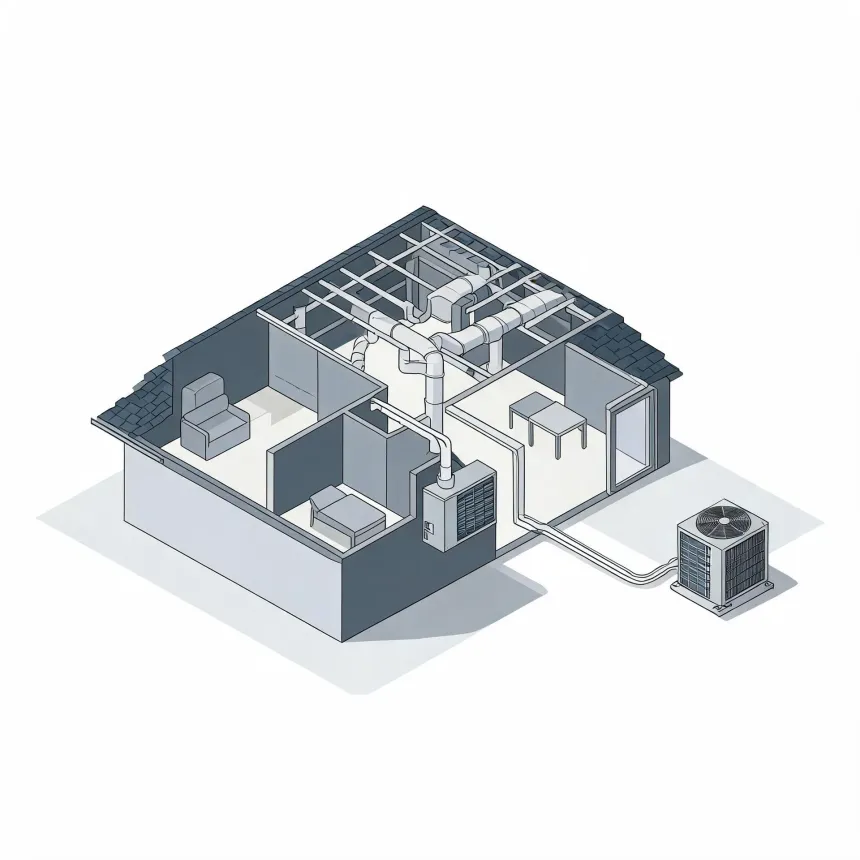
Isometric cutaway illustration of a house showing attic ductwork, an indoor air handler, and an outdoor condenser unit connected by lines.
Your air conditioner works hardest from June through August.

NOAA nClimDiv, 1991–2020 normals

A dirty condenser coil makes the compressor work harder to move the same heat.

A compressor that strains every summer wears out years before it should.

Three months of work a year, not six

Cooling runs June through August
Summer afternoons average 86°F
60 damaging wind events from 2015 to 2024

Cooling here runs June through August, three months, and June asks a lot of a system that has sat idle since last summer. That first stretch of heat is when a weak part tends to show itself. Book the check in May, before the season starts, so a dirty coil or a low charge gets caught while it's still an easy fix. Wait until June and you're making that call with the house already hot and the schedule already full.

Easy duty is still worth a yearly check

Light duty all year still means parts that can work loose or wear down. Hail and wind both reach Broomfield County, and a yearly check is when a bent fin or a loose connection gets caught before the system has to run.

Find a contractor
A gray cylindrical air conditioning condenser unit mounted on a concrete pad next to a light-colored vinyl-sided house exterior.

Newer here doesn't mean maintenance-free

A system built with the house in 2002 or later still needs a yearly check to get the years it's built for. The parts that fail on a young system are the same ones that fail on an old one, a weak capacitor, a coil that's picked up dirt, a thermostat that's drifted out of calibration. None of that shows up from the curb. A tech checking the system once a year catches it while it's still a five-minute fix instead of a reason to call for a new unit. If the system came with the house, ask what year that was and start the yearly check now, not after the first summer it struggles.

Keep the filter clean

A clogged filter is the one thing the homeowner controls. Check it every month the system is running and swap or rinse it when it's visibly dirty. A filter clogged with dust and pet hair starves the system of airflow, which makes the evaporator coil run colder than it should and can ice it over. Once that coil ices up, the system stops cooling the house at all until it thaws.

Know what to leave alone

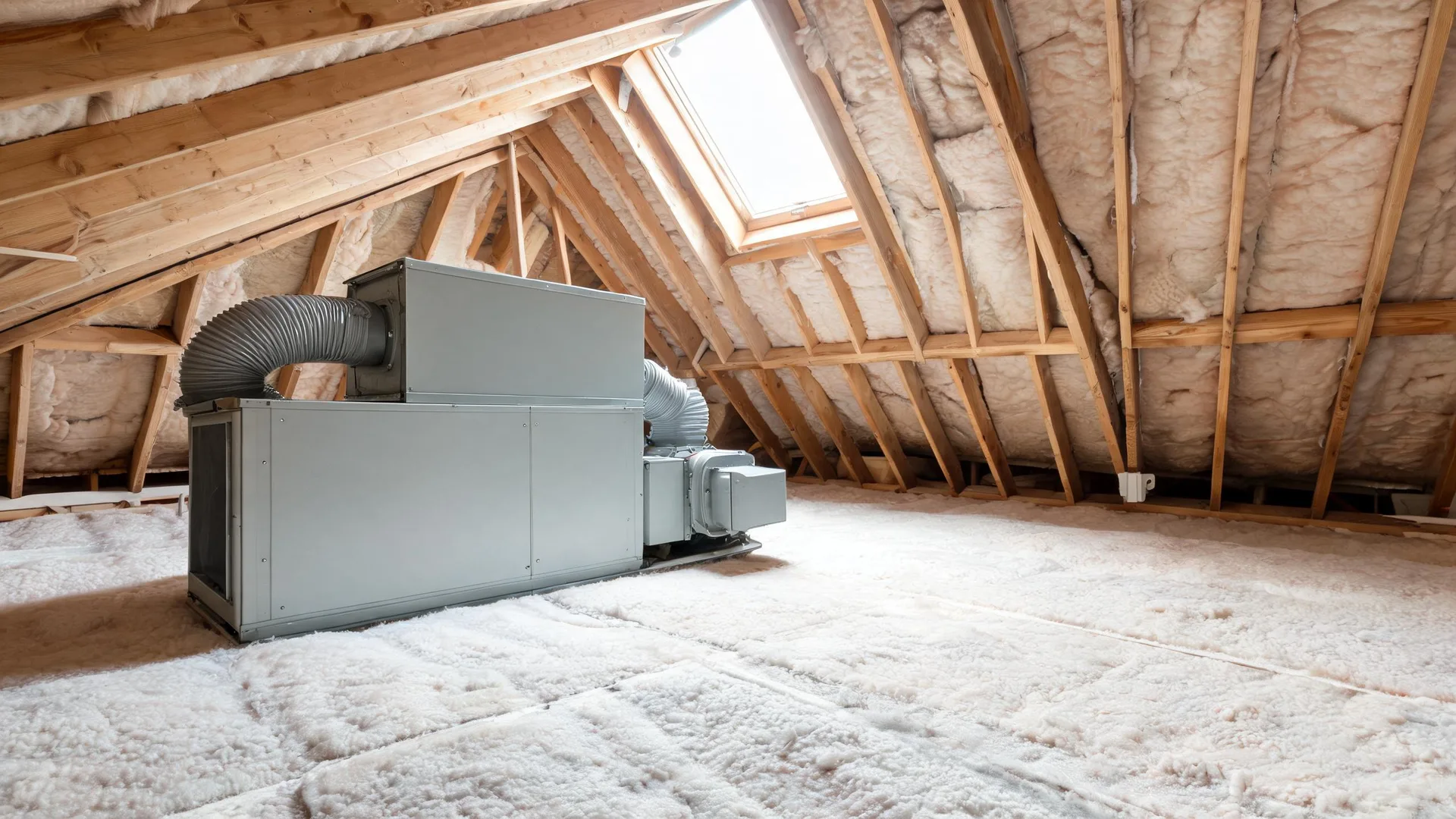
The condenser sits outside and needs clear space around it, so keep leaves, grass clippings and mulch from piling against it and skip the pressure washer on the fins. Don't pop the panel on the indoor unit or touch the electrical disconnect. Refrigerant charge, coil cleaning, and anything involving capacitors or wiring is a job for a tech with gauges and training, not a homeowner with a wrench.

An outdoor air conditioning condenser unit positioned beside a blue-sided house at sunset.

Book your AC tune-up in May, before homes here start needing cooling in June.

  1. Jan
  2. Feb
  3. Mar
  4. Apr
  5. May
  6. Jun
  7. Jul
  8. Aug
  9. Sep
  10. Oct
  11. Nov
  12. Dec

A tune-up checks the refrigerant charge, cleans the coils, tests the capacitor and tightens the electrical connections.

A proper tune-up starts outside at the condenser. The tech pulls the top or side panel and cleans the coil fins so the unit can actually shed the heat it's pulling out of the house. They'll check the capacitor's output against its rating, since a capacitor that's weakened doesn't always fail outright, it just makes the compressor struggle to start. Refrigerant charge gets checked against what the system calls for, because a system running low doesn't just cool less, it runs the compressor harder and shortens its life. Inside, the evaporator coil gets inspected for dirt and the drain line gets cleared so condensation has somewhere to go instead of backing up. Electrical connections get tightened, since a loose one generates heat and can trip the system off on its own.