Why your mini split light is blinking in Colorado

RepairMini-splitColorado
Step 1 of 2

What ZIP code is the job in?

Why is the light on my mini split blinking?

A blinking light on a mini split usually means the unit is trying to tell you something specific through a code, not just flickering at random. You want to know if this is something to watch for a day or a reason to get someone out before it turns into a bigger repair, especially with the unit working hard through a hot, dry Colorado summer.

It's the unit's way of signaling an error code, not a random malfunction

That blinking is a diagnostic code. The number of blinks, or the pattern of long and short flashes, corresponds to a specific fault the indoor unit's control board has detected, anything from a clogged filter to a refrigerant problem to a failed sensor. Different brands use different patterns, so the same blink count can mean different things depending on what you have installed. With Colorado summers running hot and dry, mini splits here often run long stretches during the day, and a unit pushed hard for hours is more likely to trip a fault code than one that cycles on and off briefly. The blinking itself won't tell you which part failed. That takes someone pulling the code and checking it against the manual for your model.

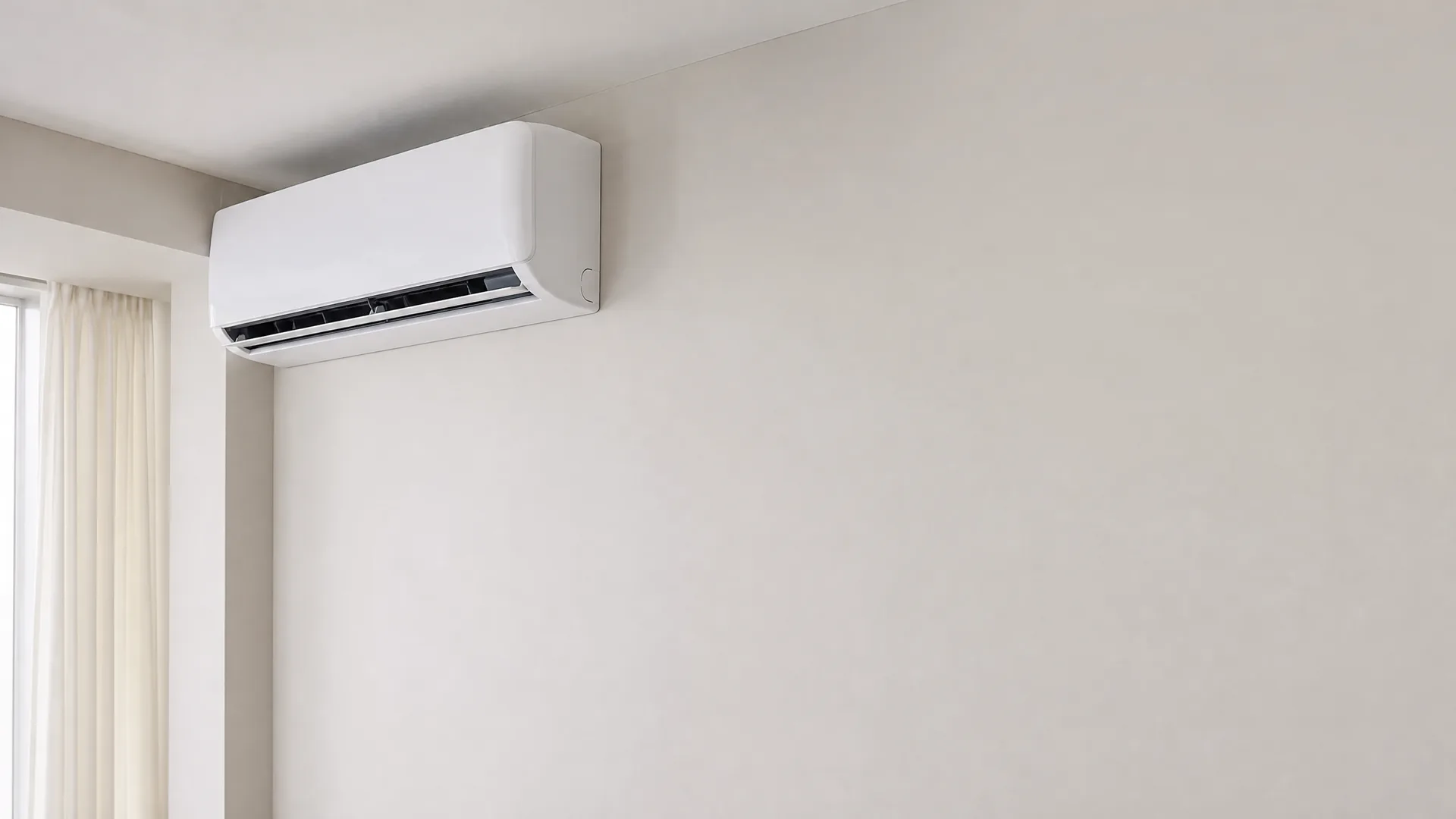
A white wall-mounted mini-split air conditioner installed near the ceiling on a plain beige interior wall.

Blinking but running fine

If the unit is still cooling the room and the light blinks in a steady, repeating pattern, it's likely just reporting its status or a minor fault code. Check the manual for what that pattern means before you assume the worst.

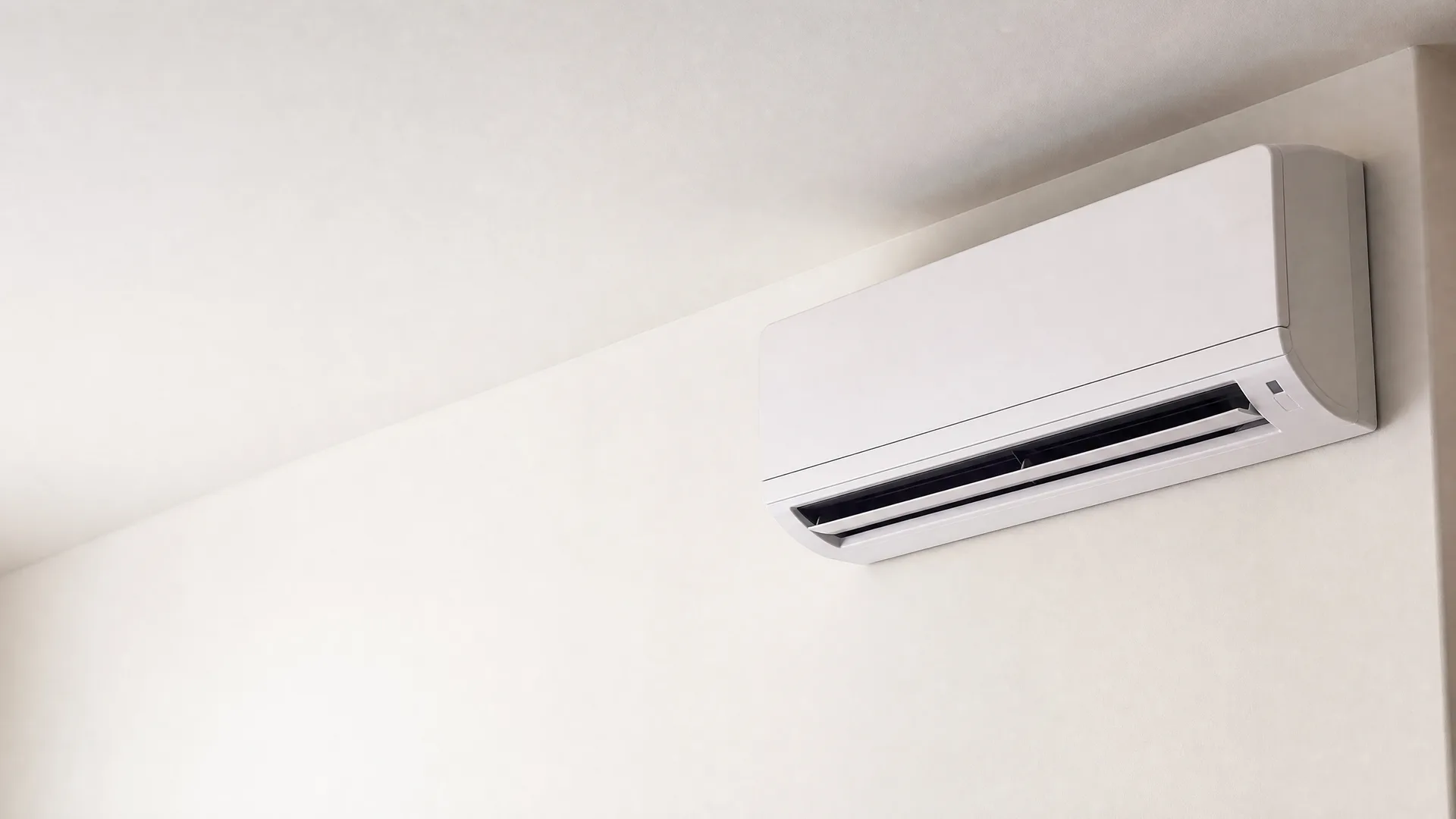
A dusty, discolored wall-mounted mini-split air conditioner unit near the ceiling of a plain beige interior wall.

Blinking and showing its age

A casing this discolored and dusty points to years of hard use, common after a lot of Colorado summers. If the blinking started along with weak airflow or warm air, the light is likely flagging a real problem, not a routine check-in.

What's going on when the light won't stop blinking

You're probably catching it out of the corner of your eye, that steady flash on the indoor unit, every time you walk past. Maybe the air coming out feels weaker than it should, or the unit cycles on and off more than it used to. Sometimes there's a faint smell, or the room just isn't cooling the way it did last week. With Colorado summers running hot and dry, a mini split that's struggling shows it fast, the house heats up in the afternoon and stays that way. Left alone, a fault code blinking day after day can mean the unit is working harder than it should, or not cooling at all by the time you notice.

A white wall-mounted mini-split air conditioner near the ceiling of a room with plain beige walls and a pale curtain at the left edge.

What the code is actually doing

The blinking comes from the unit's control board, counting out a pattern on purpose. Most brands use the number of flashes, or a flash and pause sequence, to point to one circuit or sensor. A mini split can't display a text error like a phone, so the light is the only way it has to report what it found. That's why matching the count to your model's manual, not someone else's, matters before you decide what it means.

A white wall-mounted mini-split air conditioner indoor unit installed near the ceiling on a plain off-white interior wall.

Dry Colorado air plays a part

Low humidity here means less moisture passing over the indoor coil and sensors than in a damp climate. That changes which faults show up first. A frozen coil from low refrigerant is less common when the air is this dry, but dust buildup on a sensor or filter is more likely, since dry air carries more of it indoors. If the blinking started after a stretch of hot, dry days, that pattern is worth mentioning when you look into it.

Power costs 15.69 cents per kilowatt-hour statewide

At 15.69 cents per kilowatt-hour, a mini split that's blinking and short cycling or running its compressor harder than it should still adds up fast. A unit flagging a fault early and getting looked at costs you less than one running inefficiently for weeks before anyone checks the code.

EIA-861 2025 statewide residential average

A smiling man in a blue denim shirt over a white tee sits at a light stone kitchen counter with a grey mug and a bowl of oranges and bananas, with pendant lights and shelving behind him.
A smiling bearded man in a grey long-sleeved shirt sits at a kitchen counter with a dark mug, with a dining table, pendant light and glass doors onto greenery behind him.
A bearded man in a dark green knit sweater smiles and looks off to the side while standing at a kitchen counter with a white mug of coffee, with open shelving, a potted tree, and a dining table near large windows behind him.
A man with dark curly hair in a dark green sweater stands smiling and looking to the side in a kitchen with white cabinets, a potted plant, a stone countertop with a ceramic mug, and a dining area with framed art in the background.
A white wall-mounted mini-split air conditioner installed high on a beige interior wall near the ceiling molding, with a light curtain and curtain rod at the left edge.
A quiet blink and the room still cools down even in August heat, this is the unit keeping you posted, nothing more.
A wall-mounted mini-split air conditioner indoor unit with a discolored cream plastic casing and dusty outlet vanes, installed high on a plain light-colored interior wall near the ceiling.
A yellowed case and a light that won't quit points to a unit that's been struggling for a while now.
A smiling man in a dark blue T-shirt sits on a light gray sofa in a living room with a wooden shelf and window behind him, with a laptop edge visible in the foreground.
A bearded man in a plaid flannel shirt stands indoors looking out a frost-covered window, with a steaming dark blue mug on the wooden sill and snow-covered trees outside.
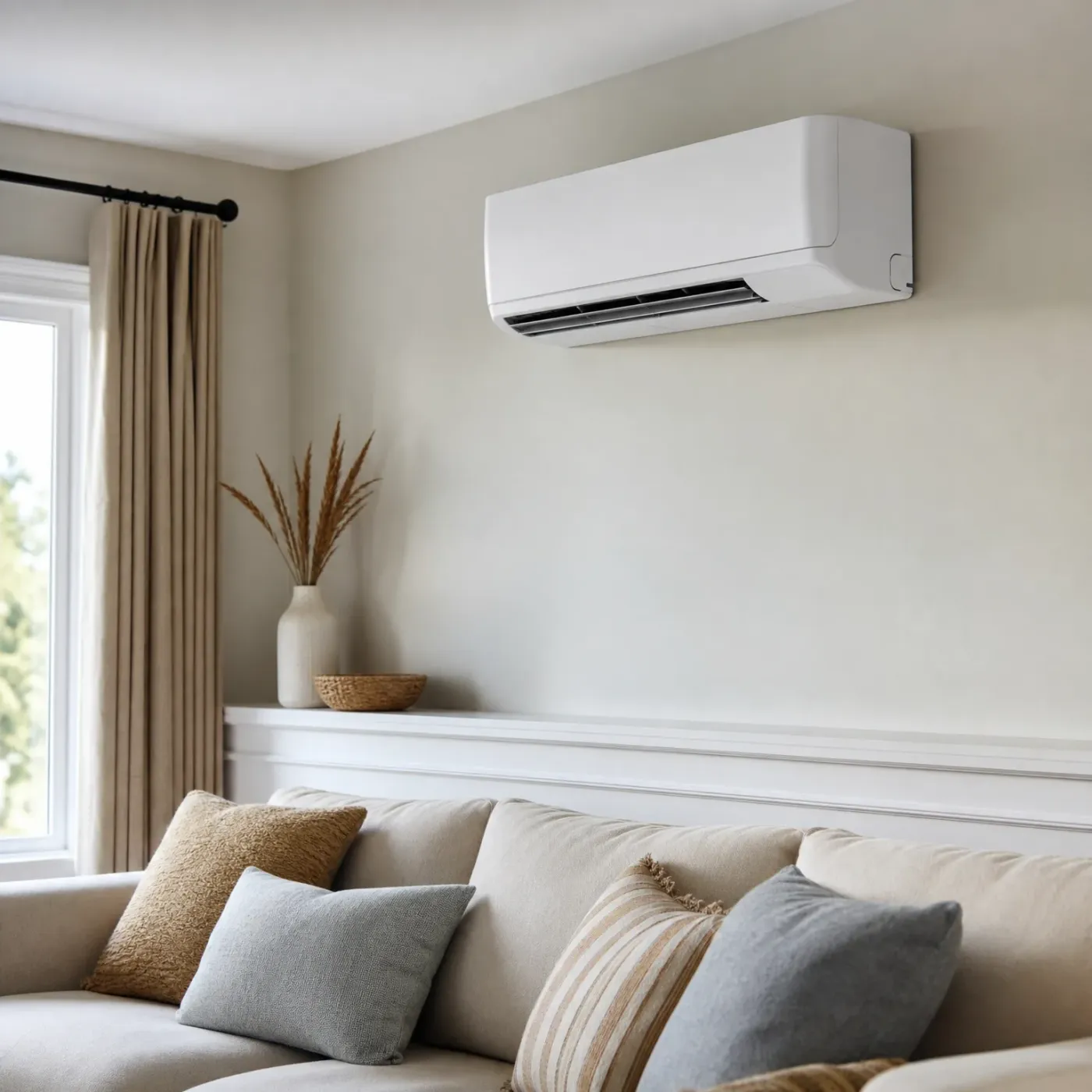
A white wall-mounted mini-split air conditioner on a pale wall above a beige sofa with assorted cushions, beside a window with long curtains and a shelf holding a vase of dried grasses and a woven bowl.

Stop chasing a mini split pro

Skip searching for a mini split pro and answer a few questions instead.

Send it once and finding someone is no longer on you.

I'm done searching

Sending the form costs nothing.

A dusty white wall-mounted mini-split air conditioner installed high on a beige interior wall below a molded ceiling trim.
Before you get your mini split repair
A white wall-mounted mini-split air conditioner unit installed high on a light gray interior wall near the ceiling, with a white-framed window and green foliage visible at the left edge.
After you get your mini split repair
  1. The control board senses a reading outside its normal range.

  2. The board matches that reading to a fault code in its memory.

  3. The indoor light flashes that code's number in a repeating count.

  4. The unit keeps running or shuts down, depending on the fault.

Call It In or Wait It Out

Call it in now

  • You get a diagnosis instead of a guess, so the fix matches the actual fault code instead of a swapped part that wasn't the problem.
  • The unit stops working against itself, which matters in July and August when you need it running right, not just running.
  • A code caught early is usually one system or sensor, not several things that failed because the first one ran too long.
  • You skip the back and forth of finding a contractor yourself, calling around, and explaining the blinking pattern more than once.
  • Whatever is driving the short cycling or the weak airflow gets named and handled before it changes how the compressor runs.

Wait it out

  • The code keeps counting out the same fault every cycle, and nothing about ignoring it makes the reading go back to normal.
  • A unit compensating for a bad sensor or a low charge tends to run its compressor harder, not easier, the longer it goes unlooked at.
  • If the fault is heat related, you may not notice until a dry Colorado afternoon when the room should be cooling and isn't.
  • You're still on your own for finding someone qualified when the unit finally stops masking the problem and just quits.
  • Whatever caused the first code gets more time to affect other parts of the system before anyone's looked at the board.
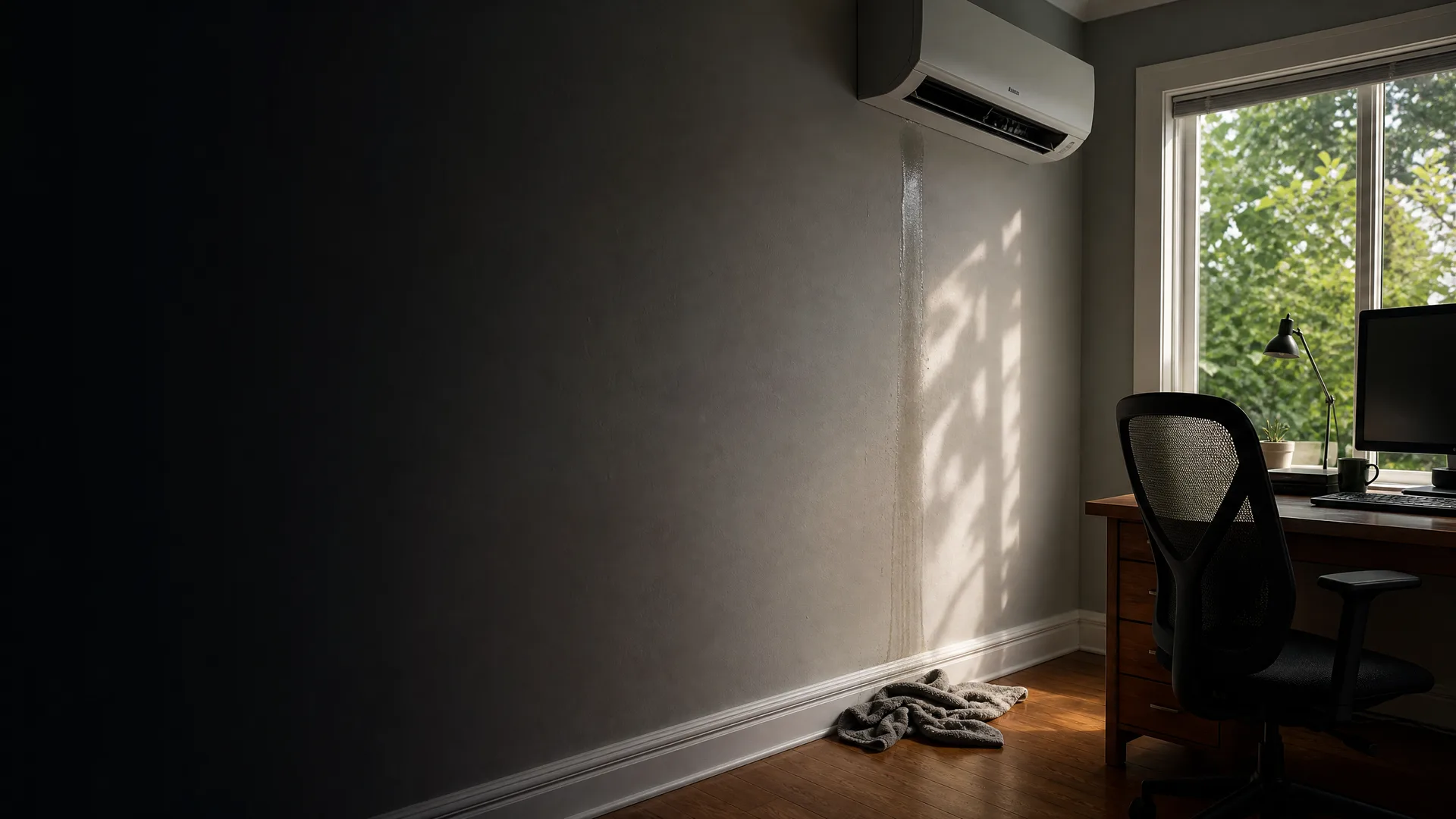
A wall-mounted mini-split air conditioner in a dim room, with a water streak running down the wall below it to a towel on the floor near the baseboard, beside a desk, office chair and monitor by a window.

You're at your desk on a July afternoon, the heat sitting heavy outside, and you notice the wall under the mini split looks wrong. A streak of water has worked its way down the drywall, dark and spreading, right below the indoor unit. You already grabbed a towel and dropped it on the floor where the drip keeps landing. The light on the unit is still blinking, same pattern as before, but now you're not thinking about what the code means. You're thinking about the wall, and how long that streak has been forming before you looked up from the screen and caught it.


A closed silver laptop and a white cup of coffee on a saucer sit on a wooden table in front of a wooden chair, a plain beige wall, a potted leafy plant and a window with greenery outside.

A blinking light is just the start of the conversation

The blink told you something was off before the room felt warm or the water stain showed up on the wall. That's the whole point of the code. A mini split in Colorado runs through a hot, dry summer and needs to be right when it matters, and a fault caught at the blink is smaller than one caught after weeks of short cycling or a drain line backing up behind the drywall.

You don't need to match the flash pattern to a chart yourself, or call around to find someone who works on your brand, or explain the blinking and the weak airflow twice to two different companies before you get a straight answer. Send the details once and that part of it is off your plate. What's left is the actual fix, matched to the code your unit is already showing you.

Interior corner of a dining room with a round wooden table, a ceramic vase holding olive branches, a dark spindle-back chair near a curtained window, and a sideboard with a lamp against beige walls.
A dark wood cabinet with a drawer and black knob holds a ceramic vase of green leafy branches and a wooden bowl, beside a window with a woven basket of knit blankets.
Sunlit interior corner with white baseboard molding, cream walls, a wood floor, a woven jute rug, and a potted green plant on a window sill with trees visible outside.
Sunlight falls across a marble countertop by a window, where a small stone bowl with pebbles sits beside a potted pothos plant in a ceramic planter and a folded beige towel.
Exterior corner of a house with lap and shingle-style siding, a white gutter and downspout with offset elbows, a stone veneer base, a window at right, and flowering hydrangea shrubs at lower left in warm low-angle light.
A wooden console cabinet with a caned front holds a ceramic vase of green leafy branches and a shallow wooden bowl, below a framed landscape print on a beige wall beside a curtained window.

Hand off the mini split problem

One form replaces the calls you'd make to find a mini split pro.

Hand it over

You're not committing to anything by asking.