






A snow-covered small-town street at dusk, with lit white clapboard houses, bare trees, and a grain elevator silhouetted against an orange and blue twilight sky.

Mini Split Installation in Yuma, CO

Tell us about the job

Takes about a minute. No obligation.

New system or replacementMini-splitYuma County, CO
Step 1 of 2

What ZIP code is the job in?

Gas heats most homes in Yuma County, close to six in ten. The rest split between electricity and propane, with propane common enough that plenty of homes here already run on bottled or tank gas instead of a utility line. A mini split doesn't compete with any of that for primary heat in most houses. It gets added to handle one room a furnace reaches last, or a space with no ductwork at all, or to cover cooling where the house was built for gas heat and nothing else. Worth checking what's already feeding your house before deciding what the new system needs to work alongside.

8 months
October through May, your system heats
3 months
June through August, it cools
18°F
the average winter night it heats against
88°F
the average summer afternoon it cools against
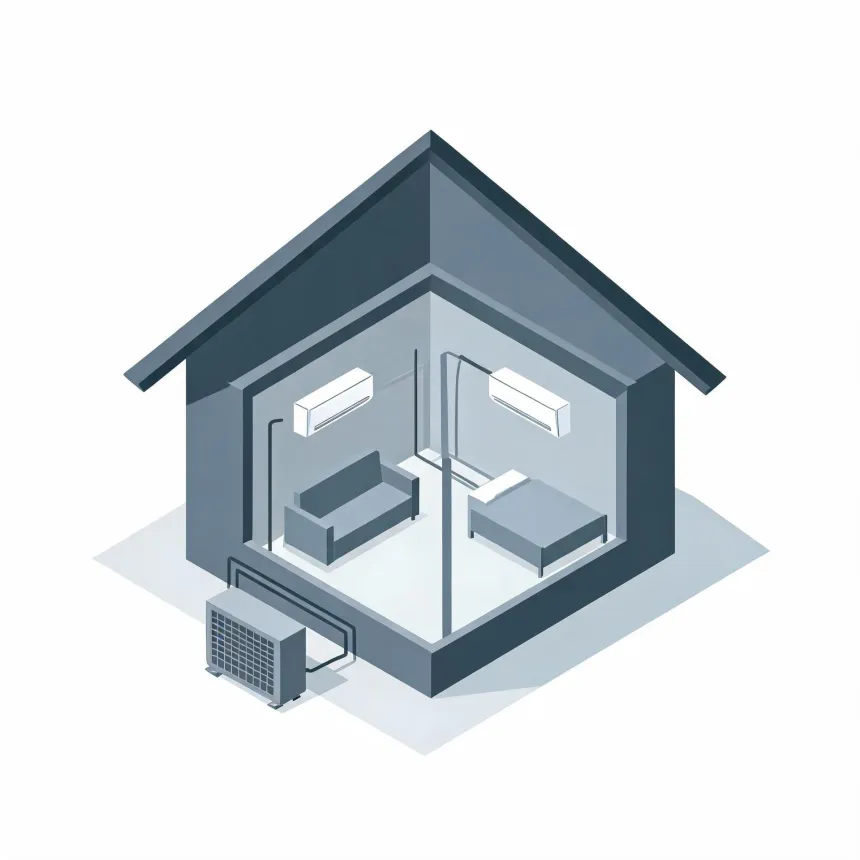
Isometric cutaway illustration of a small gray house showing two rooms, one with a sofa and one with a bed, each with a wall-mounted indoor air conditioning unit connected by line sets to an outdoor condenser unit on the ground outside.
Your system heats October through May and cools June through August.

NOAA nClimDiv, 1991–2020 normals

Yuma County sees hail, wind and winter storms most years, but none of that changes what a mini split needs to be.

A standard size and efficiency rating installed correctly will handle it.

Half the homes here went up by 1968, and a mini split has to fit the house that's already standing

Half the homes here were built by 1968
Cooling runs June through August
Summer afternoons average 88°F
Get it installed before JuneCooling runs June through August here, so May is the month to get it in.

Summer here runs about three months, June through August, with afternoon highs averaging 88°F. That's a moderate cooling load, nothing a standard-size mini split can't handle without upsizing. The bigger thing to plan for is hail and wind, both common here most years. The outdoor condenser sits outside year round, exposed to both. Where it gets mounted and what shields it matters more here than buying a bigger unit than the room needs.

What a new system here has to meet before it's an option

Yuma County sits in zone 5B, a cool climate where heating carries the bigger load. Any mini split installed here has to meet the same federal minimum as a standard split system. That's 14.3 SEER2 for cooling and 7.5 HSPF2 for heating, for units manufactured from 2023 on. A federal tax credit is available for qualifying heat pumps, which narrows the field further in a useful direction. The units that clear both bars are the ones worth comparing.

Find a contractor
A man in a dark cap, gray shirt and tan work pants walks up porch steps toward a red front door, carrying a worn canvas tool bag in his right hand beside a potted shrub in a red planter.
A white mini-split air conditioner outdoor condenser unit mounted on metal brackets against a beige stucco exterior wall, with a blue sky and scattered clouds in the background.

The house decides where this goes, not the catalog

Half the homes in Yuma County were built in 1968 or earlier. A mini split going into one of those houses has to work with the walls and layout that are already there, not a blank slate. That means the line set run, where it can pass through a wall, and where the indoor and outdoor units can actually go all depend on the house as it stands. Worth having that walked through room by room before anything gets ordered.

Sized to the room, not the house

A mini split gets sized to the specific space it's heating and cooling, not matched to square footage the way a furnace might be. The load depends on how many walls face outside, how many windows are in the room, what's above and below it, and how much heat things like appliances or electronics add. A contractor works through these room by room rather than applying one rule to the whole house.
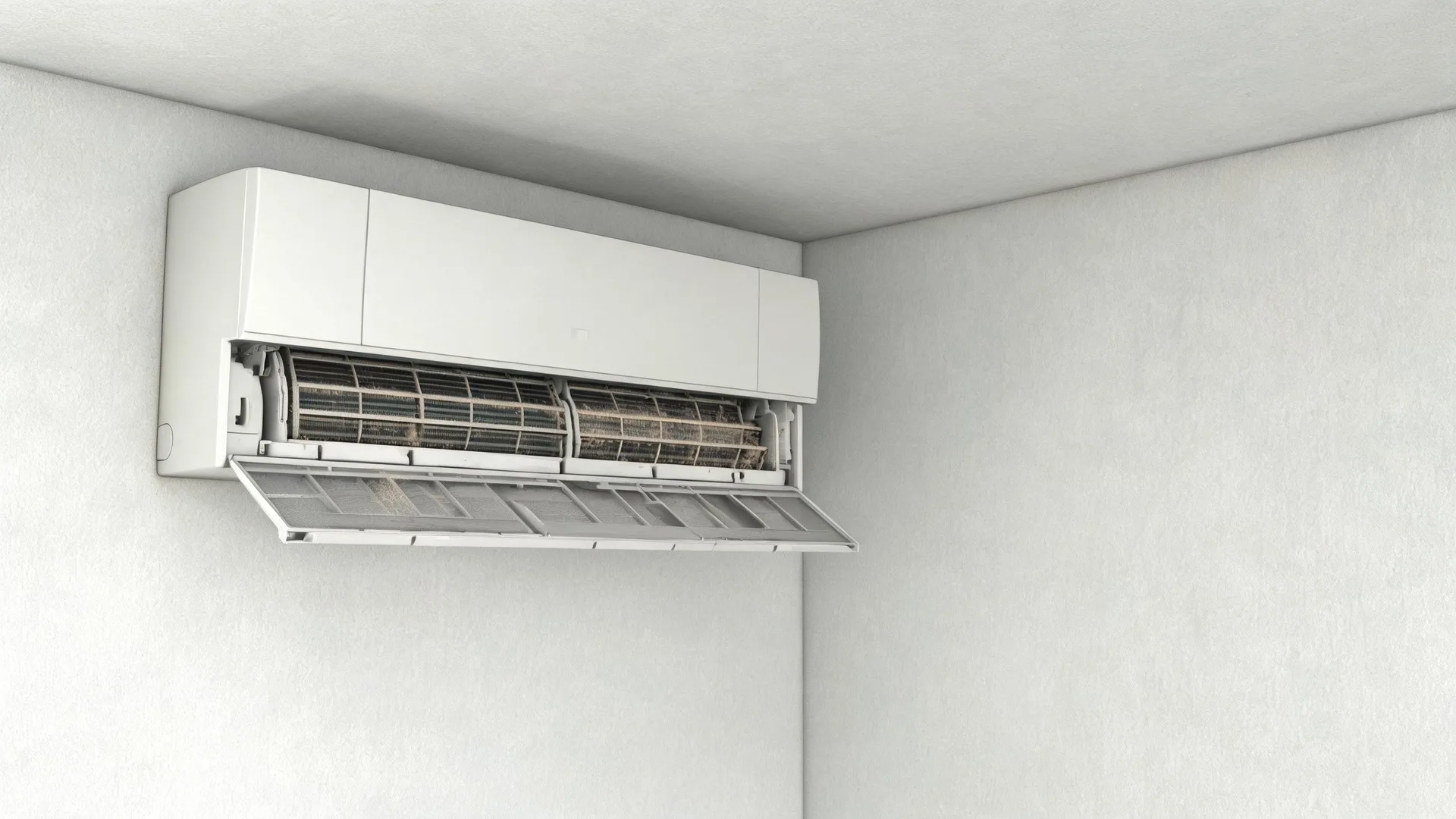
Why bigger isn't safer

An oversized unit cools the room fast and shuts off before it pulls moisture out of the air, so the room feels cold and clammy instead of comfortable. It also cycles on and off more, which wears the compressor faster than a unit sized to run longer, steadier stretches. Undersized is its own problem, since the unit runs constantly and still doesn't reach temperature on the hardest days. Getting the size right matters more than getting a bigger unit.

Comparing mini splits comes down to a handful of specs that actually tell you something, and a lot that don't. Start with the zoning. A single-zone system runs one indoor head off one outdoor unit, and that's the simplest setup to install and service. A multi-zone system ties several indoor heads to one outdoor condenser, which saves on outdoor equipment but means if that one condenser needs service, every zone loses conditioning at once. Ask how the system handles part-load conditions too, since a unit that only runs at full blast or off will cycle more and wear faster than one that can throttle down and hold a steady, lower output. Check the minimum operating temperature for heating, because not every heat pump keeps producing useful heat once it gets cold enough outside. And ask about the line set length the system is rated for, since indoor and outdoor units placed too far apart can lose efficiency or stop working within spec altogether.

Installation starts with the outdoor unit and the indoor head going up, then the line set connecting them, a sealed run of refrigerant lines, wiring and a drain line that passes through one hole in the wall. That hole gets sealed tight once the lines are in, so weather and pests stay out. Once the lines are connected, the system gets evacuated with a vacuum pump to pull out any air and moisture before refrigerant goes in, because either one left in the lines will hurt how the system runs down the road. After that comes the charge, filled to the manufacturer's spec for the line length run, and then a test cycle in both heating and cooling to check the temperature split at the head and make sure the drain is clearing condensate the way it should. A mini split installed this way shouldn't need refrigerant added later. If it does, that points to a leak somewhere in the line set or at a fitting, not normal wear.