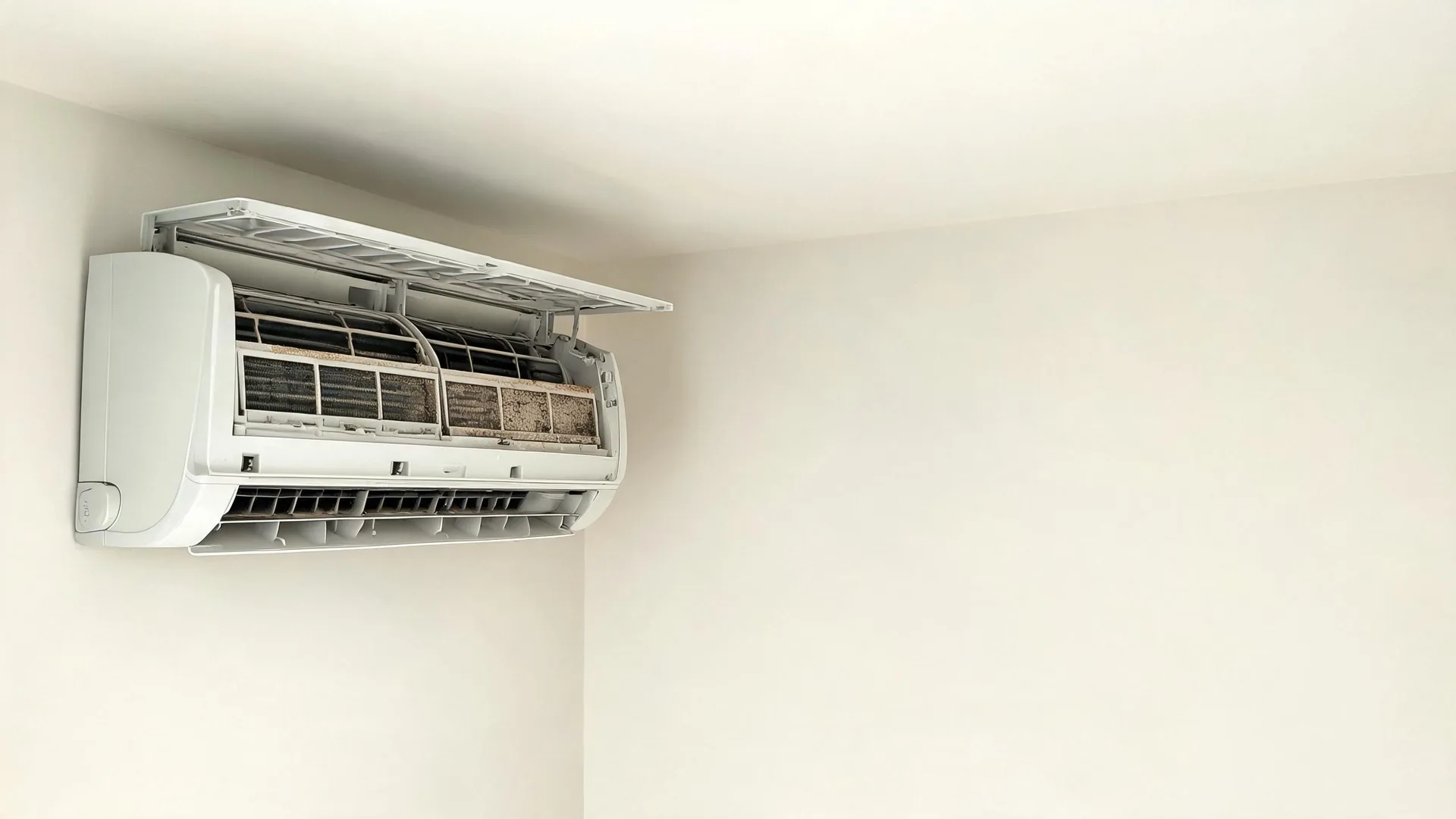
A white wall-mounted split air conditioner on a blue-grey wall, with a moonlit night sky visible through a nearby window.

Mini Split Installation in Woodland Park, CO

Tell us about the job

Takes about a minute. No obligation.

New system or replacementMini-splitTeller County, CO
Step 1 of 2

What ZIP code is the job in?

Gas is the default here

Utility gas heats 56.9% of homes in Teller County, with another 18.8% on bottled or LP gas. A mini split is not competing with that furnace for the whole house. It usually handles the rooms the furnace struggles with, or takes over cooling and shoulder season heating while gas keeps running on the coldest days.

What this means for sizing

A mini split paired with an existing gas furnace only needs to cover the zones it's assigned, not the whole home's worst-case load. That changes what size and how many indoor heads the job calls for, and it's worth going over with whoever quotes the install.

11 months
August through June, your system heats
10°F
the average winter night it heats against
73°F
the average summer afternoon it cools against
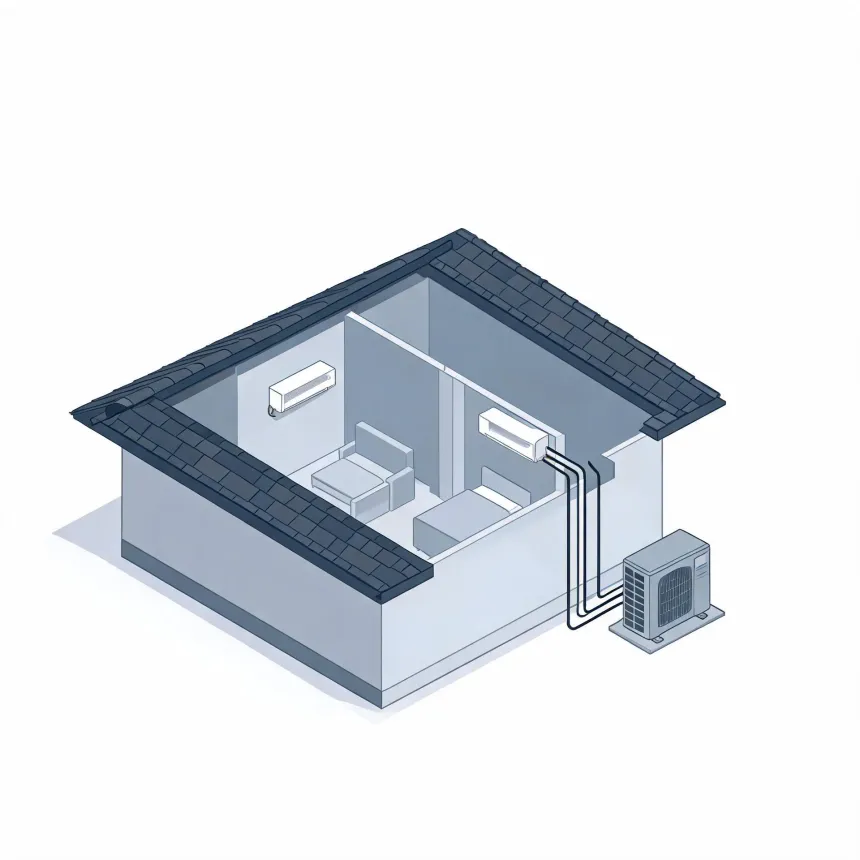
Isometric illustration of a cutaway house with tiled roof showing two wall-mounted indoor mini-split units connected by line sets to an outdoor condenser beside the building.

Summer afternoons in Teller County average 73 degrees, and no month here really calls for air conditioning.

A mini split in Woodland Park spends most of its life on mild heating days, not fighting hard heat, so a dependable mid-range system does the job.

Winter storms and wind are the real test here, not heat

249 severe weather events from 2015 to 2024
13% of homes statewide lost power a day or more in 2024
99 damaging wind events from 2015 to 2024
Power here runs cheapColorado households paid 14.92 cents per kilowatt-hour in 2024.

Teller County sits in climate zone 5B, a cool, dry zone where heating does most of the work over the year. Any mini split installed here, no matter the brand or the installer, has to be a heat pump model built to meet that load, not just a cooling-only unit. Federal rules back this up directly. Ductless systems fall under the same split-system heat pump minimums as any other heat pump, so a unit made from 2023 on has to hit at least 14.3 SEER2 for cooling and 7.5 HSPF2 for heating. That floor is set at the factory, so it narrows the field before a contractor ever gets to your house. A system meeting those numbers may also qualify for the federal tax credit on heat pump installations, which is worth asking about when you compare quotes.

With power this cheap, pick the system that holds up, not the one that saves pennies

Cheap power changes what's worth paying for. A mini split that costs more up front to shave a few cents off every kilowatt-hour takes a long time to earn that back in Woodland Park. Spend the quote comparison on build quality, warranty, and how well the installer sizes it for the rooms your gas furnace isn't reaching. That's where the money matters here.

Find a contractor
A beige split-system air conditioner outdoor condenser unit mounted on metal wall brackets atop a stucco wall.

A system that isn't carrying the whole load doesn't need the top tier

No cooling load and a gas furnace covering the coldest days means this system rarely runs flat out. It spends most of its hours on mild days, cycling on and off rather than straining to keep up. That's a light enough life that a dependable mid-range unit holds up fine here. Ask the installer to size each head to the room it serves, not the whole house, and to walk through the warranty terms before deciding between models.

Line set path decides a lot of the labor

Each indoor head connects to the outdoor unit through its own line set, run through a wall and along the house to wherever the condenser sits. A short, straight shot through one wall is simple work. A line that has to run along an exterior wall, drop through a soffit, or cross framing to reach the outdoor unit takes longer and uses more material. Every added head means another line set and another wall penetration, not just another indoor unit.

The outdoor unit needs a real mounting job

The condenser has to sit level, off the ground, and clear of where snow or runoff collects. Setting that pad or bracket, running electrical to it, and routing the condensate drain so it doesn't freeze or pool are all part of the install, not an afterthought. A rushed mounting job shows up later as vibration noise or drainage problems, so getting it right is part of what a quote is pricing.

Sizing a mini split is not about matching the biggest number on the spec sheet to the room. Every head has to match the heat loss of the space it's serving, and that comes down to a load calculation, not a guess based on square footage alone. A unit sized too big will short cycle, kicking on, satisfying the thermostat fast, then shutting off before it's pulled moisture out of the air or settled the room's temperature evenly. One sized too small runs constantly and still can't keep up on the coldest days. Windows, ceiling height, insulation and which way a room faces all feed into that calculation, which is why a contractor measures the room instead of eyeballing it. Get it right and the system runs long, steady cycles that actually feel comfortable, not quick bursts that leave corners cold.

Install day starts with the indoor heads going up, and that part goes fast. The mounting plate gets leveled, the hole gets cored through the wall, and the line set, drain line and electrical feed through to the outside in one pass. Most of the day goes to the outdoor unit and the connections between them. The lines get connected, then the whole system gets evacuated with a vacuum pump to pull out moisture and air before any refrigerant moves. Skip that step and moisture sits in the line, and it causes problems months later, not that day. Once the system holds a vacuum, the lines get charged, the heads get powered up one at a time, and the installer checks airflow and temperature split at each one before calling it done.