Gas heats most homes here
Utility gas heats 58.3% of homes in Summit County, with electricity a distant second at 35.3%. A mini split is rarely the only thing running in a house here.
Takes about a minute. No obligation.
Utility gas heats 58.3% of homes in Summit County, with electricity a distant second at 35.3%. A mini split is rarely the only thing running in a house here.
If a furnace already handles the cold months, a mini split can be sized and placed for the rooms that need help, not the whole house. Worth saying plainly to whoever quotes the job.
Colorado electricity ran 14.92 cents per kilowatt-hour in 2024.
At that rate, paying extra for the highest-efficiency mini split takes longer to earn back, so picking the right size and brand for the room matters more than squeezing out another SEER2 point.




A mini split that's too big cools the room fast, then shuts off before it pulls the moisture out of the air. The room feels clammy even though the thermostat says it hit the mark. One that's too small runs flat out and never gets there. Sizing comes from a load calculation, not the square footage of the room alone. The contractor has to account for the windows, how many exterior walls the room has, and what's on the other side of the ceiling. Get that math right and the indoor unit matches the job instead of guessing at it.
Power is cheaper here, so the most efficient model takes longer to pay off. Reliability and fit matter more.
Find a contractor
That SEER2 number on the label is a ratio, cooling output divided by the electricity it takes to produce it, measured over a season rather than a single moment. A higher number means the unit moves more heat per unit of power, but only under the test conditions it was rated at. Run the same unit on a mild day with a light load and it beats its rating. Run it on the hottest day of the year and it falls short. The number also only describes the cooling side. Heating efficiency on a mini split is rated separately, and that rating matters just as much if the unit is doing any work in the shoulder seasons. A unit with a middling SEER2 number but a strong heating rating can be the better fit depending on what it's actually asked to do most of the year.
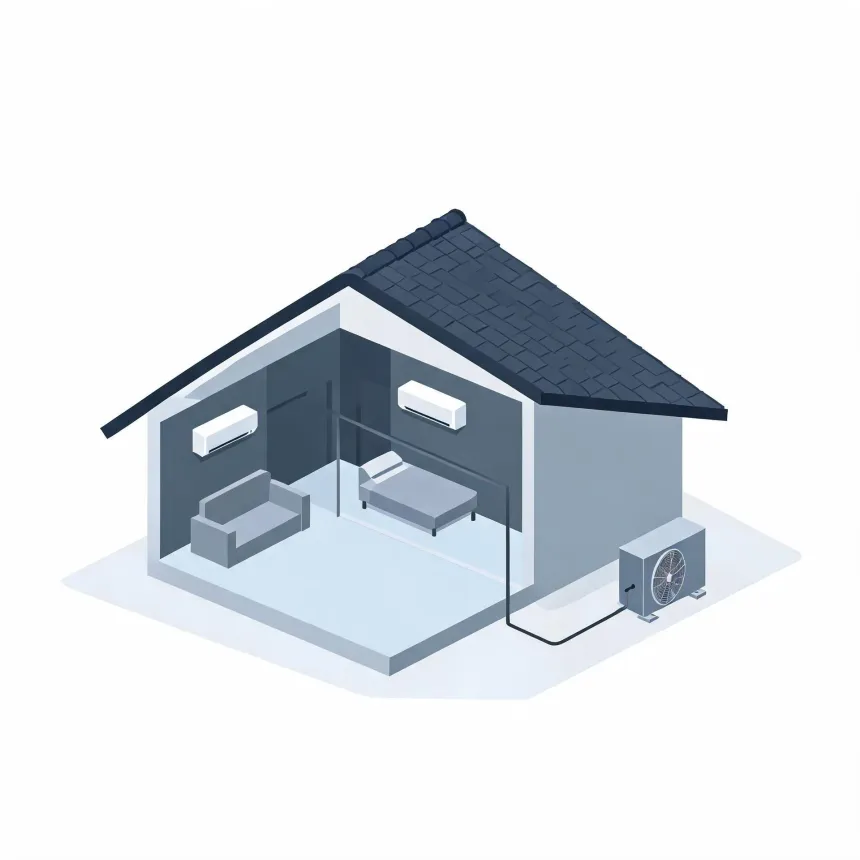
The cost of an install moves with how far the indoor head sits from the outdoor unit, and what the refrigerant line has to pass through to connect them. A straight run through one wall is a different job than a line that has to cross an attic, drop through a chase, or run along an exterior wall and get covered over. Every extra foot of line set is labor and material. Every obstacle the installer has to route around adds time.
A single indoor head paired with one outdoor unit is the simplest version of this job. Once a second or third zone gets added, the outdoor unit has to be sized for all of them together, and each indoor head needs its own power run and its own line set back to the condenser. More zones means more places to mount equipment, more wall penetrations, and more time on site, separate from whatever the equipment itself costs.
Once you're past sizing and efficiency, ask about the warranty and what voids it. Most manufacturers require installation by someone certified on that brand, and some require the installer to pull a permit and have the system inspected. Skip that step and the warranty can end up covering parts but not labor, or not covering the compressor at all. Ask who services the brand locally, too. A mini split that needs a specialty part shipped from the manufacturer sits broken longer than one a local shop keeps stock for. Ask what the warranty covers on the line set and the indoor head separately from the outdoor unit, since some manufacturers split coverage between them.
Install day starts with the outdoor unit placement and the line set path, since that decides where everything else goes. The crew mounts the outdoor unit on a pad or brackets, then runs the line set, the power wiring, and the condensate drain from there to each indoor head. Running the line set usually means drilling a hole through the wall behind the indoor unit, so expect some drywall dust in that one spot even on a clean job. Once the lines are run, the system gets evacuated with a vacuum pump to pull out air and moisture before the refrigerant goes in. That vacuum step matters more than people think. Any moisture left in the lines turns to acid once refrigerant hits it, and that shortens the life of the compressor. After charging, a tech checks the line set connections for leaks, confirms the indoor head is level, and tests both heating and cooling before calling it done.