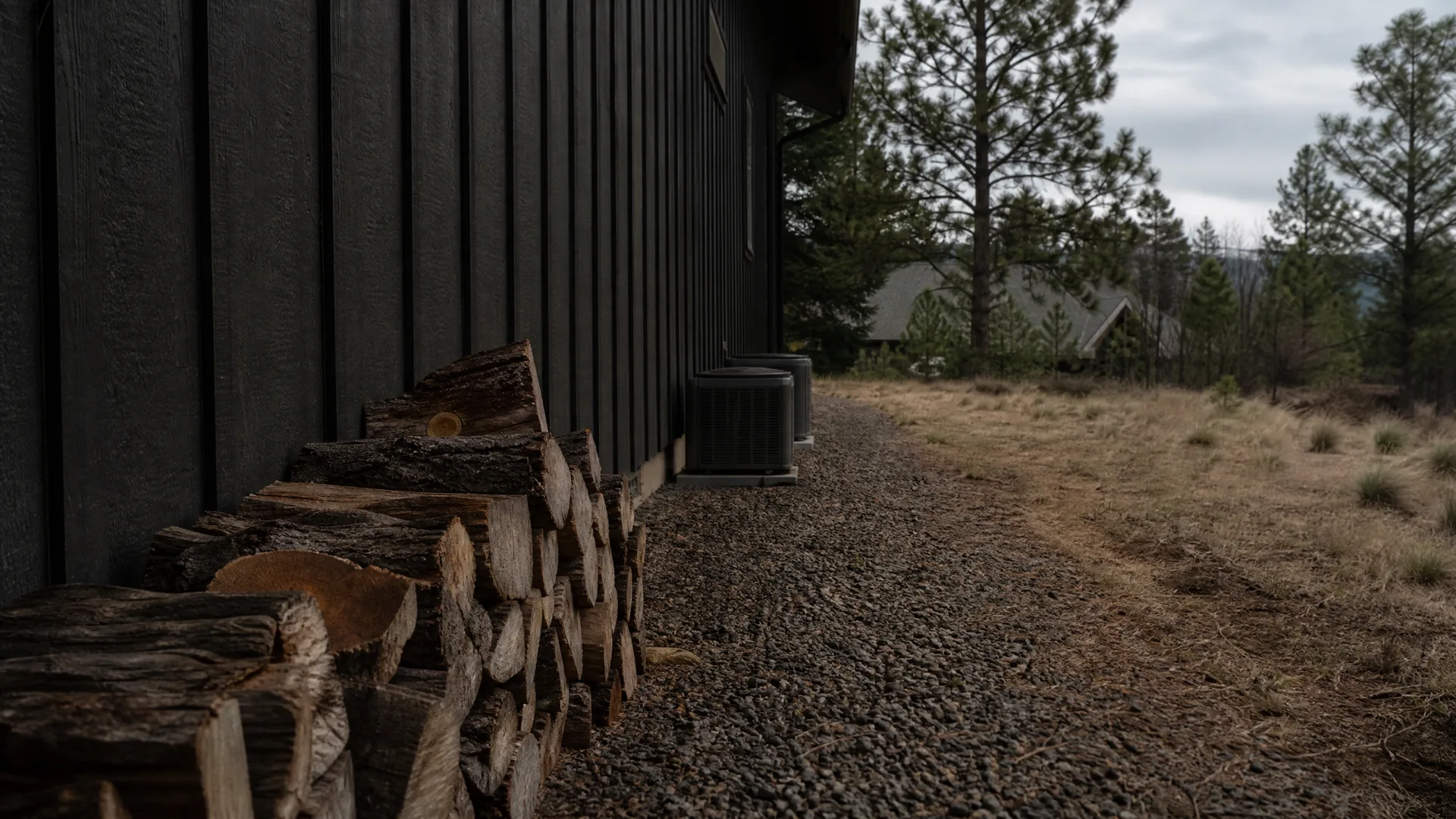





Stacked firewood along the dark vertical-board exterior wall of a house, with two outdoor condenser units, a gravel path, dry grass and pine trees under an overcast sky.

Mini Split Installation in Montrose, CO

Tell us about the job

Takes about a minute. No obligation.

New system or replacementMini-splitMontrose County, CO
Step 1 of 2

What ZIP code is the job in?

Installers can quote the same brand and still hand you different systems. Ask how they sized it. A unit sized off square footage alone is a guess. The right way is a room by room load calculation that accounts for windows, insulation and ceiling height, because an oversized unit short cycles and never pulls moisture out of the air, while an undersized one runs constantly and still can't keep up. Ask whether the system is single zone or multi zone, since that decides how many indoor heads can run off one outdoor unit and whether each room gets its own thermostat control. Ask about the line set length and how many bends it needs, because a longer run or extra turns can change what size outdoor unit actually works. And ask who does the startup check, since a system that isn't properly vacuumed and charged after installation will lose efficiency and run harder than it should from day one.

8 months
October through May, your system heats
2 months
July through August, it cools
18°F
the average winter night it heats against
83°F
the average summer afternoon it cools against
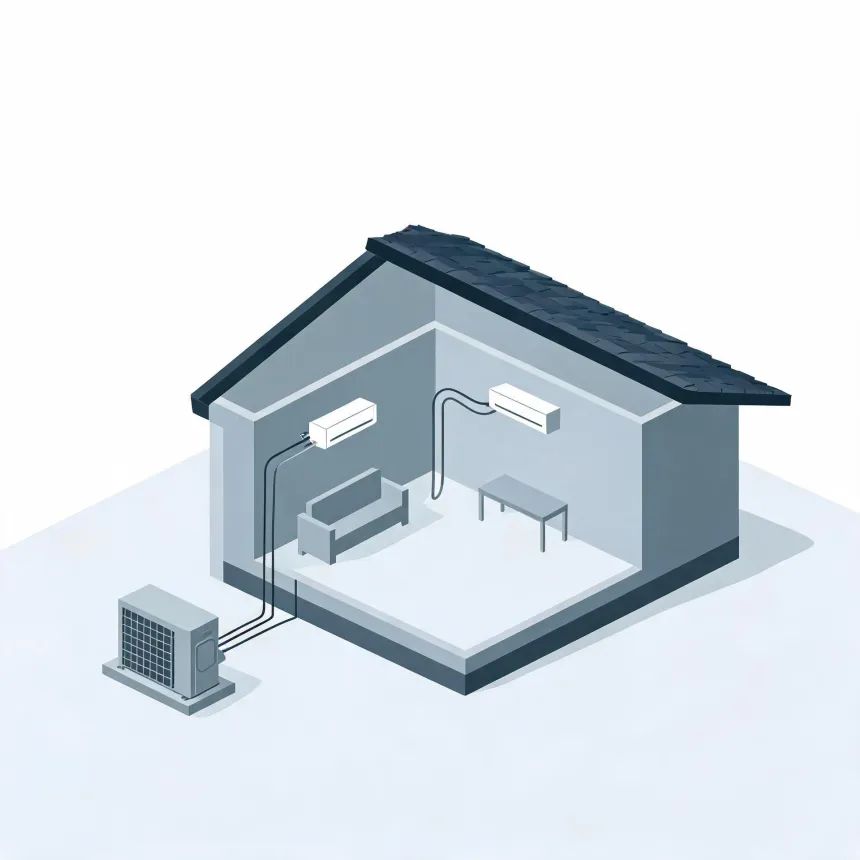
Isometric illustration of a cutaway house showing two wall-mounted indoor air conditioning units connected by line sets to an outdoor condenser unit, with a sofa and table inside the room.
Your system heats October through May and cools July through August.

NOAA nClimDiv, 1991–2020 normals

Montrose only asks for cooling in July and August, with afternoon highs around 83.

A mini split here isn't fighting long summers, so it doesn't need to be the highest-output model on the list.

At 14.92 cents a kWh, the payback on the priciest model is slow

Power costs 14.92 cents a kWh statewide
Cooling runs July through August
Summer afternoons average 83°F
Get it in before JulyCooling runs just two months here, July through August, so June is the month to have it done.

Nothing about Montrose's weather calls for an oversized or heavy-duty mini split. Winter storms have hit the county 202 times between 2015 and 2024, and the bigger risk to a system here is the power going out, not the load it has to carry. A mini split that loses power simply comes back on once it's restored, same as it was set before. Hail is rare in this county, so there's little reason to pay extra for a hardened outdoor unit. Size the system to the room and the home's actual load, not to weather that isn't the issue.

A new system here has to clear a set efficiency bar

Montrose sits in zone 5B, a cool, dry climate where heating carries the bigger load. Any mini split installed here has to meet the federal minimum of 14.3 SEER2 and 7.5 HSPF2. A system that clears that bar and is sized to the room qualifies for the federal tax credit.

Find a contractor
A white mini-split air conditioner outdoor condenser unit mounted on metal brackets against a beige stucco exterior wall, with a blue sky and scattered clouds in the background.

Two months of work a year

Two months a year, highs near 83. That's the whole job. Pick a system built to run reliably over the years it will sit idle the rest of the time, and let the contractor size the outdoor unit to the room, not to a summer this county doesn't have.

The load calculation sets the size

A contractor measures each room, checks window area, insulation and ceiling height, then works out how much heat the room gains in summer and loses in winter. That number, not the square footage on a listing, is what decides which outdoor unit and which indoor head go in. Skip this step and the size is a guess dressed up as a quote.
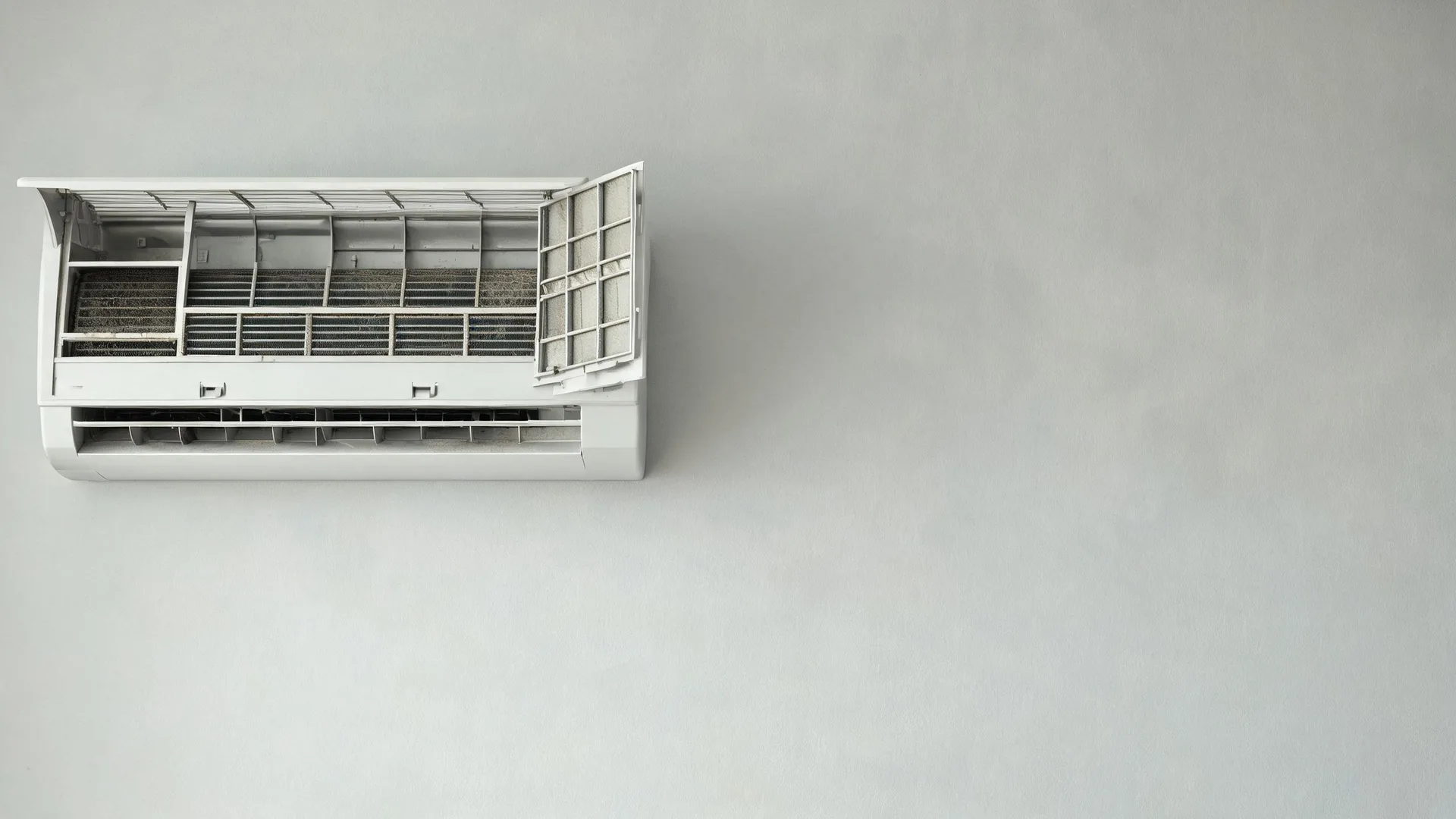
Oversized hurts comfort, not just the compressor

A mini split that's too big for the room cools the air fast and shuts off before it pulls the moisture out, so the room feels cold and damp instead of just comfortable. It also cycles on and off more than it should, which wears the compressor harder over the life of the system. Right sized, it runs longer at a lower output and holds the room steady.

Whatever is heating and cooling the house now doesn't need to be ripped out to make room for the new system. A mini split runs independently of ducted equipment, so a furnace or central air unit can often stay in place and keep handling part of the job, or get disconnected without tearing into the same lines the new system uses. If what's being replaced is an old ducted system entirely, a contractor will cap and seal whatever ductwork isn't being reused rather than leave it open to the attic or crawlspace. Window units or old through-wall sleeves just get pulled out once the new indoor heads are mounted. None of this is demolition work. It's disconnecting, capping, and in some cases hauling off a unit that's done its job.

Installation starts outside with the outdoor unit. It needs a pad or wall bracket set level, with open space around it so it can pull air through the coil without choking on its own exhaust. Inside, each wall mounted head goes high up, over a spot where the line set can run straight out through the wall rather than snaking around a stud. That line set carries the refrigerant lines, a condensate drain and electrical wiring together, wrapped and run through a small hole behind the head. Once everything is mounted and connected, the system gets vacuumed down to pull out moisture and air before refrigerant goes in. Moisture left in the lines turns into acid once the system runs, and that eats at the compressor over time. Last comes the startup check, confirming refrigerant charge, testing each head for heating and cooling, and making sure the condensate drain actually drains instead of backing up into the wall.