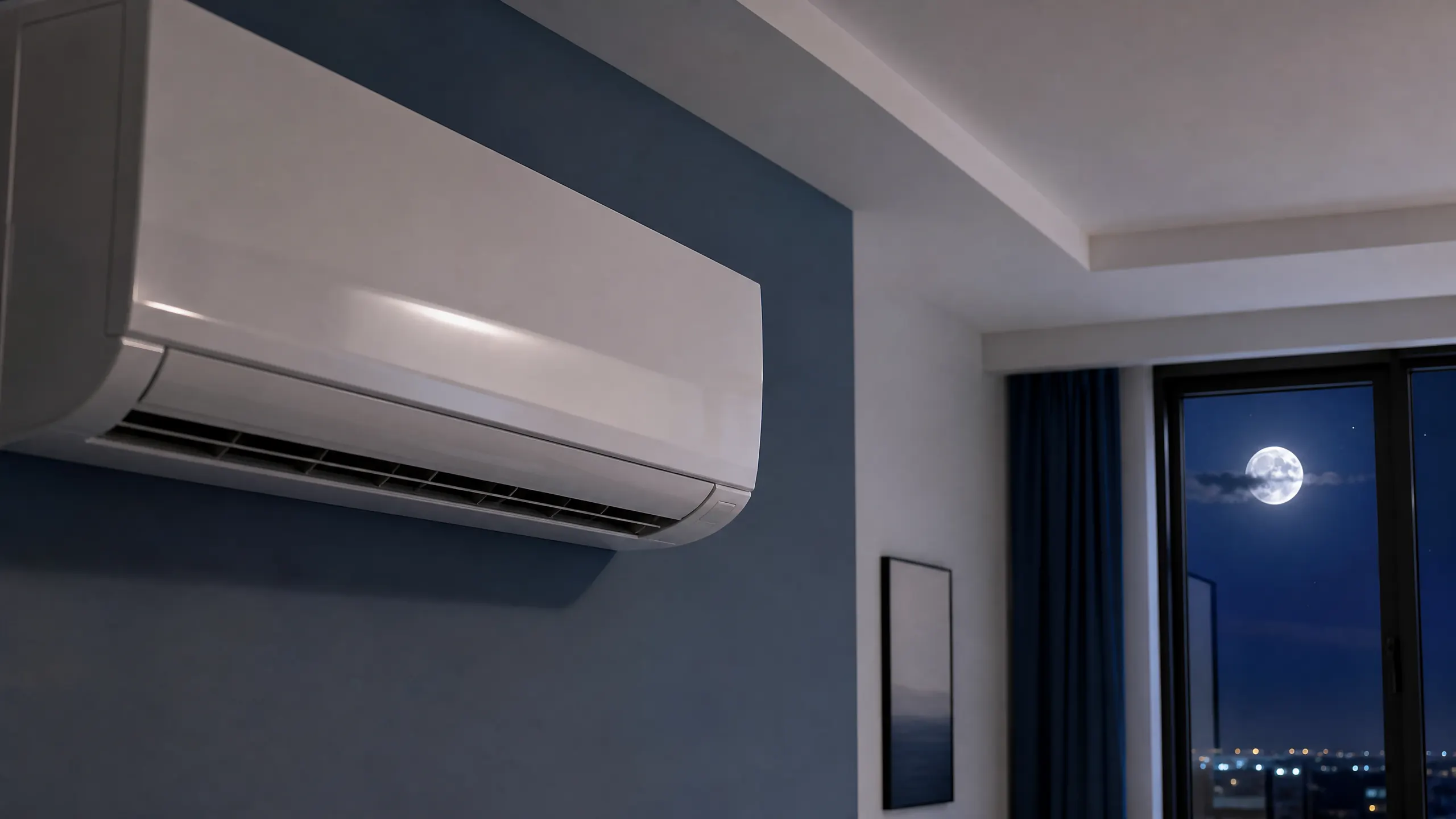




A white wall-mounted split air conditioner on a blue-grey wall, with a moonlit night sky visible through a nearby window.

Mini Split Installation in Granby, CO

Tell us about the job

Takes about a minute. No obligation.

New system or replacementMini-splitGrand County, CO
Step 1 of 2

What ZIP code is the job in?

Gas heats half the homes in Grand County, and electricity comes in well behind it at under a third. Someone looking into a mini split here is usually not replacing a furnace outright but adding one, maybe for a room the ductwork never reached well, maybe to get cooling into a house that was only built for heat. A mini split works alongside a gas furnace fine, since it runs on its own line and doesn't touch the ductwork at all. If your home is one of the smaller share that heats with electricity already, a mini split can end up doing more of the daily work, since it moves heat rather than generating it.

8°F
the average winter night it heats against
72°F
the average summer afternoon it cools against
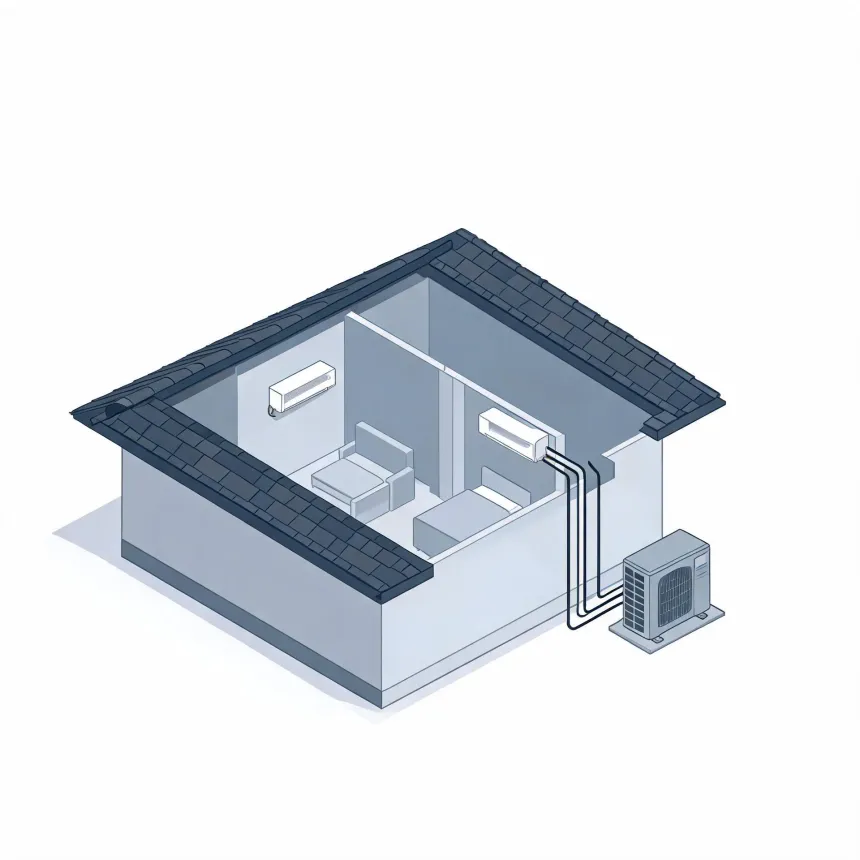
Isometric illustration of a cutaway house with tiled roof showing two wall-mounted indoor mini-split units connected by line sets to an outdoor condenser beside the building.

A Granby summer tops out at 72 degrees on average, and the air never needs cooling here.

A mini split in this county barely works for cooling, so pick one that earns its keep on the heating side.

Cheap power here means payback is slow, so pick the mini split for how well it heats, not for its efficiency rating

Power costs 14.92 cents a kWh statewide
Summer afternoons average 72°F
56 damaging wind events from 2015 to 2024

At 14.92 cents a kilowatt-hour, Colorado power sits below the national average, so a high-SEER2 mini split takes longer to earn back its extra cost here than it would somewhere with pricier electricity. That changes what's worth paying for. Put the money toward a unit that holds its heat output when it's cold outside, not the one with the best efficiency number on the spec sheet. Ask the installer how the model performs at low outdoor temperatures, since that number matters more in Granby than the one on the energy label. A mini split that struggles on the coldest nights is a worse buy than a slightly less efficient one that keeps up, no matter what either one costs to run.

Go with the standard fit

A standard size and efficiency fit fine here. There's no local reason to go bigger or pricier.

Find a contractor
A beige split-system air conditioner outdoor condenser unit mounted on metal wall brackets atop a stucco wall.

Little cooling load, regular wind, the same system handles both

Cooling will barely run here, since no month gets warm enough to call for it. That's most of what wears a mini split down ruled out before it starts. What's left is wind. Damaging wind hit Grand County 56 times between 2015 and 2024, and that's weather the outdoor unit sits through year after year. None of it means buying a bigger or fancier system. It means making sure the outdoor unit is mounted and secured the way the installer intends.

Ask what the low temperature rating actually means

Every mini split has a point where its heating output starts to drop off as it gets colder outside. Manufacturers publish a capacity number at a mild outdoor temperature, and some units hold close to that number much further down than others. Systems that look the same on paper can perform very differently on the coldest night of the year. Ask the installer to show you the capacity curve, not just the rated output at that mild temperature.
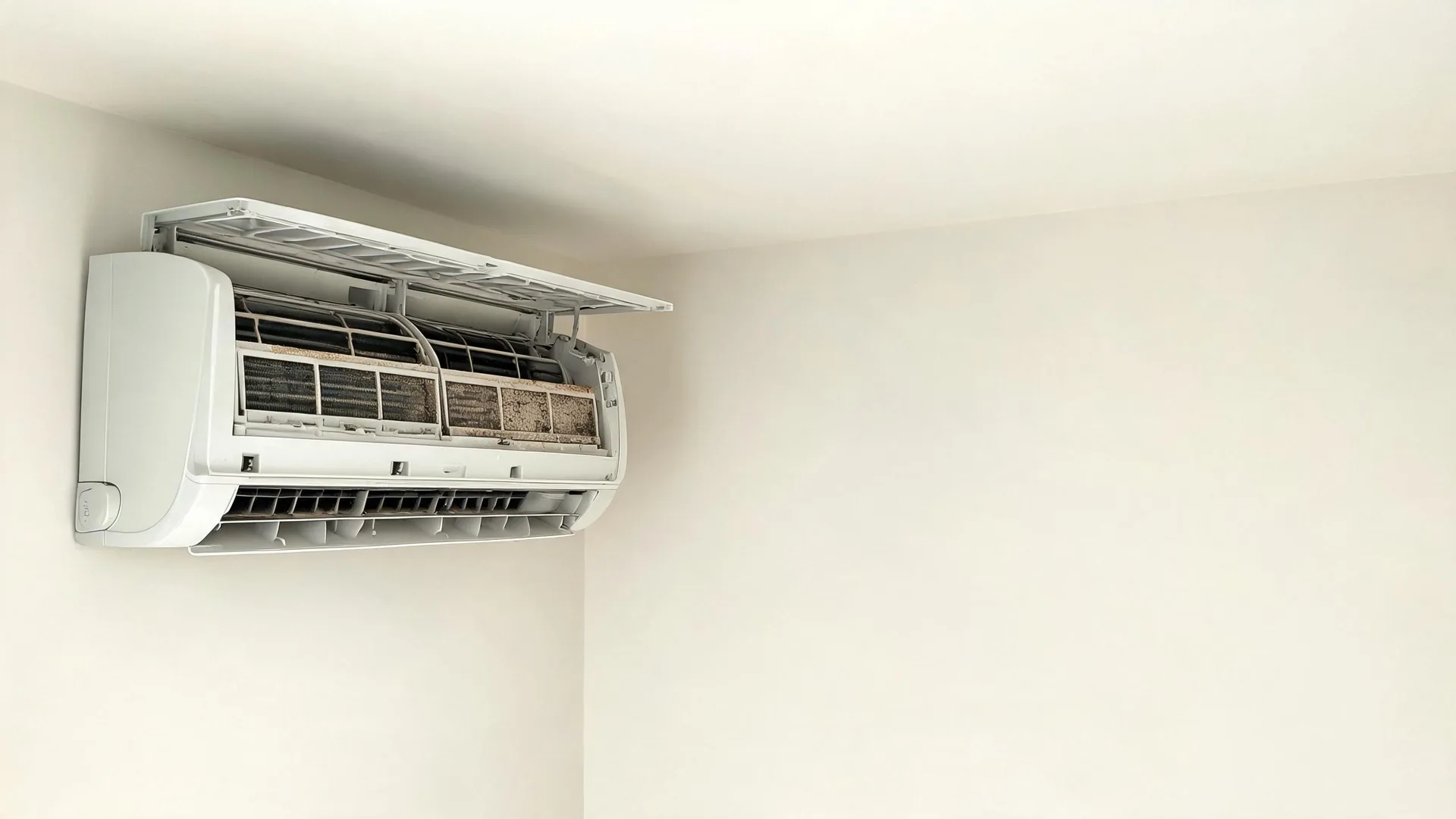
Ask how many indoor heads the outdoor unit can carry

An outdoor unit can often run several indoor heads, but each one it supports divides up the heating capacity between them. Load it with more zones than it was sized for and every room gets less heat when they all call for it at once. If more heads might get added later, ask whether this outdoor unit has room left or whether it was matched to exactly the zones going in now.

The efficiency rating on a mini split's label comes from a lab test run at one mild outdoor temperature. It tells you how much heat the unit moves for the power it draws under that one condition, nothing about how it performs once the air outside gets much colder. Heating output is what falls off in cold weather, not the efficiency number, and a unit can carry a strong rating while still losing capacity fast once the compressor has to work harder to pull heat from cold air. Units that look alike on the label can behave very differently on the coldest night of the year. The rating also says nothing about whether the unit is sized right for the room it's heating, and that matters more for comfort than what's printed on the sticker. It's one spec worth knowing, not the one to decide on by itself.

Installation starts outside. The installer picks a spot for the outdoor unit that can take a mounting pad or wall bracket and hold it steady through wind and snow load. Inside, each indoor head needs a clear path to that outdoor unit for the refrigerant lines, the drain, and the wiring, usually through a single hole drilled where the wall backs up close to the outdoor unit. The lines get connected, then the whole system gets pressure tested before any refrigerant goes in. A leak found after charging means recovering the refrigerant just to make the same fix. Once the system holds pressure, the installer pulls a vacuum on the lines to clear out air and moisture, since either one left behind damages the compressor over time. Only then does the refrigerant go in, charged to the amount the line length calls for. Last comes commissioning. The installer runs the system in heating and checks that each head responds, pulls the current it should, and reaches temperature.