






A snow-covered suburban street at dusk with lit houses and bare trees under a twilight sky.

Mini Split Installation in Fort Morgan, CO

Tell us about the job

Takes about a minute. No obligation.

New system or replacementMini-splitMorgan County, CO
Step 1 of 2

What ZIP code is the job in?

Gas heats a little more than half the homes in Morgan County, and electricity heats under a third. A mini split doesn't fit either column, since it runs on electricity but isn't a furnace or baseboard heat. For a home that heats with gas, a mini split usually goes in as a second system, handling a room or addition the ductwork doesn't reach well. For a home already on electric heat, it can replace that setup room by room and cover cooling too. Either way, what matters is what the house has now and what you want this system to take over.

8 months
October through May, your system heats
3 months
June through August, it cools
16°F
the average winter night it heats against
88°F
the average summer afternoon it cools against
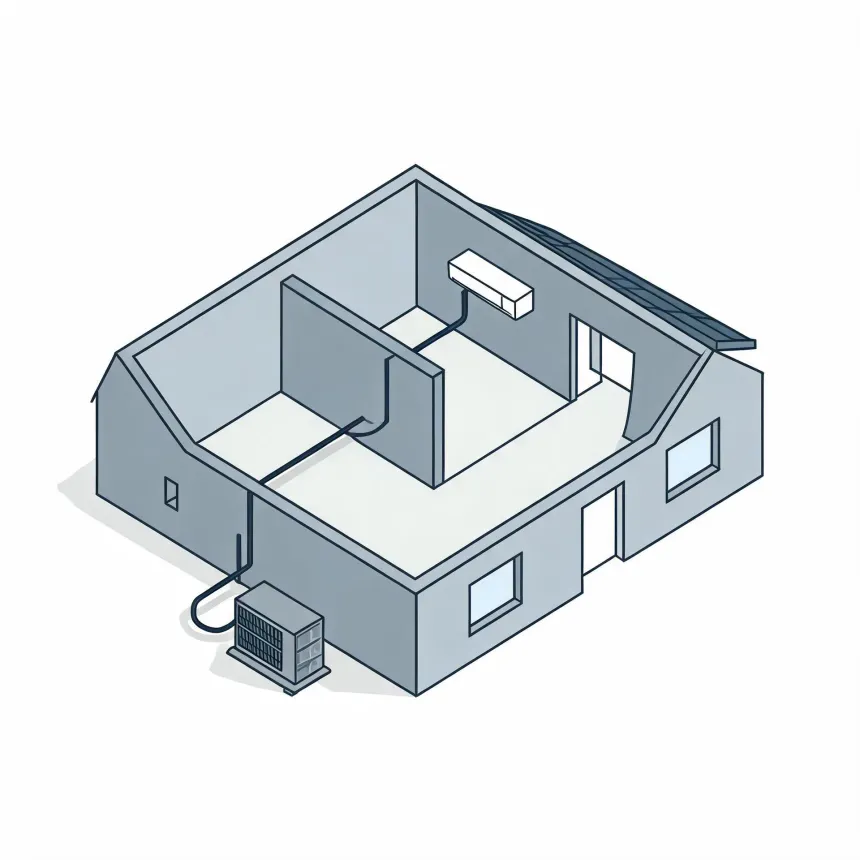
Isometric line illustration of a cutaway house showing an interior wall-mounted air conditioning unit connected by a line to an outdoor condenser beside the exterior wall.
Your system heats October through May and cools June through August.

NOAA nClimDiv, 1991–2020 normals

A mini split doesn't need a special size or a high-end model to work well in Fort Morgan.

A standard-size unit at standard efficiency handles a room or a whole setup here just fine.

May puts a mini split in place before June's heat shows up

Cooling runs June through August
Summer afternoons average 88°F
55 damaging wind events from 2015 to 2024
Built for Fort Morgan homes, old and newHalf the homes in Morgan County were built in 1975 or earlier, half in 1975 or later. A standard mini split fits either one.

The price comes down to how many rooms you're covering and how many indoor heads that takes, since each one needs its own line set run to the outdoor unit. A single zone system, one indoor head tied to one outdoor unit, is the simplest install. Add rooms and you're either running multiple single zone systems or one multi zone outdoor unit feeding several heads, and that outdoor unit has to be sized for all of them running at once. How far the indoor and outdoor units sit from each other matters too, since the refrigerant lines, wiring and drain line all have to run between them, and longer runs or runs through walls and framing take more time and material than a straight shot. Where the outdoor unit can go, and whether the wall or ceiling where each head mounts is easy to reach, affects the labor as much as the equipment does.

A standard mini split is the right call for Fort Morgan

Morgan County sees its share of hail, wind and the occasional tornado, and 193 severe weather events over ten years means outages happen. None of that changes what a mini split needs to be here. A standard-size, standard-efficiency unit handles a room or a whole house the same way it would anywhere else. No reason to size up or pay for a higher-end model on account of the weather.

Find a contractor
A man in a cap, dark jacket and tan work pants carries a worn duffel bag as he steps up onto a porch toward a red front door, with a potted shrub beside the entry.
A beige split-system air conditioner outdoor condenser unit mounted on metal wall brackets atop a stucco wall.

Three months of cooling, then it sits

Cooling runs three months here, June through August, with afternoons averaging 88°F. That's a short season, and a standard-size outdoor unit covers it without strain. The rest of the year it sits idle or handles heating if that's what you've set it up to do. Nothing about that schedule wears equipment down early or calls for sizing up.

The efficiency rating is a ratio, not a size

The number on a mini split's label compares the heating or cooling it produces against the electricity it uses to do it. A higher rating means it gets more out of the same power draw. It says nothing about how big a room or a house the unit can cover. A high-efficiency head in a room it can't fill still leaves that room short.
The rating assumes the install matches the lab

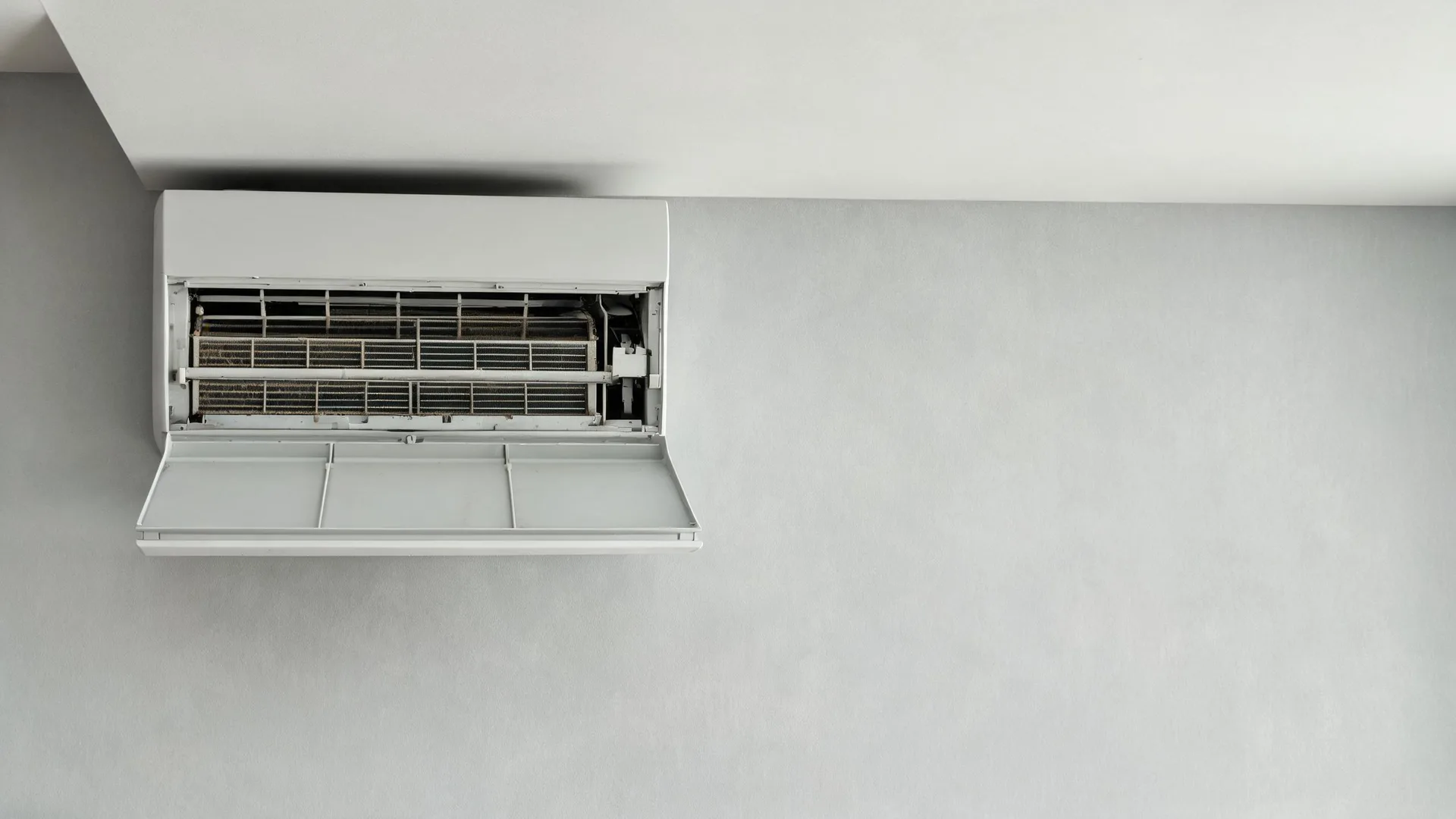
A mini split earns its efficiency number under set conditions with the line set length, refrigerant charge, and airflow the system was designed around. A correct install gets a home close to that number. A long line run, an off charge, or a head mounted where air can't move through the room makes the unit work harder than the label accounts for, no matter how high the rating was to start.

When you're comparing quotes, ask what each contractor is proposing before you compare what they're charging. Single zone or multi zone, and how many heads total. Where the outdoor unit goes and how long the line set runs to reach each head, since that affects both the price and how the system performs once it's in. Ask what capacity they're putting in each room and how they landed on that number. A contractor who's done a room by room load calculation has an answer. One who's guessing doesn't. Ask who handles the electrical work if a new circuit is needed, and whether that's included. The same brand on the label doesn't mean the same install underneath.

Whatever's getting replaced doesn't just unplug and leave. If it's ducted equipment, a furnace or central air coil, that comes out and the ducts tie back to whatever's staying or to the new mini split's air handler if there is one. If an old electric system is being replaced room by room, each piece gets disconnected and hauled off as that room's new head goes in, so for a while the house can be running on both at once. Refrigerant in the old system has to be recovered before anything gets cut loose or carried out, not vented. Whatever's left, the old unit, old line sets, any abandoned wiring, gets hauled away as part of the job, not left for the homeowner to deal with.