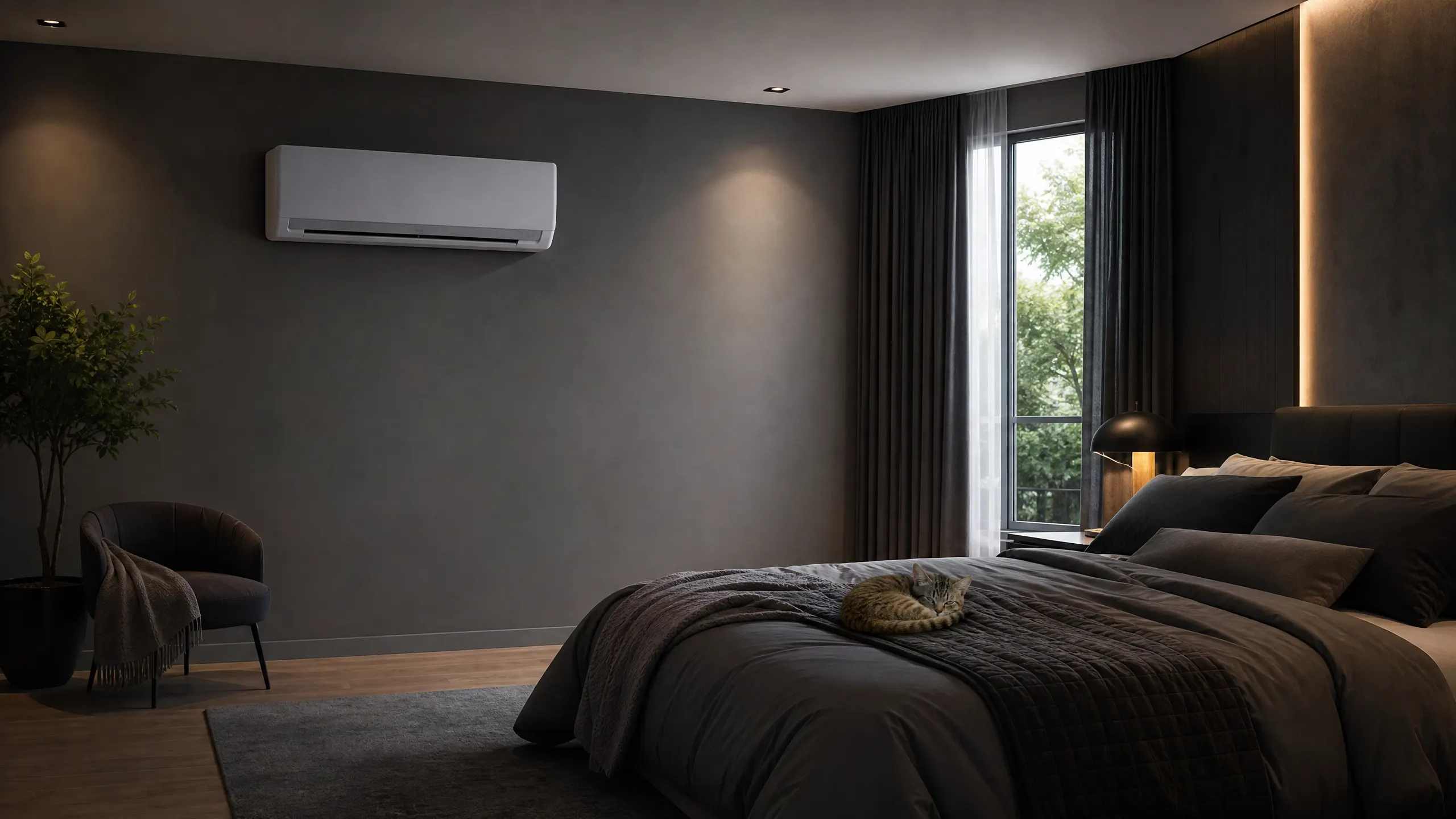





A tabby cat sleeps on a large bed in a dark, modern bedroom equipped with a wall-mounted air-conditioning unit.

Mini Split Installation in Elizabeth, CO

Tell us about the job

Takes about a minute. No obligation.

New system or replacementMini-splitElbert County, CO
Step 1 of 2

What ZIP code is the job in?

Gas heats more homes in Elbert County than anything else, 44.9 percent, with propane close behind at 37.7 percent. Electric heat runs about 10.2 percent of homes here. A mini split doesn't replace a gas furnace or a propane system. It works alongside one, covering a room the main system doesn't heat well, or carrying the house through the shoulder months so the furnace runs less. Ask what the unit does below freezing before counting on it to carry a room through a Colorado winter on its own.

9 months
September through May, your system heats
2 months
July through August, it cools
15°F
the average winter night it heats against
84°F
the average summer afternoon it cools against
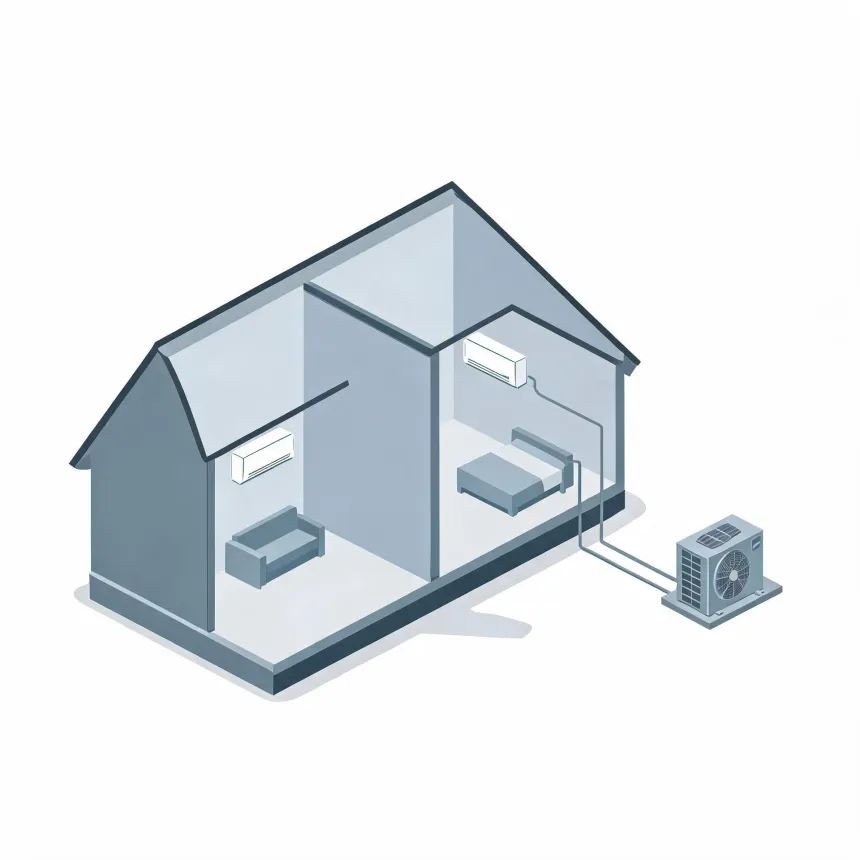
Isometric grey illustration of a cutaway house showing two rooms with wall-mounted indoor air conditioning units connected by lines to an outdoor condenser unit beside the building.
Your system heats September through May and cools July through August.

NOAA nClimDiv, 1991–2020 normals

Cooling in Elbert County runs July through August, about two months a year.

June is the month to get a mini split installed, ahead of that first stretch of heat.

Cheap power here means payback takes longer. Pick a mini split for comfort, not for the electric bill.

Power costs 14.92 cents a kWh statewide
Cooling runs July through August
Summer afternoons average 84°F
Sized for two months of heatAfternoon highs average 84°F in June, July and August, nothing a standard mini split can't handle.

Elbert County falls in climate zone 5B, a cool, dry zone where heating carries more of the year's work than cooling. Any mini-split heat pump installed here has to meet the federal minimum for split systems, since the standard doesn't treat ductless units as their own category. That means 14.3 SEER2 for cooling and 7.5 HSPF2 for heating, for any unit manufactured from 2023 on. Most mini splits sold today clear that bar without issue, so the floor rarely narrows what's available. Where it matters more is the federal tax credit, which rewards units that go well past the minimum rather than just meeting it.

A standard mini split is the right fit here

A standard size and efficiency rating covers what this county asks of a mini split. Hail, wind and winter storms hit outdoor equipment here, but none of that changes what size unit the room needs or what rating it has to meet. There's no local reason to size up or pay for a higher efficiency number than the install calls for.

Find a contractor
A white outdoor air conditioner condenser unit mounted on metal wall brackets against gray horizontal siding, with a blue sky and white clouds behind it.

What happens to the unit you're replacing

An old system coming out isn't junk by default. If the compressor still runs fine and the coils aren't corroded through, a contractor may be able to use it elsewhere or part it out. What decides its fate is refrigerant. Older systems hold refrigerant that has to be recovered by a licensed tech before the unit is cut apart or hauled off, not vented, not dumped with the scrap metal. That recovery step is the law, not a courtesy. Once it's drained, the lines get capped, the unit gets disconnected, and what's left is mostly metal and wiring that a scrap hauler will take. If the old system is ductless too, the outdoor unit is straightforward to pull, but the indoor head is often mounted into a wall or ceiling cutout, so patching that spot is worth asking about before the old one comes down.

How many rooms, how many heads

Every indoor head is its own zone, with its own line set running back to the outdoor unit. A single zone system costs less to install than a multi-zone covering several rooms, since each added head means more line set, another spot for a condensate drain, and another place to cut into the wall or ceiling. The outdoor unit also has to be sized to carry every head running at once, not just one.
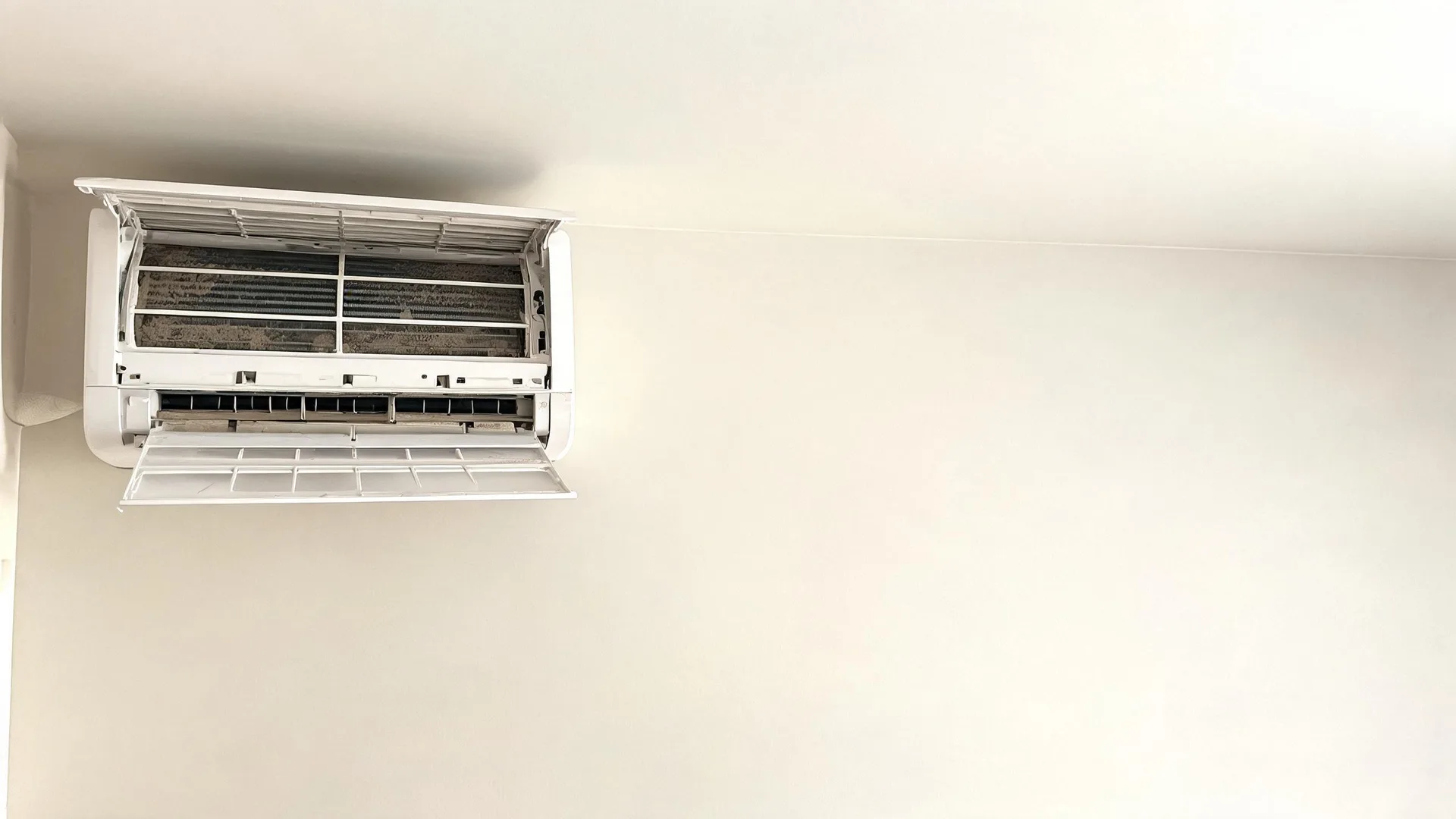
What the walls decide

Running line sets through framing, brick, or stucco takes more time than running them through a simple wood-frame wall, and that labor shows up in the bid. Where the outdoor unit can sit matters too. A long distance between indoor head and outdoor unit means more refrigerant line, more insulation on that line, and sometimes a larger line set diameter to keep the system efficient over the extra length.

Ask what each bid actually covers before comparing numbers side by side. A low bid that skips a hard start kit or uses a smaller line set than the run calls for isn't the same system as one that doesn't. Ask how many BTUs each contractor is proposing and why, since sizing a head too big for a room means it short cycles, turning on and off instead of running steady, and that wears the compressor faster than running a touch undersized. Ask about the warranty on the compressor versus the labor, because those often run different lengths, and ask whether the install itself is covered if a line connection fails down the road. Ask who's doing the vacuum test on the line set before it's charged with refrigerant, since a system charged without pulling a proper vacuum first can run fine for a while and fail early. And ask what happens to the condensate line, where it drains to, because a head that's rained indoors once from a clogged drain gets noticed fast.

Install day starts with the outdoor unit going on a mounting pad or wall bracket, then the indoor head gets hung on the spot marked out ahead of time. The line set runs between them through a hole drilled in the wall, carrying refrigerant lines, a condensate drain, and the electrical whip in one bundled run. Once both ends are connected, the tech pulls a vacuum on the line set to clear out moisture and air before any refrigerant moves through it. That vacuum has to hold, not just reach a number and get released right away. After that, the system gets charged, powered on, and run through its paces, checking that the head blows cold or hot where it should and that the condensate actually drains instead of pooling. The last walk-through covers where the lines run, how the thermostat or remote works, and what the filter looks like when it needs a rinse.