




Illuminated timber-frame and stone houses along a residential street at night, with snow-capped mountains visible in the background.

Mini Split Installation in Durango, CO

Tell us about the job

Takes about a minute. No obligation.

New system or replacementMini-splitLa Plata County, CO
Step 1 of 2

What ZIP code is the job in?

Gas heats close to half the homes in La Plata County, and propane covers another quarter. A mini split doesn't replace that setup. Most homeowners here add one to handle a room or addition the furnace doesn't reach well, or to get cooling without ducting a central AC system in. Electricity heats only about one in five homes in the county, so a mini split is more often a second system than a first one. The install still needs a dedicated electrical circuit and a line set run to an outdoor unit, even where gas or propane already heats the house.

10 months
September through June, your system heats
16°F
the average winter night it heats against
79°F
the average summer afternoon it cools against
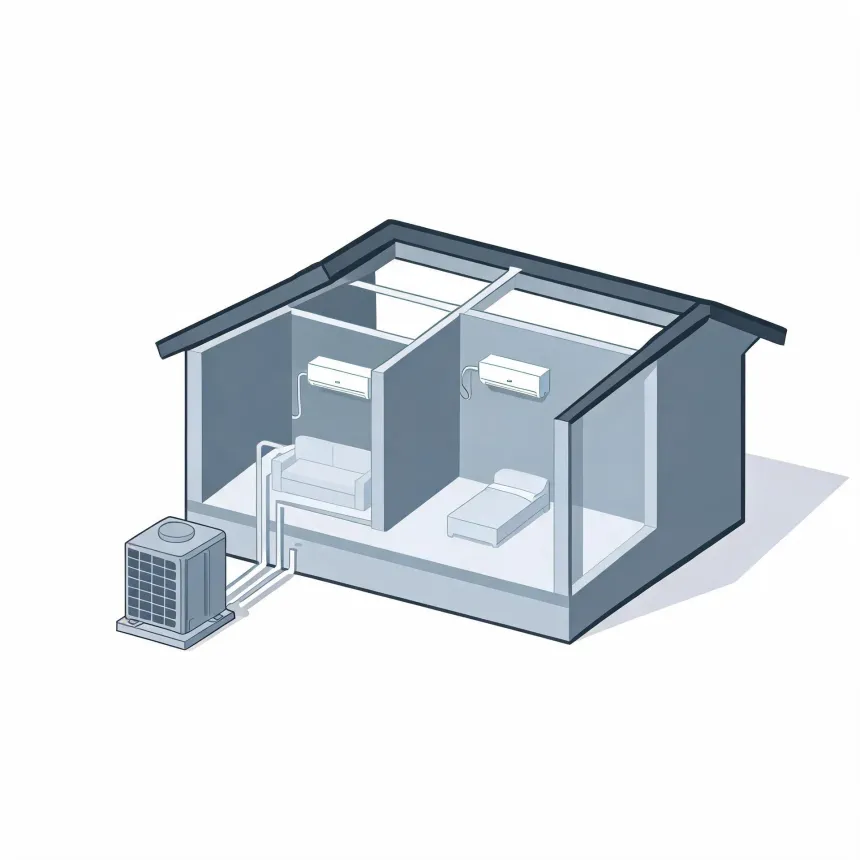
Illustrated cutaway of a two-room house showing two wall-mounted indoor air conditioning units connected by pipes to an outdoor condenser unit on the ground outside.

Summer afternoons in La Plata County average 79°F.

A mini split here barely works for its living in summer, so the cooling side of it isn't under much strain.

Power here is cheap, so it's not what decides which mini split you buy

Power costs 14.92 cents a kWh statewide
Summer afternoons average 79°F
30 damaging wind events from 2015 to 2024

At under 15 cents a kilowatt-hour, a mini split here earns back the price difference between a good unit and a top-tier one slowly, if it ever does. That changes what's worth paying for. A contractor sizing the unit to the room, and running the line set and electrical cleanly, matters more than squeezing out another point of efficiency. So does picking a brand with parts and service nearby, since a mini split that's hard to get serviced costs more over time than one that ran a little less efficiently. Ask what happens when the outdoor unit needs a part down the road before you ask about the efficiency rating.

Pick reliable, not top of the line

It won't be worked hard here, so pick a reliable system that fits. You don't need the top efficiency model.

Find a contractor
A white mini-split air conditioner outdoor condenser unit mounted on metal brackets against a beige stucco exterior wall, with a blue sky and scattered clouds in the background.

Not much to wear it down

A mini split here spends most of its year barely working the cooling side, with summer afternoons sitting around 79°F. Wind and hail show up in La Plata County most years, but that's weather the outdoor unit sits through, not load that wears it out. Without a hard summer to run against, there's no payoff for buying a higher tier unit than the room needs. Put that money into sizing and a clean install instead.

The number of zones sets the cost

A single indoor head paired with one outdoor unit is the simplest job there is. Add a second or third room and you're either running a multi-zone system off one outdoor unit or adding another outdoor unit entirely. Each indoor head needs its own line set run and its own spot on an exterior wall or ceiling that makes sense for airflow. More zones means more labor and more refrigerant line, not just another box on the wall.
What the walls and roofline decide

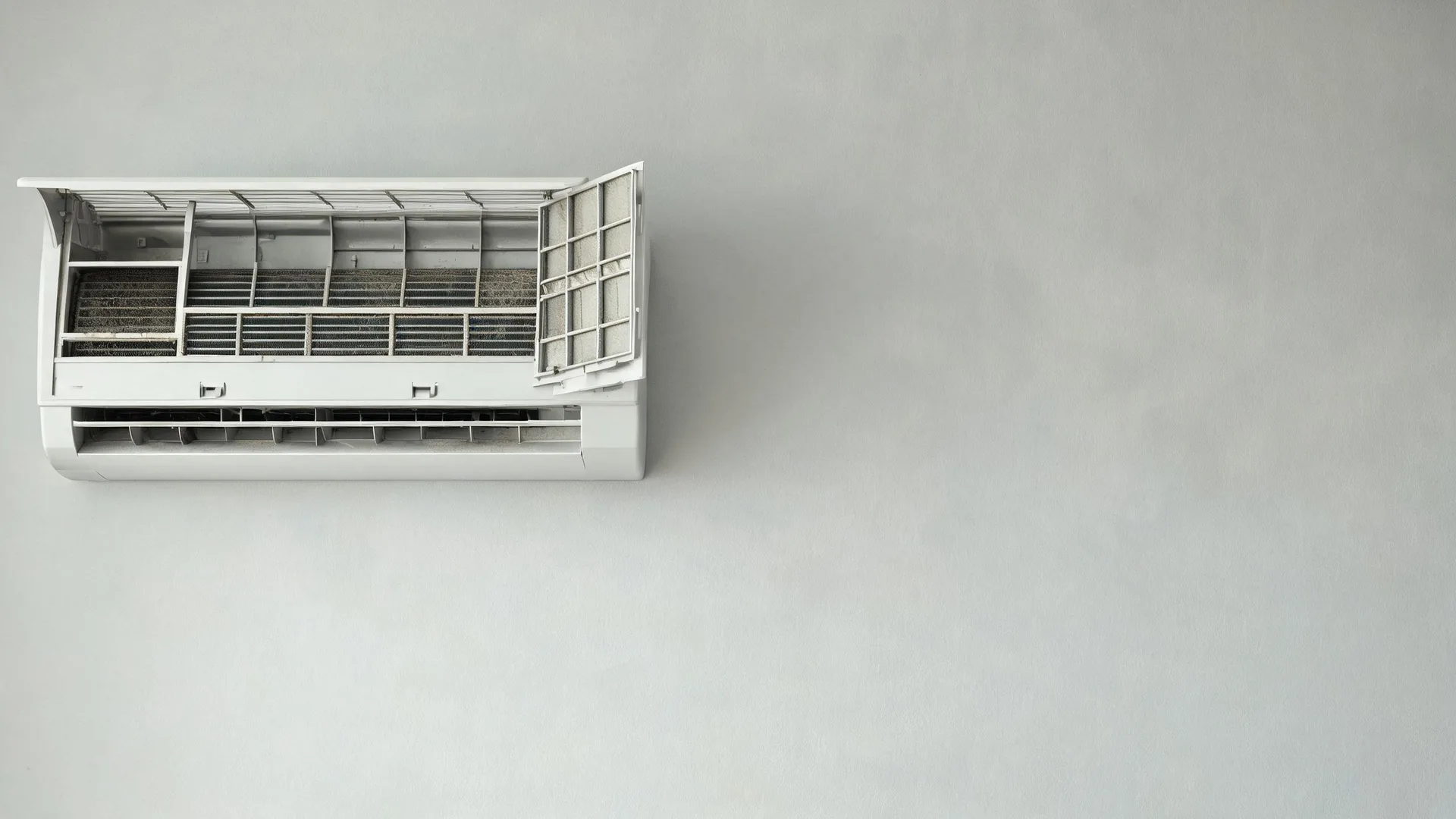
The line set between the indoor head and outdoor unit has to go somewhere, and how far it travels and what it passes through changes the job. A short run through an exterior wall is quick work. A run that has to go up through a chimney chase, across an attic, or down multiple floors takes longer and needs more material. The electrical hookup matters too. If there's a panel with room for a new dedicated circuit nearby, that's a simple tie-in. If the panel is full or far from the install site, that's its own piece of work before the mini split ever gets mounted.

When you're comparing quotes, ask how each contractor plans to size the unit, not just which brand they're pushing. A mini split sized by square footage alone can end up oversized, and an oversized unit cools or heats the room fast, then shuts off before it pulls the moisture out of the air or settles into a steady temperature. Ask whether they're doing a room by room heat load calculation, and ask what SEER2 and HSPF2 numbers the quoted unit carries, since those tell you how it performs across a season rather than at one moment. Ask about the warranty on the compressor separately from the warranty on parts and labor, since those often run different lengths. And ask who's actually doing the vacuum and charge on the line set, since a poor vacuum is one of the most common reasons a mini split underperforms from day one.

Installation day starts with the outdoor unit, set on a pad or wall bracket somewhere the airflow around it isn't blocked. From there the line set gets run, the refrigerant lines and the electrical and drain line bundled together, through the wall to the indoor head. That penetration gets sealed once the line set is through, so weather and pests stay out. The indoor head goes up on its mounting plate, levels get checked, and the lines get connected at both ends. Before any refrigerant moves, the whole line set gets pulled down to a vacuum to clear out air and moisture, then held there to make sure it's sealed. Only after that does the system get charged and tested, running it in both heating and cooling to check the temperature split at the vents and make sure the head is actually doing what the thermostat tells it to.