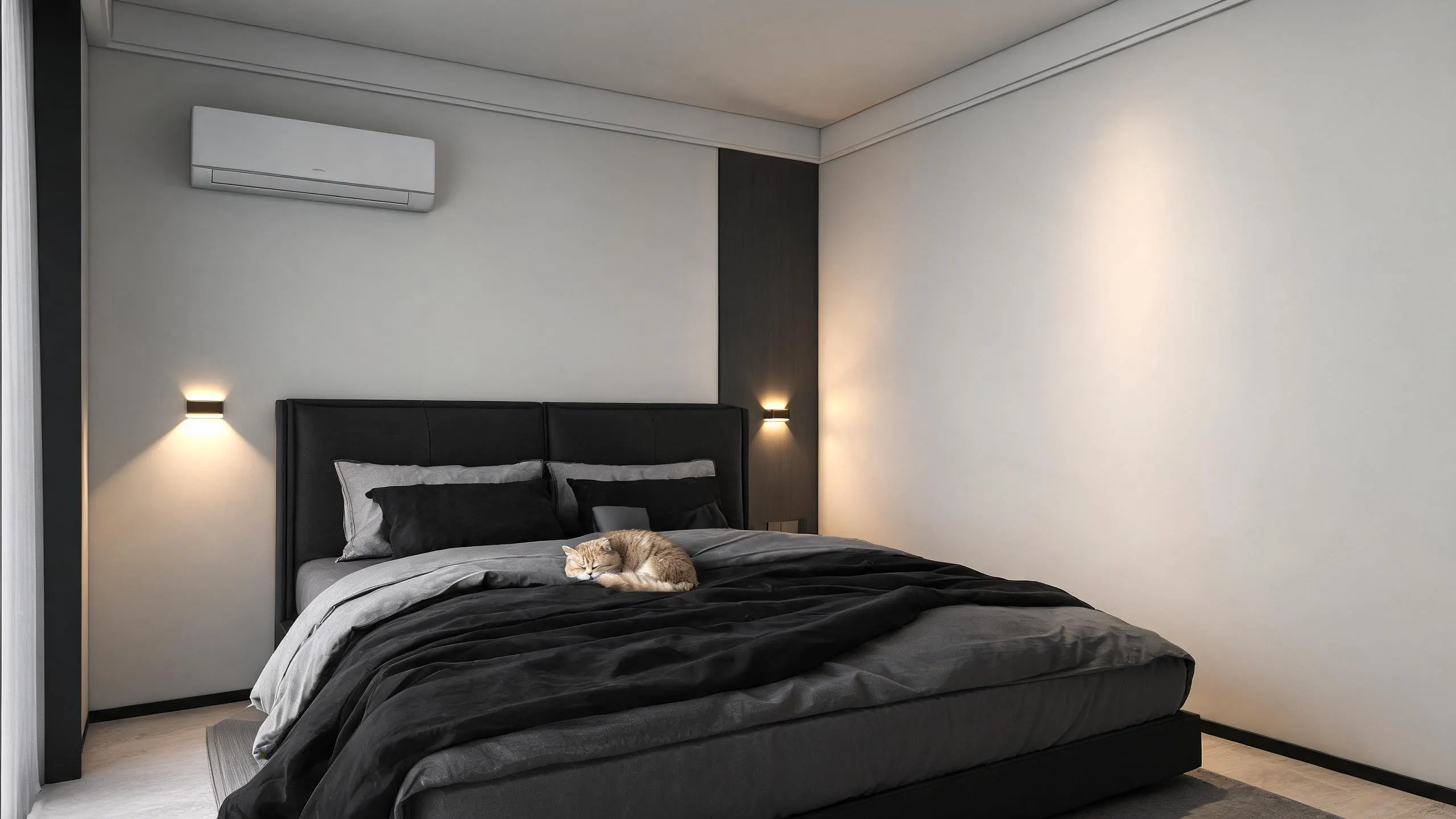





An orange cat sleeps on a neatly made bed with dark grey bedding in a minimalist bedroom with wall sconces and a mounted air conditioner.

Mini Split Installation in Delta, CO

Tell us about the job

Takes about a minute. No obligation.

New system or replacementMini-splitDelta County, CO
Step 1 of 2

What ZIP code is the job in?

Just over half of Delta County homes heat with utility gas. Most of the rest split between electric heat and bottled or LP gas, which is common where gas lines don't reach. A mini split doesn't ask which of those you have now. It runs on electricity and handles both heating and cooling from the same unit, so it works as a replacement for an electric system or as the first cooling a gas or propane home has had. If your home is on propane now, a mini split for a room or two can take the load off the furnace during the months it's just taking the chill off, not the deep cold.

9 months
September through May, your system heats
2 months
July through August, it cools
17°F
the average winter night it heats against
82°F
the average summer afternoon it cools against
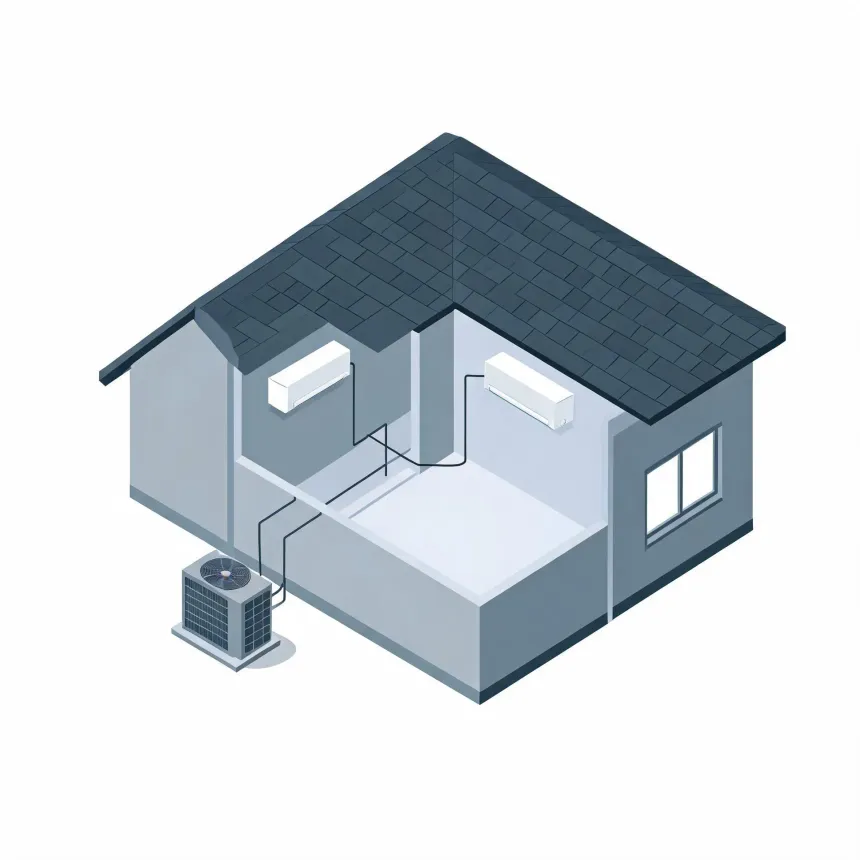
Isometric illustration of a cutaway gray house with a dark shingled roof, showing two wall-mounted indoor air conditioning units connected by lines to an outdoor condenser unit on the ground outside.
Your system heats September through May and cools July through August.

NOAA nClimDiv, 1991–2020 normals

Colorado electricity ran 14.92 cents per kilowatt-hour in 2024, cheaper than most states.

A mini split still earns its keep on comfort and fit here, since low rates stretch out the payback on the priciest, highest-efficiency models.

Nothing about Delta County asks for anything other than a standard mini split

Half the homes here were built by 1979
Cooling runs July through August
Summer afternoons average 82°F

Cooling only runs about two months here, July and August, with afternoon highs around 82. That's a mild ask for a mini split, nowhere near the kind of load it would see in a hotter state. A mid-range unit has plenty of capacity to handle it, and you're not losing much by skipping the top-tier efficiency line. The bigger thing to plan around is wind. Delta County gets hit with damaging wind often enough that the outdoor unit's mounting and placement matter more than squeezing out another efficiency point.

A mini split here has one efficiency floor to clear, and a credit for meeting it

Delta County sits in climate zone 5B, where any mini split installed new has to clear 14.3 SEER2 for cooling and 7.5 HSPF2 for heating. That's the federal minimum for split-system heat pumps, ductless included. A system that meets it also qualifies for the federal tax credit on heat pump installations. Worth asking a contractor which models on their truck clear the line and which go beyond it.

Find a contractor
A man in a dark cap, dark shirt and tan work pants, seen from behind, carries a canvas tool bag up steps toward a red front door of a gray clapboard house, with a potted shrub to the right.
A beige split-system air conditioner outdoor condenser unit mounted on metal wall brackets atop a stucco wall.

Two months of cooling, but the work should happen before June

Cooling here only runs July and August. Line up the installation before June and you're not stuck waiting on a crew while the house is already warm. A mini split put in during a slow month also gets a proper job. Whoever installs it has the time to get the line set routed right and the outdoor unit mounted where that wind won't beat on it, instead of rushing to get you running before the first hot week hits.

Zones drive the cost more than the unit

A single indoor head tied to one outdoor unit is the simplest install there is. Add a second or third zone and the price climbs, not just for the extra head but for the extra line set, the extra wall penetration, and an outdoor unit sized to run all of them. A contractor quoting a whole-house setup is pricing a different job than one quoting a single room.
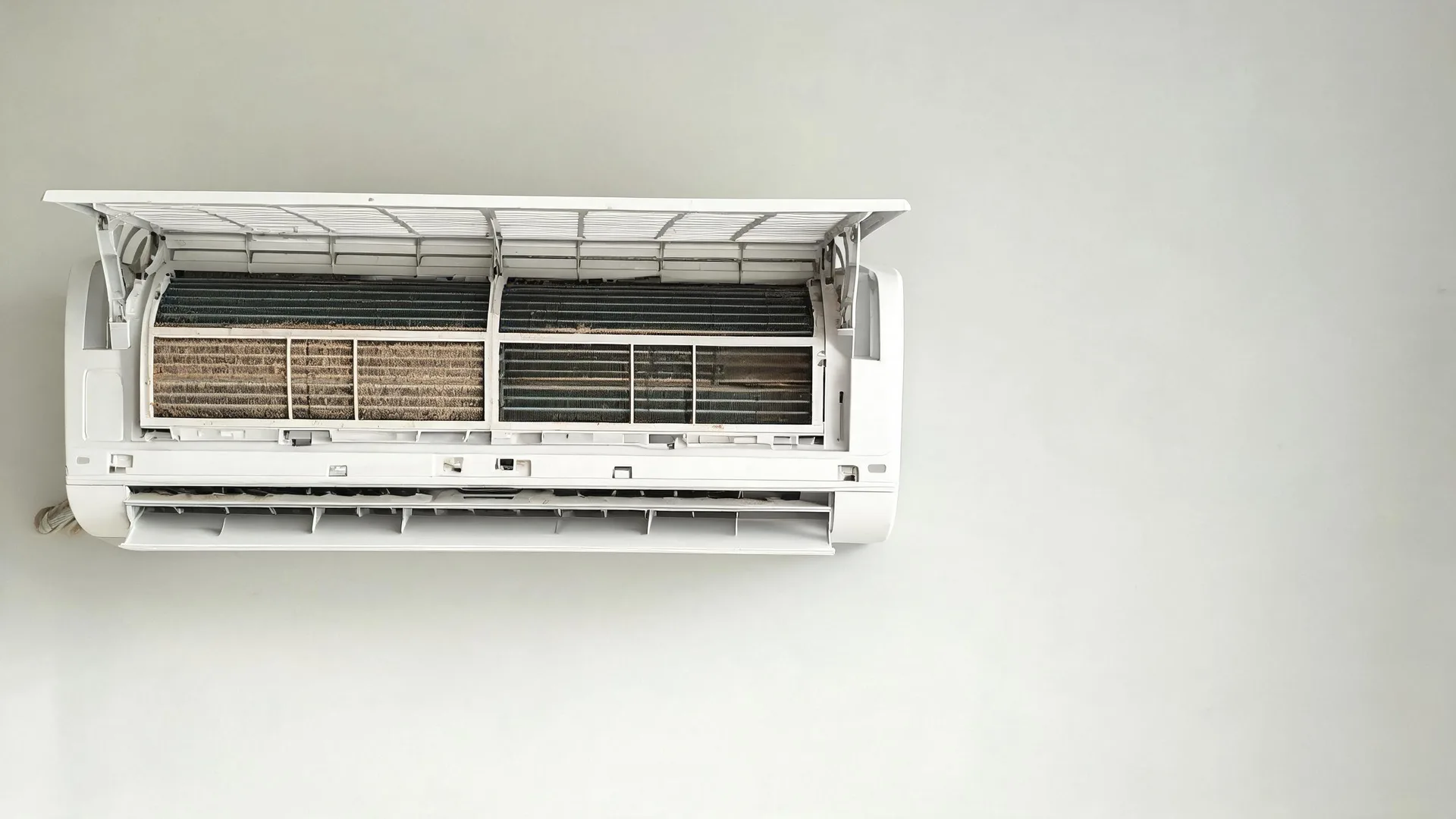
Where the outdoor unit sits changes the labor

Line set length and routing matter more than people expect. An outdoor unit placed close to the indoor head, with a clean wall path between them, is straightforward work. One that has to run line set around corners, up through a soffit, or across a longer stretch of wall takes more time and more material, and that shows up in what the job runs.

Sizing a mini split isn't about matching the room's square footage to a number on a brochure. A contractor works out how much heat the space gains in summer and loses in winter, looking at window area, insulation, ceiling height, and what's on the other side of each wall. Too big and the unit short cycles, blasting cold air until the thermostat's satisfied, then shutting off before it's pulled any humidity out of the room. That leaves the space feeling clammy even at the right temperature. Too small and it runs flat out on the hottest and coldest days without ever catching up. Either mistake wears the compressor harder than running a correctly sized unit at a steady pace. The load calculation also sets how many zones a given outdoor unit can carry, since each indoor head draws on the same shared capacity.

Install day starts with the spots already picked, so most of the time goes to running the line set and getting the outdoor unit mounted. The crew runs refrigerant lines, a drain line, and electrical through a small hole in the wall between the indoor head and the outdoor unit, then seals that penetration against weather. The indoor head gets mounted to a wall bracket, leveled, and connected before anything is charged with refrigerant. Once both ends are in place, the lines get pressure tested to check for leaks before the system is charged and started up. A tech will run it in both heating and cooling before calling it done, checking that the head is blowing the temperature it should and that the outdoor unit isn't short cycling. The last step is usually balancing the line set insulation and cleaning up the wall penetration so weather and pests can't get in through it.